As the historic capital of the Dukes of Burgundy, Dijon offers a remarkable journey through French art, architecture, and gastronomy. While many travelers rush through en route to the vineyards of the Côte d’Or, the city itself rewards those who linger. Its compact medieval center is a pedestrian-friendly maze of timber-framed houses, Renaissance hôtels particuliers, and polished limestone streets.
Beyond the famous mustard, Dijon is a city of immense cultural wealth and surprising green spaces. It balances the sophistication of a former ducal seat with the relaxed energy of a vibrant university town. You can spend your morning admiring world-class fine arts and your afternoon cycling through vineyards that begin just outside the city gates.
Visitors often find that Dijon’s scale makes it one of the most accessible cities in France to explore on foot. The self-guided “Parcours de la Chouette” (Owl’s Trail) leads you effortlessly between the main monuments and hidden courtyards. Meanwhile, the city’s covered market and independent food shops showcase why this region is considered a cornerstone of French cuisine.
Because Dijon sits at the crossroads of major rail lines, it serves as an excellent base for exploring Burgundy without needing a car. Trains connect the city quickly to Beaune, Lyon, and Paris, making day trips simple and efficient. Yet the city itself contains enough depth to fill several days of slow, immersive travel.
From Gothic churches with polychrome roofs to contemporary art spaces housed in former warehouses, the layers of history here are tangible. The local tourism office has done an excellent job preserving the authenticity of the old town while making it navigable for international guests. You will find excellent signage, clean public amenities, and a welcoming atmosphere that feels distinctly Burgundian.
Whether you are a solo traveler seeking quiet museums or a family looking for interactive fun, Dijon delivers with understated elegance. The following list highlights the essential experiences that capture the essence of this underrated French destination.
15 Best Things to Do in Dijon
1. Follow the Owl’s Trail Through the Old Town
The Owl’s Trail is the perfect introduction to Dijon’s layered history and architectural treasures. This self-guided walking route is marked by small brass owl plaques embedded in the pavement, leading you to 22 key sites across the historic center. Pick up a map at the tourist office, then let the trail guide you past half-timbered houses, Renaissance courtyards, and medieval churches at your own pace.
Along the way you will encounter the famous carved owl on the buttress of Notre-Dame church. Local tradition says you should touch the owl with your left hand while making a wish, a ritual that has polished the stone smooth over centuries. The route takes about two hours without stops, but you will want far longer to duck into shops, pause for coffee, and photograph the colorful rooftops.
2. Climb the Tower of Philippe le Bon
For the best panoramic view in Dijon, climb the 316 steps of the Tour Philippe le Bon. This 15th-century tower rises above the Palais des Ducs and offers a sweeping perspective over the city’s tiled roofs, church spires, and the distant hills of the Côte d’Or. The climb is steep and narrow in places, but the reward at the top justifies the effort.
Access is by guided tour only, which departs regularly from the tourist office. Your guide will explain the tower’s construction and point out key landmarks from the viewing platform. On clear days you can see all the way to Mont Blanc, a breathtaking reminder of Burgundy’s position between the plains and the Alps.
3. Explore the Musée des Beaux-Arts
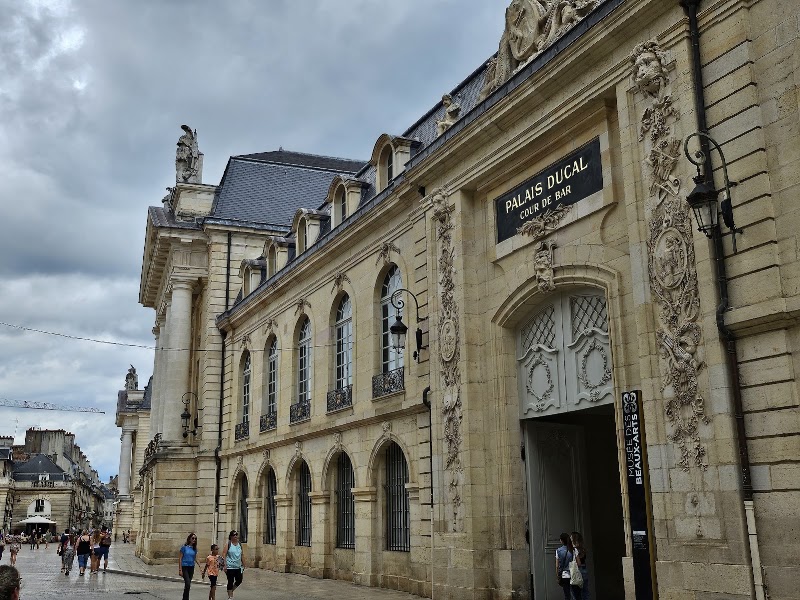
Housed within the former ducal palace, the Musée des Beaux-Arts ranks among France’s finest regional museums. Its collection spans from medieval Burgundian sculpture to Renaissance painting and modern art, with particular strength in works from the 14th to 19th centuries. The museum’s layout follows the palace’s original rooms, including the vast Salle des Gardes housing the tombs of the Dukes of Burgundy.
The star attractions are the elaborate tombs of Philip the Bold and John the Fearless, masterpieces of late medieval funerary sculpture. These alabaster and marble monuments feature intricate mourning figures and demonstrate the immense wealth of the Burgundian court. Allow at least two hours to appreciate the collection without feeling rushed.
4. Visit the Church of Notre-Dame of Dijon
The Church of Notre-Dame stands as a jewel of 13th-century Burgundian Gothic architecture in the heart of the old town. Its western facade is famous for the rows of carved gargoyles that project dramatically from the stone, appearing to watch over the square below. The church’s interior is surprisingly intimate, with slender columns and beautiful stained glass.
The most famous feature is the small carved owl on the north buttress, which has become the unofficial symbol of the city. The church also houses a revered 11th-century wooden statue of the Black Virgin, one of the oldest in France. Visit in the early morning when the light filters through the windows and the square is still quiet.
5. Wander Through Les Halles Centrales Market
Les Halles Centrales is the gastronomic heart of Dijon and a feast for all the senses. This covered market, designed in the 19th-century style of Victor Baltard, houses dozens of vendors selling local cheeses, charcuterie, fresh produce, and regional specialties. The energy here peaks on Tuesday, Thursday, and Saturday mornings when outdoor stalls spill into the surrounding streets.
Come hungry and graze your way through the market, sampling gougères, jambon persillé, and of course the famous Dijon mustard. Many stalls offer prepared dishes you can enjoy at the small tables inside or take away for a picnic. It is the perfect place to gather ingredients for an afternoon in one of the city’s parks.
6. Discover the Palais des Ducs et des États de Bourgogne
The Palais des Ducs dominates the Place de la Libération, a grand semicircular square that serves as Dijon’s ceremonial center. The palace complex evolved over centuries, serving as the residence of the Valois dukes and later as the seat of the Burgundian parliament. Today it houses the Musée des Beaux-Arts and the city’s administrative offices.
The palace’s architectural layers tell the story of Burgundy’s political evolution, from medieval fortress to Renaissance palace to classical government building. The Place de la Libération itself is a masterpiece of 17th-century urban design, with its symmetrical facades and central fountain. In summer the square fills with cafe terraces and evening events.
7. Stroll Through the Jardin Darcy
The Jardin Darcy is a small but elegant public garden located near the Dijon-Ville train station. Designed in the 19th century, it features a central fountain, manicured flower beds, and a small playground for children. It is the perfect spot to decompress after arriving by train or to enjoy a quiet moment before dinner.
The garden’s centerpiece is a replica of the Bear of Poros statue, a symbol of the city. Shaded benches offer a cool retreat during hot summer afternoons, and the surrounding neighborhood has excellent cafes and bakeries. Locals pass through here daily, giving visitors a glimpse of authentic Dijon life.
8. Cycle the Route des Grands Crus
Dijon sits at the northern gateway to the Côte de Nuits, the legendary vineyard slope that produces some of the world’s finest Pinot Noir. A network of quiet roads and dedicated cycling paths leads south from the city through villages like Fixin, Gevrey-Chambertin, and Morey-Saint-Denis. You can rent a bike in Dijon and be among the vines within 30 minutes.
The gentle terrain and short distances between villages make this an accessible ride for most fitness levels. Stop at family-run domaines for tastings, but book ahead where possible, as many producers require reservations. The scenery shifts from urban to pastoral quickly, offering a memorable contrast to the city’s stone streets.
9. Explore the Musée de la Vie Bourguignonne
For a deeper understanding of regional culture, visit the Musée de la Vie Bourguignonne. Housed in a former Cistercian monastery, this museum recreates daily life in Burgundy from the 18th to early 20th centuries. Exhibits include period shop interiors, traditional costumes, agricultural tools, and domestic objects that reveal how ordinary people lived.
The museum is particularly strong in its presentation of Burgundian trades and crafts, from winemaking to mustard production. It offers a grounded counterpoint to the grandeur of the ducal palace and helps visitors understand the region’s working-class heritage. Admission is free, making it an excellent value for budget travelers.
10. Walk Through the Parc de la Colombière
The Parc de la Colombière is Dijon’s largest green space, a 33-hectare park created in the 17th century along the Ouche River. Its long central avenue is lined with mature trees, creating a formal French garden atmosphere that invites leisurely walks and picnics. The park connects to the city center via the Allées du Parc, a pleasant pedestrian and cycling route.
Families will appreciate the playgrounds, while joggers and cyclists use the park’s wide paths for exercise. In autumn the foliage is spectacular, and in spring the flower beds burst with color. The park’s scale means it rarely feels crowded, even on sunny weekends.
11. Visit the Cathédrale Saint-Bénigne
The Cathédrale Saint-Bénigne stands on the site of an ancient abbey and burial place of Saint Benignus, an early Christian martyr. The current Gothic structure dates from the 13th and 14th centuries, though its crypt preserves Romanesque remains from the 11th century. The crypt’s circular layout and ancient columns create an atmosphere of profound stillness.
The cathedral’s interior is spacious and luminous, with fine stained glass and an impressive organ. It serves as the seat of the Archbishop of Dijon and hosts regular concerts and services. The contrast between the soaring Gothic nave and the intimate Romanesque crypt makes this a rewarding visit for architecture enthusiasts.
12. Browse the Rue de la Chouette and Antique Shops
The Rue de la Chouette is one of Dijon’s most charming streets, lined with independent boutiques, antique dealers, and art galleries. Its name comes from the famous owl carving on the nearby church, and the street embodies the old town’s intimate scale. Window shopping here feels like stepping back in time, with storefronts displaying everything from vintage books to regional ceramics.
Antique hunters will find several shops specializing in Burgundian furniture, old maps, and decorative objects. Prices range from affordable curiosities to serious investment pieces, and shopkeepers are generally knowledgeable and welcoming. Even if you buy nothing, the street’s atmosphere and architecture make it worth exploring.
13. Tour the Hôtel de Vogüé
The Hôtel de Vogüé is a stunning example of a Renaissance private mansion, built in the early 17th century for a wealthy Burgundian family. Its courtyard features a remarkable double-level gallery with carved stone columns and decorative details that showcase the wealth of Dijon’s elite. The building now houses municipal offices but the courtyard is open to visitors.
The mansion’s facade combines French and Italian influences, reflecting the cosmopolitan tastes of its original owners. It stands as a reminder that Dijon’s prosperity extended far beyond the ducal court, with powerful merchant families shaping the city’s architectural character. Photography is permitted in the courtyard.
14. Sample Regional Cuisine at a Traditional Bistro
No visit to Dijon is complete without a meal that celebrates Burgundian gastronomy. Traditional bistros serve dishes like boeuf bourguignon, coq au vin, oeufs en meurette, and escargots de Bourgogne, all prepared with local ingredients and paired with regional wines. The city’s restaurant scene ranges from Michelin-starred establishments to humble neighborhood spots where workers lunch daily.
Look for menus that emphasize seasonal produce and regional specialties rather than generic French fare. Ask your server for wine recommendations, as the local Côte de Nuits and Côte de Beaune bottles pair beautifully with the rich, savory cuisine. Booking ahead is essential for popular restaurants, especially on weekends.
15. Attend a Performance at the Auditorium or Grand Théâtre
Dijon’s cultural calendar is rich with music, theater, and dance performances throughout the year. The Auditorium, designed by the architectural firm Arquitectonica, is a striking modern venue that hosts classical concerts, jazz, and contemporary music. Its acoustics are excellent, and the programming attracts both international stars and emerging artists.
The Grand Théâtre, located near the Place de la Libération, offers opera, ballet, and theatrical productions in a traditional setting. Check local listings during your visit, as performances are often reasonably priced and provide insight into French cultural life. Attending a show is a memorable way to experience Dijon after dark.
Palais des Ducs et des États de Bourgogne

| Address | 1 Rue Rameau, 21000 Dijon |
|---|
| Maps | Click here |
|---|
| Website | Click here |
|---|
| Opening Hours | Monday: 9:00 AM – 6:00 PM
Tuesday: Closed
Wednesday: 9:00 AM – 6:00 PM
Thursday: 9:00 AM – 6:00 PM
Friday: 9:00 AM – 6:00 PM
Saturday: 9:00 AM – 6:00 PM
Sunday: 9:00 AM – 6:00 PM |
|---|
| Phone | 03 80 74 52 09 |
|---|
Юлия Тарасенко★★★★★
The Palace of the Dukes of Burgundy is one of the highlights of Dijon. The historic city center and the beautiful main square create a wonderful atmosphere. A truly charming place that I would love to visit again.
Loo Yeo★★★★★
A Court, A Crown, A City. Read the palace as a sequence of patrons and designers. First, the Burgundian court: in the mid fifteenth century Duke Philippe le Bon consolidates his seat here, raising the great tower that still centres the ensemble, on plans attributed to the Lyonnais master Jean Poncelet. Next, the French Crown: under Louis XIV, Jules Hardouin-Mansart regularises the frontage, draws a cour d’honneur and sets a new royal square before it, giving Dijon a classical face that speaks in orders and pediments. Finally, the modern city: the old palace becomes Hôtel de Ville and Musée des Beaux-Arts, its courtyards and galleries reworked for civic life and public collections. In one view you pass from ducal assertion, to royal classicism, to a museum-city that lives in both.
Amila A★★★★★
A beautiful and impressive place in the heart of Dijon, with grand architecture and a strong sense of history. The square in front of the Palais is also very nice for walking around, taking photos, and enjoying the atmosphere of the old city.
One small detail not to miss: look carefully at the old survey level marks on the wall in front of the palace — they show historic elevation measurements above mean sea level and are a fascinating reminder of the accuracy of old surveyors.
Luis Gonçalves★★★★★
To visit the Palace you shall visit the museum of fine arts. A lot of paintings and art pieces. The top thing to see is the Duques tombs.... JUST AMAZING.
Art Lambert★★★★★
Great food market with a wide variety of options. There’s something for everyone, and the choices make it easy to try different dishes in one place. A nice spot to visit for fresh, tasty food and a casual meal.
The Owl of Dijon

| Address | 11 Rue de la Chouette, 21000 Dijon |
|---|
| Maps | Click here |
|---|
| Website | Click here |
|---|
| Opening Hours | Monday: Open 24 hours
Tuesday: Open 24 hours
Wednesday: Open 24 hours
Thursday: Open 24 hours
Friday: Open 24 hours
Saturday: Open 24 hours
Sunday: Open 24 hours |
|---|
| Phone | — |
|---|
Amila A★★★★★
A small but very special symbol of Dijon. The Owl is easy to miss if you walk too quickly, but it is one of the most charming details in the old town. Many people touch it with their left hand and make a wish, so it has become a kind of “wish stone” for visitors. A lovely little stop while following the Owl Trail and exploring the historic streets.
Loo Yeo★★★★★
Palm-sized and polished by countless hands, the little owl carved into Notre-Dame’s wall turns a side lane into a ritual. Touch with your left hand and make a wish; the brass pavement plate with the owl logo marks the stop and small arrows carry you along Dijon’s Parcours de la Chouette. This is the route’s namesake and most photographed moment: modest stone, big civic idea. I like how the trail knits small details to major landmarks - marker, brief engagement, onward wayfinding - so one carving speaks to grander sites across the old town.
Philip Woo★★★★★
The “Owl of Dijon” is a small stone owl carved into the exterior of the medieval Church of Notre-Dame of Dijon. It is one of the city’s most famous symbols. Visitors traditionally touch the owl with their left hand and make a wish for good luck. The owl also inspired Dijon’s self-guided “Owl Trail,” a walking route connecting historic landmarks around the city.
Sheue Lin Ng★★★★★
It's fun, following the trail. If you see no 9. , please look straight up and you'll see the small owl statue. We actually missed it!!
Jiraporn Ch★★★★★
A modern old town, just follow the golden arrows for sightseeing. The shops are neat and orderly. I saw people slipping after the rain because the floor is slippery. It is recommended to wear shoes a good shoes. There is a restaurant that supports Down syndrome. I recommend you try it.
Jardin Botanique de l'Arquebuse

| Address | Muséum d'histoire naturelle, 1 Av. Albert 1er, 21000 Dijon |
|---|
| Maps | Click here |
|---|
| Website | Click here |
|---|
| Opening Hours | Monday: 7:30 AM – 9:00 PM
Tuesday: 7:30 AM – 9:00 PM
Wednesday: 7:30 AM – 9:00 PM
Thursday: 7:30 AM – 9:00 PM
Friday: 7:30 AM – 9:00 PM
Saturday: 7:30 AM – 9:00 PM
Sunday: 7:30 AM – 9:00 PM |
|---|
| Phone | 03 80 48 82 00 |
|---|
Thomas L★★★★★
Nice jardin with close proximity to the train station. Nice for running, nice for walking, has some very timeless museums in it
Alex Ryan Wellesley★★★★★
Extremely well kept gardens. Plenty of space for everyone and places to have a picnic or rest. Really incredible and beautiful 😍
Stephanie Loo★★★★★
Lovely garden and beautifully curated. Absolutely loved my time here and had a great morning walk and exercise!
Erwin N.★★★☆☆
We were told to visit this park, hoping to see some nice flowers. But end of august it seems that the flowers are not as beautiful as they probably would be during spring.
But nevertheless its a nice park to walk through and enjoy the quietness of a park in a city.
Enough place to sit in the shadow during hot days in summer. Some gardeners would be nice to clean up the sides and some bins for people to throw their dirt. Now we have seen beer cans between the flowers.
For us it's a one time visit as it was not that special to walk 2km from our hotel Grand Hotel la Cloche.
Michael Moriarity★★★★★
This Botanical Garden and Arboretum is located quite near the Gare Dijon and there is a pathway leading to the Garden..the garden contains nearly 4000 plant species..there are easy walking paths throughout the garden and plenty of benches for relaxation…there are a diversity of wild and cultivated plants..we spent three hours in this fabulous garden area..
Musée des Beaux-Arts de Dijon

| Address | Palais des ducs et des Etats de Bourgogne, Pl. de la Sainte-Chapelle, 21000 Dijon |
|---|
| Maps | Click here |
|---|
| Website | Click here |
|---|
| Opening Hours | Monday: 9:30 AM – 6:00 PM
Tuesday: Closed
Wednesday: 9:30 AM – 6:00 PM
Thursday: 9:30 AM – 6:00 PM
Friday: 9:30 AM – 6:00 PM
Saturday: 9:30 AM – 6:00 PM
Sunday: 9:30 AM – 6:00 PM |
|---|
| Phone | 03 80 74 52 09 |
|---|
Hayir Farko★★★★★
Its free to visit permanent collections and this museum is in the middle of center. If u have time and if u are around , u should visit.
I' Lo★★★★★
Amazing museum in an amazing city. The museum is objectively small, only three floors, but what a chic and amazing exposition. I'm not talking about the fact that the entrance is free. This is absolutely and very important for all visitors, especially for those who go with the whole family and who want to join the works of art. And of course many thanks for this to the city. Where I was, I have not seen this anywhere else, it is unique, many thanks to the city for this ones more. Exposition from ancient times to the present day, very good logistics of rooms, very good arrangement of paintings, spacious halls - all this in general is conducive to a calm viewing of the collection.
100% recommendation!
Simone Alexander★★★★★
We were greeted by very friendly staff who explained the museum's layout. This museum is large, entry is free, and there are several floors of exhibits to see. The grounds around the museum are picturesque as well. Enjoy!
Duygu Percin★★★★★
I visited the museum to see especially Tombeau de Philippe le Hardi. The sculptures are marvelous
gaybrielle hastings★★★★★
Beautiful museum! Spacious with beautiful displays of paintings, sculptures, and archeological artifacts, located in the historical section of Dijon. I spent three hours here and did not see everything, of course time spent depends on your interest. The staff was very friendly, the cost was free! (Thank you!) Museum hours were wonderful, open until 6:30! Highly recommend!
Church of Our Lady

| Address | 2 Place Notre Dame, 21000 Dijon |
|---|
| Maps | Click here |
|---|
| Website | Click here |
|---|
| Opening Hours | Monday: 8:00 AM – 6:00 PM
Tuesday: 8:00 AM – 6:00 PM
Wednesday: 8:00 AM – 6:00 PM
Thursday: 8:00 AM – 6:00 PM
Friday: 8:00 AM – 6:00 PM
Saturday: 8:00 AM – 6:00 PM
Sunday: 9:00 AM – 6:00 PM |
|---|
| Phone | 03 45 34 27 61 |
|---|
Loo Yeo★★★★★
Notre-Dame de Dijon began as a wealthy parish church on a tight commercial site, replacing Notre-Dame-du-Marché in the 13th century. Its flat façade-écran turns that compression outward: recessed portals below, stacked arcaded galleries above, and no conventional rose-and-tower frontage. The building also served Dijon’s commune before civic government had its own settled architecture. One tower held the city archives; the belfry watched for fire or hostile troops; the communal bell summoned assemblies, regulated gates and sounded alarm. Then came the Jacquemart, brought from Courtrai by Philip the Bold and installed on the church of the commune. A Burgundian trophy became Dijon’s public clock, with worship, authority and city time sharing the same Gothic front.
Patrick McElhaney★★★★★
Medieval cathedral Our Lady.
Catholics worship and has very significant spiritual meaning for us.
This place has seen a lot of history. Just imagine the different types of people who were baptized, confirmed, married, and died with funeral rights here! There is a spiritual presence. An ethnographic history would be worth a dissertation if the records are available.
Amila A★★★★★
A beautiful Gothic church in the centre of Dijon, full of small details worth noticing. Do not miss the Jacquemart clock at the top: Jacquemart and Jacqueline strike the hours on the large bell, while their “children”, Jacquelinet and Jacquelinette, strike the quarter hours on smaller bells. I was also told that the church was not completely finished, although I cannot recall the exact reason. A fascinating mix of architecture, history, and old mechanical engineering.
Chin Hock Chua★★★★☆
Well known Cathedral in the heart of Dijon. Build in the 1200s and well known for the gargoyles sculptures and don’t forget to look for the good luck owl before you leave.
Paul Vivas★★★★★
Landmark & Iconic Cathedral
This is a beautiful Cathedral in the town centre of Dijon, it is marvellous both inside & outside. The architecture is amazing and the attention to details was tremendous. This can be seen whilst looking at the gargoyles. Nice and well worth the visit.
Cathédrale Saint-Bénigne de Dijon

| Address | Pl. Saint Bénigne, 21000 Dijon |
|---|
| Maps | Click here |
|---|
| Website | Click here |
|---|
| Opening Hours | Monday: 9:00 AM – 12:00 PM, 2:00 – 6:30 PM
Tuesday: 9:00 AM – 12:00 PM, 2:00 – 6:30 PM
Wednesday: 9:00 AM – 12:00 PM, 2:00 – 6:30 PM
Thursday: 9:00 AM – 12:00 PM, 2:00 – 6:30 PM
Friday: 9:00 AM – 12:00 PM, 2:00 – 6:30 PM
Saturday: 9:00 AM – 12:00 PM, 2:00 – 6:00 PM
Sunday: 9:00 AM – 12:00 PM, 2:00 – 6:00 PM |
|---|
| Phone | 03 80 30 39 33 |
|---|
Hayir Farko★★★★★
To visit Catherdrale is free , absolutely u should visit. But also u can visit "La Rotonde" , its under of Catherdrale. But this visit is with guide. And at 15 oclock starting visit with group. Ticket price is 5 euro per person , there have some reduction for some people depends their personal situacion. Our guide it was a young lady , she explained amazing. First she was explain in French , after in English. I highly recommend it.
Charbel★★★★★
A magnificent cathedral with a striking exterior and a beautifully serene interior. The unique roof tiles are stunning, and the atmosphere inside is incredibly peaceful. It’s rich in history and located right in the heart of Dijon, definitely worth a visit.
Mike★★★★★
An impressive cathedral and friendly and supportive staff inside.
Donations can he done using contactless payment, which was very convenient.
Commemorative coins are really heavy but affordable.
Torsten Burandt★★★★☆
impressive medieval cathedral, worth to visit and also a place of silence and pray
Luis Gonçalves★★★★☆
Offcorse you can't miss it if you are visiting Dijon. When you see the cathedral outside building from some distance, it's amazing. When you are close you lost a bit the magnitude due to the surrounding buildings. Inside is nice.
Place de la Libération

| Address | Pl. de la Libération, 21000 Dijon |
|---|
| Maps | Click here |
|---|
| Website | Click here |
|---|
| Opening Hours | Monday: Open 24 hours
Tuesday: Open 24 hours
Wednesday: Open 24 hours
Thursday: Open 24 hours
Friday: Open 24 hours
Saturday: Open 24 hours
Sunday: Open 24 hours |
|---|
| Phone | 03 80 74 51 51 |
|---|
Amila A★★★★☆
A beautiful open square in the heart of Dijon, just in front of the Palais des Ducs et des États de Bourgogne. The curved layout, fountains, and surrounding historic buildings make it a great place to walk, take photos, or simply sit and enjoy the atmosphere. It is especially nice in the evening when the lights and water features make the square feel very elegant.
One small detail not to miss: look carefully at the old survey level marks on the wall in front of the palace, they show historic elevation measurements above mean sea level and are a fascinating reminder of the accuracy of old surveyors.
Loo Yeo★★★★★
A royal hemicycle turned civic living room. Drawn in the late 1600s to frame the ducal palace, the square’s changing names track politics — Place Royale, d’Armes, Impériale, then in 1944 the present Place de la Libération. It has staged big moments from exhibitions to Marsac's demise to de Gaulle’s wartime address. The 2005–2006 redesign by Jean-Michel Wilmotte set pale Comblanchien stone, three low fountains and discreet lighting, so the geometry that once magnified power now hosts café terraces, museum traffic and evening promenade.
David Troy★★★★★
This is stunningly beautiful architecture with water fountains that the children are playing in. Plenty of lovely restaurants around the edges where you can just have a drink or eat too.
Heather Monks★★★★★
Beautiful with fantastic Xmas tree and lights all around the town. Recommend a visit.
Arne Vanstechelman★★★★★
Great place to visit during your walk around the city centre! Have a seat at one of the terraces and enjoy a nice glas of wine with the ambience of the surroundings.
Tour Philippe le Bon

| Address | Pl. des Ducs de Bourgogne, 21000 Dijon |
|---|
| Maps | Click here |
|---|
| Website | Click here |
|---|
| Opening Hours | — |
|---|
| Phone | 03 80 44 11 44 |
|---|
blueberry man★★★★★
Great panoramic views from the top! Not that hard to climb for the average person, but during the summer it is pretty hot inside, making it more uncomfortable. Once you reach the top, though, you’ll be rewarded with a great view of Notre Dame and many other influential buildings. Tour guide was really helpful and informative, too.
Loo Yeo★★★★☆
Originally the Tour de la Terrasse, Tour Philippe le Bon was built into Philippe le Bon’s 1450s ducal logis. It served the levels of a residence arranged around service rooms, ducal apartments and reception space, while also containing rooms of its own. At 46 metres, that practical stair-and-room structure made Burgundian ducal authority visible across Dijon. After 1477, the palace changed masters and meaning; the tower remained, even surviving a 17th-century demolition threat before becoming part of today’s town-hall and museum complex. The later observatory and modern 316-step climb add further lives, but the old palace logic is still there: movement, residence and authority carried upwards.
K J★★★★★
I honestly thought the climb would be harder. I didn’t get winded, and the stairs were wide enough not to have to “grapevine” sideways up and down them. The tour was really inexpensive, as well as informative! And there were a few breaks in the ascent to learn about the tower’s history, and catch your breath if necessary. And the views are incomparable!
Peter Kam Fai Cheung★★★☆☆
On the night of 21 July, 2024, my wife asked me if I’d join her to climb up the tower the following day, I said no right away as I did not want to repeat the knee straining experience.
My wife booked the 3pm guided tour and I watched possible signs of her from down under. I had thought about taking a photo take of her when she was up.
It tuned out that there was an additional safety barrier on the tower roof and I could only capture her selfie camera stick when she extended it beyond the barrier.
Erwin N.★★★★☆
A beautiful square in the center of Dijon with lots of restaurants and local shops to buy products from this area.
During summer it's very busy with tourists but that makes the square a living area.
The buildings are having the beautiful French architecture which makes the place a must to visit when you're in Dijon
Muséum d'histoire naturelle de Dijon

| Address | Muséum d'histoire naturelle, 1 Av. Albert 1er, 21000 Dijon |
|---|
| Maps | Click here |
|---|
| Website | Click here |
|---|
| Opening Hours | Monday: 9:00 AM – 12:30 PM, 2:00 – 6:00 PM
Tuesday: Closed
Wednesday: 9:00 AM – 12:30 PM, 2:00 – 6:00 PM
Thursday: 9:00 AM – 12:30 PM, 2:00 – 6:00 PM
Friday: 9:00 AM – 12:30 PM, 2:00 – 6:00 PM
Saturday: 2:00 – 6:00 PM
Sunday: 2:00 – 6:00 PM |
|---|
| Phone | 03 80 48 82 00 |
|---|
Thomas L★★★★★
Cool museum, free. Feels like 2006 inside, lots of animals to see, enjoy
Erika Lisa Horiuchi★★★★★
It's simple, but very nice, considering it's free. There's a lot of stuffed animals, some fossils and even animal recordings, I thought their work was very well done. Definitely recommend if you have kids, or even if you're just an enthusiastic, like me lol
The whole visit took about 40 minutes and it is not accessible, unfortunately. You have to climb some stairs, some of them really narrow.
Oh, everything is in french, which was good for me as a student, but maybe not the best if you don't speak the language.
Jeremy Knight★★★★★
Free entry, was bigger than I'd expected (took me half an hour to see everything and take some photos), nothing on the walls in English, but as most of the exhibits are fossils and stuffed animals, it's not really necessary. It's always a shame to see animals killed for display purposes, but I assume these are all quite old (but well preserved of course). Some interesting animals on display, especially the marine life. Employee at the main desk was very welcoming. Next to a nice park. Recommended activity while in Dijon.
margaret robertson★★★★★
We arrived 30 minutes before closing time yet the staff at the entrance insisted we visited the museum. Must say that the staff were friendly and attentive 💯.
The entry is free and the exhibition very interesting to visit, a great compliment to the botanical gardens.
A very much recommended experience for all.
0101★★★★★
Free museum in a spacious garden park with beautiful blooming flowers. Might be very interesting for kids. Lots of things to see but I can't tell if the animals are real or not... but surely some displays are fake.
Halles centrales et marché central

| Address | Rue Odebert, 21000 Dijon |
|---|
| Maps | Click here |
|---|
| Website | Click here |
|---|
| Opening Hours | Monday: Closed
Tuesday: 7:00 AM – 1:00 PM
Wednesday: Closed
Thursday: 7:00 AM – 1:00 PM
Friday: 7:00 AM – 1:00 PM
Saturday: 7:00 AM – 1:00 PM
Sunday: Closed |
|---|
| Phone | 03 80 74 51 51 |
|---|
Amila A★★★★☆
A lively and authentic market in the heart of Dijon. The building itself is beautiful, and inside you can enjoy the local atmosphere with fresh produce, cheese, meat, bakery items, and regional specialties. It is a great place to experience everyday French food culture, not only as a tourist attraction but as a real local market. Very nice to combine with a walk through the old town.
You can buy many local items at one place (Dijon musted, ...). But this is not the lowest price in the town.
Loo Yeo★★★★★
Planned in 1868 on a former Jacobins site already used for market trade, Dijon’s Halles gave the city a cleaner, more convenient covered food hall. Built between 1873 and 1875, the four iron-and-glass pavilions turned that practical aim into civic architecture, with crossing market lanes adapted from an Eiffel-company planning idea and carried through by Dijon’s municipal architects. The building still says what it does: arched openings, brickwork, animal and fruit motifs, and the city arms make food trade visible on the façade. Protected since 1975, it has not retreated into monument status. It still begins with traders, market mornings and the daily business of buying food under a 19th-century roof.
SM★★★★★
Busy market for fruit, vegetable, fish and meat. Amazing selection of cheeses! Mainly for the locals with just a few visitors. There's several stalls with locals specialities, mustard, wine, cassis, gingerbread and biscuits. Well worth a visit. Open on Tuesday, Friday and Saturday 8am to 1pm.
Charbel★★★★★
The true heartbeat of Dijon. Les Halles centrales is an absolute paradise for food lovers. The indoor and outdoor stalls are packed with the freshest local cheeses, meats, produce, and Burgundy specialties. The energy here on a market morning is fantastic. It's the perfect place to grab local treats and experience authentic French culture.
Kazuyo Sugiura★★★★★
Lots of fresh vegi and fruits shops. I am traveling here so had nothing to buy but felt local vibes.
Porte Guillaume

Mladen Zelen★★★★☆
The gate itself is nice, but it is in a busy pedestrian zone, next to the park where you can rest and fill your water bottle.
Loo Yeo★★★★☆
Step under Porte Guillaume and you are on Rue de la Liberté, the main pedestrian spine to Place de la Libération. Locals treat the arch as the city-centre threshold and an easy meet-up point; visitor guides fold it into everyday wayfinding with tram Darcy as the stop name. The Parcours de la Chouette walking trail sends you from the square under the arch and down the street, so foot traffic resolves around this single span. A small plaque to Thomas Jefferson adds a note of long-distance friendship, now part of the storytelling used on tours. In practice the monument is less a relic than a working sign - a nexus between plaza and promenade, commerce and heritage - and a reliable compass for first-time walkers
Francois & Pam BELORGEY★★★★★
Beautiful porte ! If there during Christmas time, watch the lights come on.
Oleksandr Sborshchyk★★★★☆
Great place to start exploring old Dijon. The area sometimes hosts cultural and gastronomic events. It has a large underground parking, good transport connections, and a charming historic garden. However, some events can be disruptive — recently there have been pro-Palestinian demonstrations, which can be noisy and occasionally tense.
Kenneth Yaw Agyeman-Badu★★★★★
At the city's entrance, a magnificent 18th-century stone archway adorned with allegorical sculptures welcomes visitors. This monumental gate provides a stunning panorama of Dijon, showcasing its meticulously planned, clean, and orderly urban landscape. It's a must-see for anyone exploring the city.
Darcy Garden

| Address | Pl. Darcy, 21000 Dijon |
|---|
| Maps | Click here |
|---|
| Website | Click here |
|---|
| Opening Hours | Monday: 7:30 AM – 7:00 PM
Tuesday: 7:30 AM – 7:00 PM
Wednesday: 7:30 AM – 7:00 PM
Thursday: 7:30 AM – 7:00 PM
Friday: 7:30 AM – 7:00 PM
Saturday: 7:30 AM – 7:00 PM
Sunday: 7:30 AM – 7:00 PM |
|---|
| Phone | — |
|---|
Mladen Zelen★★★★★
Cosy place to rest and recover during a city trip. You can refil your water bottle. We visited in July and everything was burned, but still nice.
Mike★★★★☆
A beautiful but small park.
It reminded me a bit of Central Park Bethessa Terrace / Fountain in NYC.
The water fog machine was highly appreciated
momo Alex★★★★★
A beautiful and peaceful garden, especially in the early morning. It is the perfect place for a quiet walk and to enjoy nature
Jett Dadswell★★★★★
Beautiful serene inner-city park.
DESTINY GNANTÉ★★★★★
Great park to walk through, admiring the view or to seat down reading a book while the world moves on. It is also a wonderful place to have a picnic while the kids play in the play area.
Jardin de l'Arquebuse

| Address | 14 Rue Jehan de Marville, 21000 Dijon |
|---|
| Maps | Click here |
|---|
| Website | Click here |
|---|
| Opening Hours | Monday: 9:00 AM – 12:30 PM, 2:00 – 6:00 PM
Tuesday: Closed
Wednesday: 9:00 AM – 12:30 PM, 2:00 – 6:00 PM
Thursday: 9:00 AM – 12:30 PM, 2:00 – 6:00 PM
Friday: 9:00 AM – 12:30 PM, 2:00 – 6:00 PM
Saturday: 2:00 – 6:00 PM
Sunday: 2:00 – 6:00 PM |
|---|
| Phone | 03 80 48 82 00 |
|---|
Aurelie Perla★★★★★
Lovely parc with flowers, shade et Space for picnics. Closes at dawn, it's clean and peaceful.
Sophia Martin★★★★★
Lovely garden with a variety of plants organized in a maze-like way. Pretty trails, a playground, and two museums (free). I've brought a person in a wheelchair before and it's fine.
Malcolm Stokes★★★★★
What a wonderful garden, so peaceful and restoring. Although it was a cold day, it was easy to spend a long time there admiring all the plants, birds and red squirrels. Interesting information throughout the gardens also available in English. Amazing history to this garden going back to the 18th century and trees hundreds of years old
Lucie VINCENT★★★★★
A large garden, with access to the planetarium (free exhibits and paid screenings), the natural history museum (free), and temporary exhibitions.
A pleasant place for a stroll, winter or summer.
Saint Michael's Church

| Address | 5 Pl. Saint-Michel, 21000 Dijon |
|---|
| Maps | Click here |
|---|
| Website | Click here |
|---|
| Opening Hours | Monday: 8:00 AM – 7:00 PM
Tuesday: 8:00 AM – 7:00 PM
Wednesday: 8:00 AM – 7:00 PM
Thursday: 8:00 AM – 7:00 PM
Friday: 8:00 AM – 7:00 PM
Saturday: 8:00 AM – 7:00 PM
Sunday: 9:00 AM – 7:00 PM |
|---|
| Phone | 03 80 63 17 80 |
|---|
Hayir Farko★★★★★
Its a church what u should add on your visit list at Dijon. During walking between streets of Dijon , u see often some place for visit. And almost all places for visit are free. Its really amazing city with so many historical places to visit.
Wendy Leung★★★★★
Beautiful catholic church. Very few visitors during weekdays
I' Lo★★★★★
Late Gothic Church from sixteenth century. It was the first church visited in this beautiful city. Of course, an unusually executed entrance leaves a lasting impression. And the church itself with huge stained-glass windows, beautiful paintings, and a calm, pleasant atmosphere will not leave you indifferent.
Luis Gonçalves★★★★☆
The front facade it amazing... for me one of the best in France. Inside you will see some historical stuff... Google it and discover more when you are there.
Francois & Pam BELORGEY★★★★★
Lovely cathedral. Beautifully decorated with a lightshow over the Christmas period.
Cité Internationale de la Gastronomie et du Vin

| Address | 12 parvis de l'Unesco, 21000 Dijon |
|---|
| Maps | Click here |
|---|
| Website | Click here |
|---|
| Opening Hours | Monday: 11:00 AM – 11:00 PM
Tuesday: 11:00 AM – 11:00 PM
Wednesday: 11:00 AM – 11:00 PM
Thursday: 11:00 AM – 11:00 PM
Friday: 11:00 AM – 11:00 PM
Saturday: 11:00 AM – 11:00 PM
Sunday: 11:00 AM – 11:00 PM |
|---|
| Phone | 03 80 23 88 76 |
|---|
Sila★★☆☆☆
We were really disappointed to find that La Cave de la Cité is closed. Missing the wine tasting there made the whole visit feel like a letdown. The exhibition in the chapel next door was pleasant, but it wasn’t enough to make the visit worthwhile.
ronak Sharma★★★★★
What an absolutely fascinating experience! This place offers an incredible look into the evolution of French culinary history and table etiquette. It goes far beyond just the food, detailing how dining customs developed, the correct manners for hosting and being a guest, and the intricate protocols for dinner invitations. I loved learning about the structure of multi-course meals and the surprising rules of French etiquette—like discovering exactly what is acceptable to touch with your fingers versus a utensil. It gives you a profound appreciation for how deeply French culture values the art of the table. A must-visit for anyone wanting to truly understand French food culture down to the smallest detail
Bob Whitfield (Bobby's World)★★★★★
There is a lot to take in here. The entry to the exhibition is free, however, you do need to register and obtain a ticket to the inside desk. Learn all about French culture, when it comes to culinary history in the burgundy region, through a multi-point presentation. Then take in the actual cuisine at a the restaurant next door. I have included a few pics of our visit in April ‘26
Hayir Farko★★★★★
Its free to visit , u can take a free ticket at recepsion and u can visit permanent collections. We visited 2 expo today , it was really interesting. Also with that ticket we visited Chapelle too.
John Hornick Chef’s Apprentice★★★★★
Category: Attraction. The name says it all. Just outside the old-town area, on the other side of the train tracks, sits a huge complex of food-and-cooking-related shops, a movie theatre, restaurants, school of Burgundy wines, cultural and educational attractions, and exhibitions (such as “The Little Theatre of Fine Food and Drink”). There’s quite a lot of the latter, and you could spend an entire afternoon here (maybe most of a day). Admission is free. Walk into the main building, which houses the cultural and educational stuff. Enjoy whatever attracts you. Then pass out the other side into the “Gastronomic Village”, which is an open air collection of shops and restaurants. We strolled the shops (cheese, cookbooks (mostly in French), kitchen wares, dining wares), enjoyed freshly baked mini baguettes 🥖 with ham, cheese, butter, and cornichons from the Boulangerie, then tasted wine at the La Cave de la Cite wine tasting room (see my separate review). It was raining when we visited, so we could not fully experience all of the outdoor seating. But this is a great place for gastronomes and oenophiles. YouTube’s Chef’s Apprentice
Practical Tips for Visiting Dijon
Making the most of your time in Dijon requires a bit of planning, especially if you are visiting during peak season or hoping to explore the surrounding vineyards. The city is generally easy to navigate, but a few insider strategies can help you avoid crowds and experience the destination more like a local. These practical tips cover transportation, timing, dining, and cultural etiquette to ensure a smooth and enjoyable visit.
1. Use the Dijon City Pass for Museum Access
The Dijon City Pass offers free or reduced entry to most major museums and attractions, plus unlimited public transportation. It is available for 24, 48, or 72 hours and can save you significant money if you plan to visit several sites. The pass also includes the guided tower climb and access to the tourist train.
2. Book the Tower Climb Early in the Day
Tours of the Tour Philippe le Bon are limited to small groups and fill up quickly, especially in summer. Visit the tourist office when it opens to secure a spot for the same day or book online in advance. Morning climbs offer cooler temperatures and better light for photography.
3. Respect the Lunch Hour
Many shops, bakeries, and even some museums close between noon and 2 p.m. as locals take their midday meal seriously. Plan your sightseeing around these hours or use the time to enjoy a leisurely lunch yourself. Restaurants typically serve lunch from noon to 1:30 p.m., and arriving later may mean a limited menu.
4. Take Advantage of Free Sundays
Several Dijon museums offer free admission on the first Sunday of each month, including the Musée des Beaux-Arts and the Musée de la Vie Bourguignonne. This is an excellent way to experience the city’s cultural offerings on a budget. Expect larger crowds, so arrive early or visit less popular exhibits first.
5. Use the Divia Bicycle System
Dijon has an excellent public bicycle-sharing system called DiviaVélo with stations throughout the city. Short trips are inexpensive, and the flat terrain makes cycling an easy way to cover more ground than walking. The system is particularly useful for reaching the Parc de la Colombière or the start of the vineyard cycle route.
6. Learn a Few French Phrases
While many people in Dijon’s tourism industry speak English, making an effort in French goes a long way. Simple greetings like “bonjour,” “merci,” and “s’il vous plaît” are expected in shops and restaurants. Starting interactions in French, even imperfectly, will make your experience warmer and more authentic.
7. Check Market Days Before You Go
Les Halles is open most mornings, but the outdoor market only takes place on Tuesday, Thursday, and Saturday. If you want the full experience with street vendors and the liveliest atmosphere, plan your visit for one of those days. Arrive before 10 a.m. for the best selection of produce and prepared foods.
Dijon rewards travelers who slow down and engage with its rhythms rather than rushing from sight to sight. The city’s compact size means you can wander without a strict itinerary, following your curiosity down quiet lanes and into unexpected courtyards. Take time to sit at a cafe terrace, watch the light change on the stone facades, and savor a meal that honors centuries of culinary tradition.
What