Córdoba is a city that demands to be explored slowly. While many travelers rush through on a day trip from Madrid or Seville, those who linger are rewarded with layers of history that span Roman rule, Islamic caliphates, and Christian monarchies. The streets of the old town, particularly in the Judería, hold the scent of orange blossoms and the echo of centuries-old footsteps.
Understanding the city’s past is key to appreciating its present. Córdoba was once the capital of Al-Andalus, a center of learning and culture that rivaled Baghdad and Constantinople. Today, that legacy lives on not just in the grand monuments, but in the quiet courtyards, the narrow alleys, and the way the afternoon light hits the ancient stone walls.
For history enthusiasts, the city offers a dense concentration of UNESCO World Heritage Sites and protected monuments. You can walk from a Roman bridge to a Moorish water wheel, then turn a corner to find a synagogue that predates the Spanish Inquisition. The layering of cultures here is not just visible; it is tangible.
This guide focuses on the most significant historical sites that tell the story of Córdoba. Each location offers a distinct window into a different era, from the city’s founding as a Roman settlement to its golden age as an Islamic capital. Whether you are a first-time visitor or a returning traveler, these sites provide a comprehensive understanding of the city’s complex identity.
Planning your visit with a focus on history allows you to see connections between the sites. The same builders who worked on the Great Mosque later influenced the architecture of the Alcázar. The Roman engineers who built the bridge set the stage for trade routes that shaped the medieval city. Every corner of Córdoba is connected.
The best way to experience these landmarks is on foot. The historic center is compact and pedestrian-friendly, allowing you to move easily between eras without the barrier of a car window. Wear comfortable shoes, carry water, and be prepared to get lost in the maze of whitewashed streets—often, that is where the most authentic moments happen.
Below is a curated list of the top historical sites in Córdoba, each with practical details and historical context to help you plan a meaningful visit.
Mosque-Cathedral Monumental Site of Córdoba

| Address | C. Cardenal Herrero, º 1, Centro, 14003 Córdoba |
|---|
| Maps | Click here |
|---|
| Website | Click here |
|---|
| Opening Hours | — |
|---|
| Phone | 957 47 05 12 |
|---|
Willie Ruiz★★★★★
What a breathtaking and historical location. I suggest to visit with a guide so you can learn all about the history and details. There was so much to learn and so many little details about the mosque that I don’t think just walking around, would have let me appreciate it as much. The entire place is beautiful. We booked online with a guide ahead of time and the entire tour was inside the mosque so the walking even in the summer was not an issue. Highly recommend coming here if you are in Spain!
Zulkarnain Abdul Majid★★★★★
A must go place before you die.
Attended their night tour.
Awesome showcase from the start of its construction till end of it.
Better than daytime tour. Proper deep rooted history showcase with light show.
Seems to have free visit from 830am till.930am except on sunday.
Its courtyard is open for all but Ticket is needed for Mezquita entry.
ahm albed★★★★★
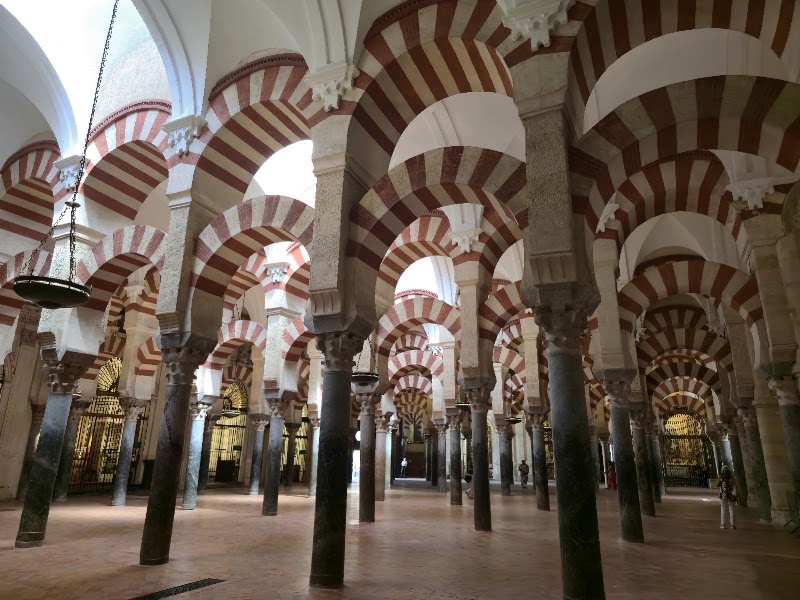
The Mosque-Cathedral Monumental Site of Córdoba is one of the most breathtaking historical places I have ever visited. The stunning blend of Islamic and Christian architecture creates a unique atmosphere that feels both peaceful and majestic. Walking through the famous red-and-white arches and admiring the intricate details of the interiors was truly unforgettable.
The monument is exceptionally well preserved, and every corner tells a story of Córdoba’s rich cultural heritage. The staff were helpful, and the overall organization made the visit smooth and enjoyable. I highly recommend visiting early in the morning to fully appreciate the beauty and calmness of this incredible landmark. A must-see destination for anyone visiting Córdoba!
dont ask★★★★★
Wow. This place completely exceeded my expectations. The Mosque–Cathedral of Córdoba is one of the most beautiful and unique places I’ve ever visited. The architecture is breathtaking, and the history you can feel inside is incredible.
I was honestly mesmerized the entire time. Everything was well organized, and the atmosphere was peaceful despite the number of visitors.
I absolutely fell in love with Córdoba, and visiting this amazing landmark was the highlight of my trip. I highly recommend it to anyone visiting Spain.
Vienna★★★★★
Great experience! It wasn't too crowded and buying tickets online was very convenient. Just a heads-up, it gets a bit chilly inside. Overall, I personally found the original mosque architecture to be much more beautiful than the cathedral additions.
Palacio de Viana

| Address | Pl. de Don Gome, 2, Centro, 14001 Córdoba |
|---|
| Maps | Click here |
|---|
| Website | Click here |
|---|
| Opening Hours | Monday: Closed
Tuesday: 10:00 AM – 7:00 PM
Wednesday: 10:00 AM – 7:00 PM
Thursday: 10:00 AM – 7:00 PM
Friday: 10:00 AM – 7:00 PM
Saturday: 10:00 AM – 7:00 PM
Sunday: 10:00 AM – 3:00 PM |
|---|
| Phone | 957 49 67 41 |
|---|
Angela Reader★★★★★
We visited yesterday(Brits, from Texas) - charming Villa with several pretty courtyards and patios, some with water features and Roman relics. We missed the guided tour unfortunately as couldn’t figure out where it started, but we didn’t mind as we don’t speak Spanish and it was a 103 degree day - BUT we did have the added bonus of seeing a wedding which was lovely!
Arfon Jones★★★★★
Only visited the gardens/patios and they were wonderful and a calm tranquil oasis to chill and relax. Well worth a visit. Tour of the palace is available in Spanish for an additional charge. If youre in Cordoba for the patios then this palace is a must visit
Jim J.★★★★★
Palacio de Viana is one of Córdoba’s most iconic historic houses, famous for its twelve exquisite patios, centuries of noble heritage, and beautifully preserved collections. It’s a must‑see if you’re exploring Córdoba’s tradition of patios and aristocratic architecture.
Twelve Patios + a Historic GardenEach patio has its own character—Roman, Arabic, Renaissance, and Andalusian influences blend across five centuries.
A Lived-in Noble ResidenceUnlike a typical museum, the palace preserves original furnishings, art, and objects exactly as they were used by the families who lived there from 1425 to 1980.
Darren Cantwell★★★★☆
A nice museum in Cordoba with beautiful courtyards. To be honest, the ticket (€8.50) is a bit pricey considering what you can see. I think €5 would be more reasonable and in line with other museums of a similar nature. Also, there is some renovation going on inside so keep that in mind when buying a ticket.
Yulan Zhou★★★★★
I bought the ticket for gardens and it turns out to include a few lovely rooms as well. All gardens are pretty, with fountains, lovely colorful flowers. Very well maintained.
Medina Azahara - Conjunto Arqueológico Madinat al-Zahra

| Address | Ctra. Palma del Río, km 5, 5, 14005 Córdoba |
|---|
| Maps | Click here |
|---|
| Website | Click here |
|---|
| Opening Hours | Monday: Closed
Tuesday: 9:00 AM – 6:00 PM
Wednesday: 9:00 AM – 6:00 PM
Thursday: 9:00 AM – 6:00 PM
Friday: 9:00 AM – 6:00 PM
Saturday: 9:00 AM – 6:00 PM
Sunday: 9:00 AM – 3:00 PM |
|---|
| Phone | 600 14 30 71 |
|---|
Zdeněk Konopásek★★★★★
Wonderful place, worth of visiting. Well organized space for a visit. Be careful: First you need to go to the office to get the tickets (for free) and only then you can go back to the parking place and take the bus (not for free, but relatively cheap) to get to the proper site (not reachable by own car).
Amy Tan★★★★☆
Medina Azahara – Conjunto Arqueológico
Medina Azahara is an impressive archaeological site located near Córdoba, Spain. Built in the 10th century during the Caliphate of Córdoba, it was once a magnificent palace-city. Walking through the ruins, you can see large stone arches, ancient walls, and the remains of grand buildings that show the scale and beauty of the original complex. The peaceful surroundings and historical atmosphere make it a fascinating place to visit. Medina Azahara offers a unique glimpse into Islamic Spain’s rich history and architecture. 🏛️✨
Shaaeda X★★★★★
Stunning, be sure to visit the museum also. There isn't a taxi rank but staff are happy to book taxis for visitors.
Christian Schebesta★★★★★
Don't leave Córdoba without a visit to this stunning site. Been on a Saturday morning, never felt crowded and everything is well explained and organized. You can even take the public bus from the center, all EU citizens have to pay is 3€ for the shuttle from the visitor center to the site
Gonzalo Córdova★★★★★
Wonderful visit. You park on the museum part, and walk inside to get information on the history of andalusia and the site. After that, you get in a bus, which you need to pay (€6 only) and you arrive to the archaeological site, which is beautiful.
Templo Romano

| Address | C. Capitulares, 1, Centro, 14002 Córdoba |
|---|
| Maps | Click here |
|---|
| Website | Click here |
|---|
| Opening Hours | Monday: Closed
Tuesday: 10:00 AM – 12:00 PM
Wednesday: 10:00 AM – 12:00 PM
Thursday: 10:00 AM – 12:00 PM
Friday: 10:00 AM – 12:00 PM
Saturday: 10:00 AM – 1:00 PM
Sunday: 10:00 AM – 1:00 PM |
|---|
| Phone | 957 48 50 01 |
|---|
Murat Gunes★★☆☆☆
Disappointment. Nothing left only ruins of something but it is difficult to tell what it is. They just made new columns to symbolize the original state but it even made it look worse. We loved all over Cordoba but this spot was disappointment
Siu Y Lo★★★☆☆
I visited it in the evening on 1 March 2026. I could not go inside as it was closed already. It looked quite a strange attraction as there are reconstructed columns on a platform which looks very new, and do not match with remains underneath it. There is an information board for those who is interested in the Roman history of Córdoba.
Lucas Martin★★★☆☆
Templo Romano is a quick and easy stop in Córdoba — no tickets needed, and you can simply walk by and take a look. The remaining columns are impressive to see up close, especially when you imagine how large the original temple must have been.
It’s not a place where you spend much time, but it’s perfect for a short photo stop while exploring the city.
D D B★★★★☆
It's nice to see ancient Roman Temples in modern surroundings. In 2000 years, those modern surroundings will be gone, but this temple will probably still be standing.
Piotr Kalinowski★★★★☆
Unfortunately, the museum was closed when I attempted to visit it. Maybe some other time I will be more lucky.
Roman Bridge of Córdoba

| Address | Av. del Alcázar, s/n, Sur, 14009 Córdoba |
|---|
| Maps | Click here |
|---|
| Website | Click here |
|---|
| Opening Hours | Monday: Open 24 hours
Tuesday: Open 24 hours
Wednesday: Open 24 hours
Thursday: Open 24 hours
Friday: Open 24 hours
Saturday: Open 24 hours
Sunday: Open 24 hours |
|---|
| Phone | 957 49 99 00 |
|---|
Rahmah Ramli★★★★☆
The Roman Bridge of Cordoba (or the Bridge of Musa Ibn Nusayr) is a public historical monument open to visitors 24/7 free of charge. A walk across the bridge is more than just a way to cross the river, it is indeed a journey back in time. Since 2004, the bridge has been entirely pedestrianised, allowing tourists and locals to walk leisurely and enjoy views of the historic center, the famous Mezquita, and the Calahorra Tower, which guards the entrance to the bridge. A statue of Saint Raphael, the patron saint of Córdoba, stands in the middle of the bridge, adding a special atmosphere to the site.
The Roman Bridge (Puente Romano) is one of the main symbols of Córdoba and an outstanding architectural monument that should not be missed during a visit to this Andalusian city. The bridge stretches majestically across the Guadalquivir River, connecting the historic center with the southern bank. Built as early as the 1st century BC, it remained the city's only crossing for nearly two millennia, highlighting its strategic importance.
The bridge's structure is an impressive sight. It spans approximately 250 meters and consists of 16 sturdy arches that are reflected in the calm waters of the river. Although the bridge has been rebuilt many times throughout its long history, it has preserved the spirit and grandeur of Roman engineering. Today, most of the visible structure dates back to medieval reconstructions, but at its core, it remains the same ancient path that was once part of the Via Augusta connecting Rome to Cádiz.
Meena Jain★★★★★
I was wonder stuck to actually walk on bridge constructed during Roman era. What engineering and construction techniques people had those times amazes me. Without today’s machinery and AI , solid concrete infrastructure. Wao feeling on the bridge. It’s night view is also very beautiful from the other side bridge
Talal Qadah★★★★☆
a remarkable historic landmark spanning the Guadalquivir River. It offers a beautiful setting for walking and photography. A must‑visit site to enjoy the rich history and charm of the city.
Damien Mc Sweeney★★★★★
As a huge game of thrones fan l was excited to visit this iconic bridge, depicted as part of the ancient GOT city of Volantis! The Roman Bridge of Córdoba (known locally as Puente Romano) is an ancient stone arch bridge that spans the Guadalquivir River in the historic center of Córdoba, Spain. For over 2,000 years, it stood as the city's only bridge crossing the river. Today, it is fully pedestrianized and connects the iconic Mosque Cathedral on the north bank with the defensive Calahorra Tower on the south bank. Its free and the views from the south bank are spectacular.
Nor F. M.★★★★★
The music from instruments player and combines with the water from drain under the roman bridge bring uniqueness of experience. Strolling along the bridge in hot summer at 10am, makes you feel the burning but that make you stay because you will still excited with the beautiful views.
Torre de la Calahorra

| Address | Puente Romano, s/n, Sur, 14009 Córdoba |
|---|
| Maps | Click here |
|---|
| Website | Click here |
|---|
| Opening Hours | Monday: 10:00 AM – 7:00 PM
Tuesday: 10:00 AM – 7:00 PM
Wednesday: 10:00 AM – 7:00 PM
Thursday: 10:00 AM – 7:00 PM
Friday: 10:00 AM – 7:00 PM
Saturday: 10:00 AM – 7:00 PM
Sunday: 10:00 AM – 7:00 PM |
|---|
| Phone | 957 29 39 29 |
|---|
Rahmah Ramli★★★★☆
Torre de la Calajorra or the Calahorra Tower of Cordoba is an ancient defensive fortress which is mentioned in a number of Arab sources on “Al-Andalus” (Arab Andalusia), as well as historical records ever since the Christian conquest of Cordoba. Its architecture reflects the successive renovations made to the tower. The horseshoe archway serves as an additional entrance gate, and its rectangular enclosure flanked by towers was rebuilt in the 12th century.
In the early 20th century, the tower was declared a historic-artistic monument. After different uses over the years, it currently hosts the Living Museum of al-Andalus, which celebrates the period when the Jewish, Christian and Muslim cultures lived in peaceful coexistence in the city.
We didn’t have much time during our tour if Cordoba to visit the Museum located at the base of the tower. One can also climb up the tower for an aerial view of Cordoba, the Guadalquivir river, and its surroundings. An exciting experience to be here.
john smith★★★★☆
The cost is 4.5€ per person, for the money you get the entrance to the small museum and an audio guide. Get to the top through eight rooms where some interesting facts about the history of the place mentioned. The top view is really nice too.
Amy Simpson★★★★★
It's worth the price of admission for the views. Nice little museum, doesn't take much of your time. Good audio guide. The stairs are manageable and it wasn't too crowded while we were there.
The Writer★★★★☆
Lovely museum with a great view of the Mezquita and the bridge. Good information, the audio tour was not the best, a little overly detailed and flat, gained more knowledge exploring on my own. Incredible view from the top. Great history lesson that helps shape your time in Cordoba. Recommend, and the cost is reasonable about 4.5 euros pers person
Priyanka Shah★★★★☆
One of the most iconic landmarks in Córdoba, Torre de la Calahorra stands proudly at the southern end of the Roman Bridge, guarding the entrance to the historic city just as it has done for centuries.
What I loved most about this monument is its location. As you cross the Puente Romano and look back towards the tower, it feels like you've stepped into a different era. With the Guadalquivir River flowing beneath the bridge and the Mezquita-Catedral visible in the distance, the entire setting is incredibly picturesque and easily one of the most photographed spots in Córdoba.
The tower itself has Islamic origins and was originally built as a defensive fortress protecting access to the city via the Roman Bridge. During the 12th century it was expanded and strengthened, and later modified after the Christian conquest of Córdoba. Over the centuries it has served many different purposes, including a fortress, prison, school and even a hospital during times of epidemic.
Architecturally, the tower is fascinating. The structure combines Islamic and later Christian influences, reflecting the different civilizations that shaped Córdoba. Its thick defensive walls and strategic position demonstrate just how important controlling the bridge was throughout the city's history.
Today, the tower houses the Museo Vivo de al-Andalus (Living Museum of Al-Andalus), which explores one of the most remarkable periods in Córdoba's history — when Muslim, Christian and Jewish communities coexisted and contributed to extraordinary advances in science, architecture, philosophy, medicine and culture. The museum uses exhibits, models and audiovisual presentations to tell the story of medieval Córdoba and its influence on Europe.
Even if you don't enter the museum, the tower is worth visiting simply for its exterior and views. From the top, visitors can enjoy one of the best panoramas in Córdoba, overlooking the Roman Bridge, the Guadalquivir River and the UNESCO-listed historic centre.
One of the most interesting aspects of the tower is how it symbolizes Córdoba itself. Standing here, you can literally see the layers of history around you — Roman engineering in the bridge, Islamic architecture in the tower, Christian monuments in the old city, and modern Córdoba continuing to thrive around them.
The area is especially beautiful during sunrise or sunset. The golden light hitting the stone bridge and tower creates a magical atmosphere, and the reflections on the river make it a photographer's dream.
If you're walking across the Roman Bridge, don't just rush past the Calahorra Tower. Take a few moments to appreciate its history and significance. It may not be as famous as the Mezquita, but it tells an equally important part of Córdoba's story.
A stunning medieval fortress, a symbol of Córdoba's multicultural heritage, and one of the best viewpoints in the city. Definitely a must-see while exploring Córdoba.
Calleja de las Flores

| Address | Calleja de las Flores, 1, Centro, 14003 Córdoba |
|---|
| Maps | Click here |
|---|
| Website | Click here |
|---|
| Opening Hours | Monday: Open 24 hours
Tuesday: Open 24 hours
Wednesday: Open 24 hours
Thursday: Open 24 hours
Friday: Open 24 hours
Saturday: Open 24 hours
Sunday: Open 24 hours |
|---|
| Phone | — |
|---|
Meena Jain★★★★☆
It’s a beautiful street but little overrated. Very small and thin lane decorated with flowers. Quite close to the Roman bridge. Church tower from the street is a visual delight specially around sunset. So yes visit the street but try at around sunset times. Small cute patio inside with fountain awaits you
john smith★★★☆☆
It’s a pretty narrow street with hanging flower pots . looks pretty nice, but nothing really special. You can find many similar places, all over Spain.
Tomi Valny★★☆☆☆
overrated! its not hidden gem, its a tourist trap. Place is a small lane with flower pots on the wall, not very wide even to contain all the mass of tourist hoping to take a photo of empty tranquil lane with flower. Again, its definitely not that
Dani Baal★★★★☆
Calleja de las Flores is a tiny alley that instantly charms you with its flowers, calm atmosphere, and Andalusian character. Every corner feels photogenic, especially the perfect view of the cathedral tower framed by the narrow walls. It’s a short walk, but the experience is warm and memorable, giving you a real sense of Córdoba’s spirit. Small alley, big charm — it’s the kind of place that stays with you.
Vincent F★★★★★
My 🌞 summer visit to this place in Cordoba was a vivid tapestry of colours and a delightful assault of senses. While the scorching summer heat was undeniable ( at least it was not humid) it could not overshadow the sheer beauty and charm of this place.
The vibrant flowers that adorned every nook and cranny of Calleja Des las Flores were nothing short of breathtaking. The vivid reds , pinks, and yellows against a backdrop of whitewashed walls created a mesmerizing visual contrast. Strolling through this picturesque alley felt like walking through a living , breathing canvas. I highly recommend this place.
Palacio de la Merced

| Address | Pl. de Colón, 15, Centro, 14001 Córdoba |
|---|
| Maps | Click here |
|---|
| Website | Click here |
|---|
| Opening Hours | Monday: 9:00 AM – 2:00 PM
Tuesday: 9:00 AM – 2:00 PM
Wednesday: 9:00 AM – 2:00 PM
Thursday: 9:00 AM – 2:00 PM
Friday: 9:00 AM – 2:00 PM
Saturday: Closed
Sunday: Closed |
|---|
| Phone | 957 21 11 00 |
|---|
Gary Zhao★★★★☆
A historical landmark in Córdoba, Andalusia, Spain. Once home to the convent of La Merced Calzada, it is now home to the Provincial Government of Córdoba. Free to access, typical beautiful Andalusia architecture. Just come by and pay your visit.
Piotr Dendys★★★★★
Beautiful palace across the park!
But it's a functional local office! Guards are so nice and let you in to admire inside. The entrance to the office is on the left side of the door to the church.
Unfortunately the church was closed
vassilios marinis★★★★★
I am always excited when I go to that church. Today supposed to be a prossetion day but because covid-19 is not happening. So we just visited the church to take a look.
Dejan Braki★★★★☆
This place was close to our hotel so we walked to it and the same name park across it.
A beautiful Baroque facade drew our attention, so we learnt it used to be a medieval Monastery, but now it serves for some city administration purposes
Mohammad Ahmed★★★☆☆
The Palace isn't really a palace anymore. Access is limited to the center portion of the building as it is now a business complex. Free entry and although it is pretty, you have to go through security and it takes less than 5 minutes to see everything.
Torre-campanario de la Mezquita-Catedral de Córdoba

| Address | C. Cardenal Herrero, 1, Centro, 14003 Córdoba |
|---|
| Maps | Click here |
|---|
| Website | Click here |
|---|
| Opening Hours | Monday: 9:30 AM – 6:00 PM
Tuesday: 9:30 AM – 6:00 PM
Wednesday: 9:30 AM – 6:00 PM
Thursday: 9:30 AM – 6:00 PM
Friday: 9:30 AM – 6:00 PM
Saturday: 9:30 AM – 6:00 PM
Sunday: 9:30 AM – 6:00 PM |
|---|
| Phone | 957 47 05 12 |
|---|
Lucas Martin★★★★★
The Torre‑campanario of the Mosque‑Cathedral of Córdoba is absolutely worth the climb. The views from the top are incredible — you can see the entire old town, the red‑tiled rooftops, the Roman Bridge, and the full layout of the Mezquita from above. It’s one of the best vantage points in the city and adds a completely different perspective to the visit.
However, access to the tower is strictly controlled. Each time slot has a limited number of visitors, and during peak season the tickets sell out very quickly. Many people who try to buy tickets on the spot end up disappointed because there are no slots left.
If you’re visiting in high season, I strongly recommend buying your tower ticket in advance or securing it as soon as you arrive in Córdoba. The climb is short and manageable, and the panoramic view at the top makes the experience truly memorable.
Rahmah Ramli★★★★☆
In the heart of Córdoba’s Historic Quarter stands a towering sentinel: the Torre Campanario de la Mezquita-Catedral de Córdoba, or the Bell Tower of the Mosque-Cathedral of Córdoba. Rising 54 meters high — equivalent to a 16-story building — this remarkable landmark claims the distinction of being the city’s tallest structure.
Formerly a mosque minaret, the bell tower stands as a living testament to Córdoba’s fascinating and diverse past. Visitors can climb to new heights and experience breathtaking views of Cordoba from the two uppermost levels of the tower.
The original structure was built as an Islamic minaret between 951 and 958 CE under Abd ar-Rahman III, during the height of the Umayyad Caliphate. From its top, the muezzin would have called the faithful to prayer five times a day across a city of perhaps 100,000 people — one of the largest in 10th-century Europe.
The Bell Tower of the Mosque-Cathedral of Cordoba, had much resemblance to the La Giralda of Seville,and it has undergone various restorations over many years. The most comprehensive conservation effort to date commenced in 1991, when the building was closed, not reopening until 2014.
During our tour here, we didn’t have much time to climb up the tower. However viewing the itself is already satisfying.
Hubeiren★★★★★
Definitely need to buy tickets online ahead. Every half hour it allows about 20 visitors. It’s a little bit challenging to climb up for older people.
Thomas★★★★★
A beautiful bell tower, well worth the visit from outside and going up too. The steps aren’t too difficult, takes about 5m to reach the top, they let people in per timed slots every 30mins. We purchased the tickets at 11:15am (€3 pp) and got an entry slot for 12 noon which was great (month: May) but recommended to pre-book during peak season. They are strict about the timings and number of people per slot.
Wonderful views of the city and Mezquita from the top. About 20mins or so is enough to cover both the levels once at the top.
antonios varzakis★★★★★
After the Christian conquest, the former minaret of the Aljama was converted into a bell tower. In 1589 an earthquake affected its structure an a new one was duilt following the plans of Hernan Ruiz III, who completed the body of bells. After this, Juan Sequero de Matilla added the body clock and Gaspar de la Penia created the cupola on which the figure of Saint Raphael would sit. The uniqueness of the Bells lies in the fact that each of them has a certain name as Assumption or Saint Zoilus etc. The tower is the tallest building in the city, standing at 54 metres.
Córdoba Archaeological Museum

| Address | Pl. de Jerónimo Páez, 7, Centro, 14003 Córdoba |
|---|
| Maps | Click here |
|---|
| Website | Click here |
|---|
| Opening Hours | Monday: Closed
Tuesday: 9:00 AM – 9:00 PM
Wednesday: 9:00 AM – 9:00 PM
Thursday: 9:00 AM – 9:00 PM
Friday: 9:00 AM – 9:00 PM
Saturday: 9:00 AM – 9:00 PM
Sunday: 9:00 AM – 3:00 PM |
|---|
| Phone | 957 35 55 17 |
|---|
g y★★★★★
Excellent museum. Some beautiful displays that tell the story of this fascinating city from Visigoths and Roman settlements through to Moorish, Jewish and Christian settlement. Very nicely laid out and the quality of the artefacts was often exceptional. Free entry. Only downside is no access to toilets on day I visited
Mark Minghella★★★★★
We decided to visit here as it seemed quite interesting and was only €1.50 per ticket (free if you are European). It's really interesting, but could do with a few more translations into English; some are already there but more would be nice. The exhibits are really well presented.
Timothy Cargal★★★★★
This archaeological museum is small to mid-sized and focused on the Cordoba region, presenting artifacts from the Neolithic through the Moorish periods. Most of the items are Roman and Islamic. The first section (in the order recommended for visitors) is arranged chronologically, proceeding through the stone, chalcolithic, and bronze ages, to the Roman, Visigoth, and Umayyad periods. The second level is more thematic in arrangement, beginning with household artifacts and then shifting to items of religious significance. The final level is below ground level and passes over excavations of a Roman theater on the site. Entrance is free for residents of European Union countries, and currently a modest 1.5 euros for adults from outside the EU. Descriptions are primarily limited to item identification, but it is well worth a visit by those interested in archaeology.
Kimberly Mackay★★★★★
A little off the beaten path. I had a couple hours before my train, so I came here. Great choice! Under the museum are old Roman ruins. The truth is there is an ancient city under many parts of Córdoba. The artifacts were amazing and presented in a chronological manner. The gentlemen managing entry were super kind and helpful. I recommend this museum. It is not crowded and I enjoyed it very much.
Mika Born★★★★☆
Definitely worth a visit to see information on the Roman occupation and influence on the city and for only €1.50! Unfortunately the older man working at the front was extremely rude, when I first entered and tried to get a ticket I was told it was cash only, which is fine, so I left to find an atm and get some money. When I came back and tried to pay with a €10 bill the man was instantly annoyed and angry with me. He asked if I had a smaller bill and I didn’t and he started scoffing and shaking his head at me. I stood there for a moment unsure of what to do when he angrily ripped off a ticket and threw it across the counter at me and while shaking his head and motioned for me to go away without paying. I don’t under what I did wrong, for a place that accepts only cash I don’t think a €10 bill is too big to provide change for, and if so he should have told me after I left the first time before going to an atm. This interaction put a negative cloud over my visit.
Puerta del Puente

| Address | Pl. del Triunfo, s/n, Centro, 14003 Córdoba |
|---|
| Maps | Click here |
|---|
| Website | Click here |
|---|
| Opening Hours | Monday: Open 24 hours
Tuesday: Open 24 hours
Wednesday: Open 24 hours
Thursday: Open 24 hours
Friday: Open 24 hours
Saturday: Open 24 hours
Sunday: Open 24 hours |
|---|
| Phone | — |
|---|
Ali★★★★☆
"The Puerta del Puente is absolutely magnificent! It stands as a grand entryway into the city, located right in front of the river and directly connecting to the spectacular Roman Bridge. The architecture is incredibly impressive during the day, but it looks even more magical when it gets illuminated at night. It is a fantastic spot to enjoy the river breeze, take in the views, and snap some beautiful photos before heading toward the Mosque-Cathedral.
Lamis El Ghor★★★★★
Impressive gate that makes for a grand entrance to Cordoba’s historical center. Its monumental architecture and prime location near the Roman Bridge and the Mosque-Cathedral make it a beautiful and iconic landmark. A must-see when exploring the city.
Tomas Osvald★★★★★
Standing dramatically at the northern entrance of the Roman Bridge, the Puerta del Puente serves as the grand ceremonial gateway into Córdoba's UNESCO-listed historic center. Often mistaken for an ancient Roman arch due to its classic proportions, this impressive limestone structure was actually built in the 16th century by architect Hernán Ruiz III to replace an earlier Moorish gate, designed to showcase the city's wealth and prestige during a visit by King Philip II.
Talal Qadah★★★★☆
a historic gateway located near the Mezquita‑Catedral in Córdoba. It serves as a grand entrance to the old city. A beautiful landmark and perfect spot for photos while exploring the historic center.
dan safra★★★★★
Before there was a gate, there was a river.
The Guadalquivir has always been the silent witness of Córdoba, carrying merchants, armies, poets, and pilgrims along its shimmering spine. Empires crossed it. Dreams crossed it. And at its edge, standing between water and stone, rises the noble Puerta del Puente.
Built in the 16th century during the reign of Philip II of Spain, the gate was designed by Hernán Ruiz III upon ancient Roman foundations. It was not merely an entrance, it was a declaration. A threshold between worlds. Behind it lay the living labyrinth of Córdoba. before it stretched the Roman Bridge and the open horizon of Andalusia.
But the Puerta del Puente is more than Renaissance stone. It is a symbol of passage. Every civilization that touched Córdoba left footprints here. Romans, Visigoths, Muslims, Jews, Christians. Each crossed this axis between the city and the infinite.
Stand beneath its columns at sunset, and you feel the weight of centuries dissolve into golden light. The air carries a softness, as if time itself pauses in reverence. The gate does not speak loudly. It does not demand admiration. It simply stands firm yet humble, reminding us that all journeys require a crossing.
On one side: the great Roman Bridge of Córdoba stretching across the Guadalquivir like a memory carved in stone. On the other, the sacred skyline of the Mosque-Cathedral of Córdoba, rising as a testament to the union and tension of faiths.
The Puerta del Puente teaches us something gentle but profound, that life itself is a doorway. We are always arriving, always departing. We are bridges between our past and our becoming.
Triunfo de San Rafael de la Puerta del Puente

| Address | C. Corregidor Luis de la Cerda, 85, Centro, 14003 Córdoba |
|---|
| Maps | Click here |
|---|
| Website | Click here |
|---|
| Opening Hours | Monday: Open 24 hours
Tuesday: Open 24 hours
Wednesday: Open 24 hours
Thursday: Open 24 hours
Friday: Open 24 hours
Saturday: Open 24 hours
Sunday: Open 24 hours |
|---|
| Phone | — |
|---|
Priyanka Shah★★★★☆
Triunfo de San Rafael de la Puerta del Puente is one of the most beautiful monuments to come across while exploring the historic centre of Córdoba. Located just beside the Puerta del Puente and at the entrance to the Puente Romano, it occupies one of the most historically important spots in the city, with the Guadalquivir River, Roman Bridge and Mezquita-Catedral all within the same area.
The monument is dedicated to San Rafael, the Archangel Raphael, who has a very special place in the history and identity of Córdoba. San Rafael is considered the guardian angel of the city, and statues and monuments dedicated to him can be found in several parts of Córdoba. This particular monument is one of the most impressive and recognisable examples.
The monument was created in the 18th century by the sculptor Miguel Verdiguier and was completed in 1781. It was commissioned following a period when Córdoba had experienced a devastating earthquake, and the monument was intended in part as an expression of gratitude and devotion to San Rafael for protecting the city.
The structure is much more elaborate than it initially appears. San Rafael stands at the very top, holding a staff and looking out over the city. Beneath him is a tall column decorated with various sculptural elements, while the lower section contains several figures representing different virtues and religious symbolism.
The entire monument rises from a large stone pedestal surrounded by a decorative wrought-iron enclosure. There are also sculptures representing Córdoba and the surrounding areas, making the monument not only a religious tribute but also a symbolic representation of the city itself.
One of the most interesting things about this monument is its location. Stand beside it and you are surrounded by layers of Córdoba's history. The Puerta del Puente, the monumental Renaissance gateway, stands immediately behind it. Beyond that is the famous Puente Romano, whose origins go back to Roman Córdoba. Across the river stands the Torre de la Calahorra, while on the opposite side you can see the historic centre and the magnificent silhouette of the Mezquita-Catedral.
It is difficult to find many places where so many different periods of Córdoba's history come together in such a small area.
San Rafael is particularly important in Córdoba because of the city's long-standing devotion to him. There are actually several "Triunfos de San Rafael" around Córdoba, but the one beside the Puerta del Puente is arguably the most famous because of its monumental size and spectacular setting.
The monument also has a wonderful visual relationship with the Roman Bridge. If you stand slightly further back, you can frame San Rafael, the Puerta del Puente and the bridge together, making for a beautiful photograph. At sunset, the warm light on the stone and the surrounding historic buildings makes the whole area especially atmospheric.
Another interesting detail is the inscription associated with the monument, expressing the city's devotion and gratitude towards its guardian angel. It reflects how deeply San Rafael became connected with Córdoba's identity and religious traditions.
The area around the monument is naturally busy because it is one of the main routes between the historic centre and the Roman Bridge. However, despite the crowds, it is worth stopping for a few minutes and looking closely at the details rather than simply passing through.
I particularly liked how this monument feels like a symbolic guardian of the entrance to Córdoba's historic heart. Standing between the city and the Guadalquivir, San Rafael looks out over one of the most historically significant landscapes in Córdoba.
If you're visiting the Mezquita-Catedral, Puerta del Puente or Puente Romano, you will almost certainly pass this monument, so it's an easy stop to include in your walking route. Even if you don't specifically come here for the monument, take a moment to appreciate the sculptures and the incredible setting around it.
Eva Bravo★★★★☆
Ok, forget about the monument and just take a look at the Roman Bridge and the river from there. Sit down at the furthest right corner and enjoy the view, you will feel as if you've been transported to Marrakesh or some place like that.
The only drawback is that it closes at 18:00-19:00h depending on the season, and it would be nice to appreciate the surroundings during the evening, when the sun starts to fall.
Kent Wang★★★★★
The Triunfo de San Rafael de la Puerta del Puente, completed in 1781, is the largest of the many monuments to the Archangel Rafael scattered across Córdoba, where he is venerated as the city's eternal guardian. The cult of San Rafael in Córdoba traces to 1578, when the archangel appeared during a plague epidemic and swore to protect the city—an oath inscribed on a cartouche at the base of the monument.
The monument stands 27 meters tall and is made of black marble, red jasper, white jasper, and veined marble. It rises from a rocky base decorated with allegorical figures of Córdoba and the Guadalquivir—a horse, an eagle, a fish among reeds, palms, vines, and wheat—through a crenellated jasper tower bearing the bishop's coat of arms, to a veined marble column topped by a white marble figure of the archangel. Three marble figures of saints—Acisclo, Victoria, and Barbara—stand at the base.
Talal Qadah★★★☆☆
a tall monument with a statue of Saint Raphael on top. (protector of the city of Córdoba!)
People believed Saint Raphael saved the city, so they built this to honor him.
Gary Zhao★★★★☆
Triunfo de San Rafael in Córdoba, Spain, a religious monument dedicated to the Archangel Raphael. It’s a quite beautiful piece of art, some maintenance is required urgently though.
Barrio de la Judería de Córdoba

| Address | Pl. de la Concha, Centro, 14003 Córdoba |
|---|
| Maps | Click here |
|---|
| Website | Click here |
|---|
| Opening Hours | Monday: Open 24 hours
Tuesday: Open 24 hours
Wednesday: Open 24 hours
Thursday: Open 24 hours
Friday: Open 24 hours
Saturday: Open 24 hours
Sunday: Open 24 hours |
|---|
| Phone | — |
|---|
Anna Danuta★★★★★
Be careful almost everything was closed on Saturday afternoon. Beautiful streets.
Ignacio Díaz Triviño★★★★★
It is the city's most famous medieval urban layout, a beautiful labyrinth of narrow, whitewashed streets overflowing with flowers that transports you directly back to the era when the Jewish community flourished in the Caliphate capital between the 10th and 15th centuries.
Its irregular and winding layout reflects a purely Islamic and defensive urban design, originally conceived with narrow passages and strategic turns to protect the houses from the intense Andalusian summer sun and hinder the advance of potential military assaults.
In the heart of the neighborhood stands the Synagogue of Córdoba, built in 1315 in the Mudéjar style; it is an extraordinarily unique temple, being one of only three medieval Jewish temples that remain virtually intact in all of Spain.
It pays homage to its intellectual past with an emblematic bronze sculpture dedicated to Maimonides, the celebrated Jewish philosopher, physician, and theologian born in this neighborhood in the 12th century, whose works united Aristotelian thought with religious faith.
It is currently a UNESCO World Heritage Site and is home to some of the most photographed spots in the world, such as the iconic Calleja de las Flores (Alley of Flowers), a dead-end passage that offers a perfect view of the Mosque's Bell Tower amidst pots of blue flowers and geraniums.
Mayte Corman★★★★★
You can't go to Córdoba without visiting it. If possible, go with a guide to hear the history, which is very interesting.
Зoран★★★★★
Time of visit: mid-April 2026.
We spent a significant part of our time in Cordoba (besides the Mezquita, of course) touring the Jewish Quarter.
The city of Cordoba preserves the Jewish Quarter, which is located in the historic center, and which is part of the area declared a World Heritage Site by UNESCO.
Today, Cordoba has an extremely small number of Jews, estimated at only 25 to 50 inhabitants (compared to the city's total population of 320,000).
In the Middle Ages, Cordoba was a center of Sephardic culture and home to the great philosopher Maimonides.
After the expulsion of Jews from Spain in 1492, the Jewish presence was almost completely extinguished.
J. V. V.★★★★☆
Streets with the vestiges and charm of the past, flower-filled courtyards, and archaeological remains from ancient times. I loved it.
Patios Cordobeses

| Address | C. San Basilio, 44, Centro, 14004 Córdoba |
|---|
| Maps | Click here |
|---|
| Website | Click here |
|---|
| Opening Hours | — |
|---|
| Phone | — |
|---|
Irda A★★★★★
Nice and well maintained place with few little shops inside selling leather, accesories and perfume. No entrance fees but do give some gratitude
Amy Tan★★★★☆
Mercado Victoria is a food market in Córdoba where different stalls sell ready-to-eat dishes such as seafood, salads, tapas, and other Spanish foods. It’s a convenient place to grab a quick meal and try a variety of options in one spot. However, the food is quite simple and nothing particularly fancy, while the prices are relatively high for what you get. It’s still a decent place to stop if you want something quick to eat while exploring the city. 🍽️
BlondeBudgetTravels★★★★★
A real highlight of Cordoba. It’s such a treat to be allowed into the private patios of the city. A couple are free/ donations and others you need a ticket to access which is €6.50. Not only beautiful but also culturally important.
Sarah S.★★★★★
They were free to visit and take pictures! But do give them tips!
Brisippus★★★★★
Absolutely gorgeous patios. I visited as many patios as possible and these were easily my favorite. If you only visit a couple patios, make it these; so beautiful. The earlier you arrive the shorter the lines, but even at 1100 with a substantial line it was only a 15min wait. Entrance is free, but I recommend bringing some euro coins so you can donate a little bit and help them maintain the flowers.
Patio de los Naranjos

| Address | C. Cardenal Herrero, 1, Centro, 14003 Córdoba |
|---|
| Maps | Click here |
|---|
| Website | Click here |
|---|
| Opening Hours | Monday: 10:00 AM – 7:00 PM
Tuesday: 10:00 AM – 7:00 PM
Wednesday: 10:00 AM – 7:00 PM
Thursday: 10:00 AM – 7:00 PM
Friday: 10:00 AM – 7:00 PM
Saturday: 10:00 AM – 7:00 PM
Sunday: 8:30 – 11:30 AM, 3:00 – 7:00 PM |
|---|
| Phone | 957 47 05 12 |
|---|
Lamis El Ghor★★★★★
Peaceful and most beautiful courtyard filled with orange trees, offering a welcome moment of shade and serenity before or after visiting the Mosque-Cathedral. Such a nice entry point or exit really to a monumental site. Its rich history and timeless atmosphere make it a lovely place to pause and simply enjoy the surroundings. Grateful to have been there for sure
Rahmah Ramli★★★★☆
As soon as you enter one of the gates of the complex, you will be met with a courtyard full of green trees. I know now that those are orange trees. The courtyard provides a shady and cooling place for rest while waiting to enter the mosque-cathedral, or after exiting from the mosque-cathedral. It feels calm and serene in the courtyard.
The Naranjos Courtyard (the Orange Tree Courtyard) was used for public activities in the Islamic period, such as teaching or for justice purposes. The arches that go from the praying hall to the courtyard were opened. From the beginning it was conceived as a courtyard with a colonnade (the construction of the galleries was started under the power of Abderraman I, but it was under the rule of Hixem I that they were finished). Hixem I also built the Alminar or minaret and the ablutions room. In the 16th century a complete reform was done under the rule of the Bishop Martín Fernández de Angulo with the help of the architect Hernán Ruiz I, who also built, at the same time, what today are the cloisters. Under the orange trees there is a large aljibe (water tank) that provided water for the Muslim's purifications. In the 13th century palm trees were planted. Its from the 15th century when we know of the existence of the orange trees at this courtyard. In the 18th century olive and cypress trees were added. Grateful to have arrived here to experience the environment.
Jim J.★★★★★
Beautiful orange orchard with a fountain a one end, the bell tower, and the mosque-cathedral surrounding it. You can see the age of the orange trees, the way their irrigated them.
Tomi Valny★★★★★
Patio of Oranges as its translates is a garden adjacent to the main complex of the Mosque-Cathedral. Could be entered through at least 4 gates . Its a free entrance here. Place where people gather to observe processions entering the Cathedral, specially on Holy week (Semana Santa). Smell of orange blossom here is mind-blowing.
Margarita Jovic★★★★★
It all begins in the beautiful 'Patio de los Naranjos' (Court of the Oranges), which is a perfect, fragrant introduction to what lies ahead.Unfortunately, the rain disrupted our plans a bit and cut our sightseeing short. We will definitely have to come back again on a sunny day!
Tips for Visiting Córdoba’s Historical Sites
A little preparation goes a long way in Córdoba, especially if you want to see the major monuments without spending your entire trip standing in lines or wandering in the midday heat. These practical tips will help you make the most of your time while respecting the city’s heritage and local customs.
- Book the Mezquita early in the morning. The Great Mosque-Cathedral is the most visited site in the city, and the queues can stretch for an hour or more by late morning. The first entry slot of the day offers cooler temperatures, softer light for photography, and a far quieter atmosphere inside the forest of columns.
- Wear modest clothing for religious sites. While Córdoba is generally relaxed, the Mezquita and local churches require covered shoulders and knees. Carrying a light scarf or shawl solves this easily and keeps you comfortable in the sun.
- Use the Córdoba Monumental Pass. If you plan to visit the Alcázar, the Synagogue, and the Mezquita, the combined pass saves money and often includes skip-the-line access. It is available at most tourist offices and online.
- Visit the Judería in the late afternoon. The narrow streets become magical when the tour buses leave and the lanterns begin to glow. This is also the best time to photograph the Calleja de las Flores without crowds.
- Stay hydrated and respect the stone. Summer temperatures in Córdoba regularly exceed 40°C. Carry a refillable water bottle—there are public fountains near the Roman Bridge—and avoid touching or climbing on ancient structures, as oils from skin accelerate erosion.
The historical sites of Córdoba are not static museum pieces; they are living parts of a city that continues to evolve. Locals still walk across the Roman Bridge to work, children play in the courtyards of medieval homes, and the bells of the Mezquita still mark the hours. To visit these places is to step into a story that is still being written.
When you leave Córdoba, you will likely remember the details: the smell of jasmine in a hidden patio, the coolness of the Mezquita’s marble floors, the sound of a guitar drifting from an open window. That is the true value of historical travel—not just seeing the past, but feeling how it shaped the present. Take your time, look up at the arches, and let the city reveal itself at its own pace.
Freya Belle is a content writer and travel journalist specializing in European destinations. With experience exploring over 30 European countries, she focuses on providing in-depth guides to authentic cuisine, historical culture, and hidden gems often overlooked by mainstream tourists. Her writing helps travelers experience Europe like a local.