Oviedo, the elegant capital of Asturias, is a city where centuries of history are woven into the fabric of everyday life. Unlike sprawling metropolises that can feel overwhelming, Oviedo offers a compact, walkable core that rewards curiosity at every turn. From the solemn beauty of pre-Romanesque chapels to the grandeur of Gothic cathedrals, the city serves as an open-air museum of northern Spain’s rich heritage.
For travelers seeking authenticity, Oviedo provides a unique alternative to the sun-soaked coasts of the south. Here, the air is cooler, the cider is local, and the architecture tells stories of kings, pilgrims, and artisans. The city’s historical attractions are not just relics to be viewed from a distance; they are active parts of the community where locals still worship, gather, and celebrate.
Understanding the layers of Oviedo’s past is essential to appreciating its present. The city played a pivotal role in the Christian reconquest of the Iberian Peninsula, serving as a bastion of faith and art when much of the region was in flux. This legacy left behind a concentration of UNESCO World Heritage sites that are remarkably accessible to modern visitors.
A visit to Oviedo is a journey through distinct artistic periods, from the austere Asturian Pre-Romanesque style to the ornate Baroque. You can stand in a chapel that has witnessed over a thousand years of prayer, then walk ten minutes to a bustling market square filled with modern life. This seamless blend of the ancient and the contemporary is what makes the city so captivating for history enthusiasts.
To fully grasp the significance of these sites, it helps to know that Oviedo was a crucial stop on the original Way of St. James pilgrimage route. This influx of travelers over the centuries brought wealth, ideas, and artistic influences that shaped the city’s unique character. Today, you can follow in the footsteps of those medieval pilgrims simply by wandering the old town’s narrow streets.
Planning your historical tour of Oviedo requires a balance between the must-see monuments and the hidden gems tucked away in quiet plazas. Many of the most significant attractions are clustered near the city center, allowing you to explore at a leisurely pace without relying heavily on transport. Comfortable walking shoes and an open schedule are your best tools for discovery here.
Below is a curated guide to the most significant historical attractions in Oviedo, selected for their cultural importance, architectural beauty, and the unique stories they tell about this resilient Asturian capital.
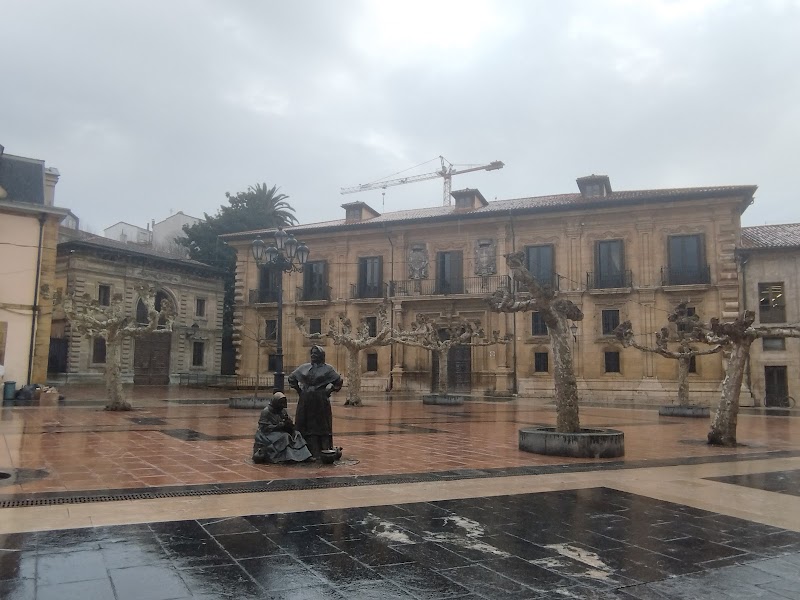
Palacio del Marqués de San Feliz

| Address | Pl. Daoiz y Velarde, 9, 33009 Oviedo, Asturias |
|---|
| Maps | Click here |
|---|
| Website | Click here |
|---|
| Opening Hours | Monday: Open 24 hours
Tuesday: Open 24 hours
Wednesday: Open 24 hours
Thursday: Open 24 hours
Friday: Open 24 hours
Saturday: Open 24 hours
Sunday: Open 24 hours |
|---|
| Phone | — |
|---|
Seokjin Ham★★★★☆
This palace was built in the late 18th century and originally belonged to the noble San Féliz family. It is a beautiful architectural work that combines Rococo and Neoclassical styles, symbolizing the elegant and refined lifestyle of the nobility in Oviedo at the time. Today, it serves as a venue for cultural events and public gatherings.
Radko Shopov★★★★★
Considered as one of the best preserved barrocco building in Oviedo Co stracted in 18th century. An excellent example of Oviedo past glory.
Bea Ski★★★★★
Nice square to visit
Arcangelo Cutolo★★★☆☆
I found the square where this beautiful building is located really dirty, so despite the beautiful facade, I feel compelled to remove two stars. There are very few attractions in Oviedo, so I would expect a little more attention.
Foncalada's Fountain

| Address | C. Foncalada, s/n, 33001 Oviedo, Asturias |
|---|
| Maps | Click here |
|---|
| Website | Click here |
|---|
| Opening Hours | Monday: Open 24 hours
Tuesday: Open 24 hours
Wednesday: Open 24 hours
Thursday: Open 24 hours
Friday: Open 24 hours
Saturday: Open 24 hours
Sunday: Open 24 hours |
|---|
| Phone | 984 49 37 85 |
|---|
Grá Ní Bhroin★★★★★
The veil is very thin here. Not only is it steeped in history but there is something else in the air. As an Irish Celt I am very spiritually grounded in thin places and I felt the presence of the ancestors here. I was walking about on my first day in Oviedo and was 'called' down here.
It's a great place to sit in reflection and absorb the energy at the entrance to the underground springs. Supposedly built around the Roman times, there is something much deeper and underground that came long long before.
Urban Traveler★★★★☆
Ancient fountain of medieval Oviedo still with water
Seokjin Ham★★★★☆
Built around the 9th century during the reign of Alfonso III, this medieval fountain is one of the oldest functioning water facilities in Europe. It features architectural elements of the Asturian Pre-Romanesque style and is adorned with Christian cross motifs. Once a crucial water source for the citizens of Oviedo, it continues to flow water to this day.
Vladimir Titin★★★☆☆
Original 9th century fountain, one of the few well preserved and in use examples of high medieval civil architecture. Difficult to park nearby, better to walk.
Patrice Kerremans★★★★★
Well conserved construction of the ninth century. Supposedly one of the oldest (still erect) civil constructions in Europe. It's a nice little gem if you like history and are in the neighborhood.
Acueducto de los Pilares

| Address | C. los Pilares, 33012 Oviedo, Asturias |
|---|
| Maps | Click here |
|---|
| Website | Click here |
|---|
| Opening Hours | Monday: Open 24 hours
Tuesday: Open 24 hours
Wednesday: Open 24 hours
Thursday: Open 24 hours
Friday: Open 24 hours
Saturday: Open 24 hours
Sunday: Open 24 hours |
|---|
| Phone | — |
|---|
Nanita★★★★☆
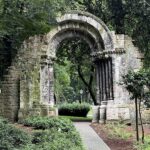
The Acueducto de Los Pilares consists of five arches. It dates back to the 16th century when it carried water into the city. Impressive how it is right there next to modern day living.
Vincent Oliver★★★☆☆
A short section (50m?) remaining of the aquaduct. Not much else to see. There is much more to see elsewhere. Unless you are an aquaduct addict...😉😄
Iulia Jipa★★★★★
Old piece of bridge/aquaduct with a nice view in the back, towards some stairs
Antje Hassler★★★★★
Interesting
Silvia Yvonne★★★★☆
The Forgotten Aqueduct
Remains of the Oviedo Aqueduct (Los Pilares)
Walking along La Losa, it's hard not to glance to the side with nostalgia at the sight of only a few arches still standing. The Oviedo Aqueduct, known as Los Pilares, largely unknown to many, was one of the city's great architectural gems. Built between the 13th and 14th centuries, its demolition at the end of the 19th and beginning of the 20th centuries deprived Oviedo of one of its most valuable historical structures.
Today, we can only look at what remains and, above all, at what is no longer there, while the city walks on the absence of a structure that would have been a unique symbol of its past.
The arches that endure remind us that as the centuries pass, we will yearn for what we can replace today without a second thought. A lesson in stone about the fragility of what we take for granted.
Oviedo Archiepiscopal Palace

| Address | Pl. Corrada del Obispo, 1, 33003 Oviedo, Asturias |
|---|
| Maps | Click here |
|---|
| Website | Click here |
|---|
| Opening Hours | — |
|---|
| Phone | 985 20 74 72 |
|---|
Ladelamanofurada★★★★☆
Episcopal Palace (16th century), in the Plaza Corrada del Obispo, Oviedo (Asturias). The previous building—of which some Romanesque openings remain—was destroyed in the fire that ravaged part of the city of Oviedo in 1522. It was burned down again during the revolutionary events of October 1934. Rebuilt in 1942, the east façade was modified, although the main entrance was maintained, with its large door and episcopal coat of arms beneath a projecting balcony with ironwork, a cross of angels, and the coats of arms of King Philip II of Spain, the cathedral chapter, and Bishop Diego Aponte Quiñones (1585–98), the patron. The south façade, facing Calle Canóniga and preceded by a garden with a well, bears the coat of arms of Bishop Juan García Avello Castrillón (1730–44). Promoter of the Transit of Santa Bárbara (1734), arch with gallery connecting the north facade to the cathedral. Central courtyard with Tuscan columns, a renovation by Bishop Ramón Martínez Vigil (1884-1904), based on an original from the time of Bishops Juan Daza (1498-1502) and Diego de Muros (1512-26). Chapel with Baroque altarpiece (18th century). Archbishop's residence, diocesan offices, and historical archive.
Francisco Hevia★☆☆☆☆
While all the flags in Oviedo fly at half-mast for national mourning, the bishopric raises them fully. I wonder, and I ask you, with all due respect, why?
Juan Suárez★★★★★
The heart of the Archdiocese of Oviedo, and despite what one might expect from an "administrative" building, a place where peace, tranquility, and calm prevail. Architecturally understated, yet its style is in keeping with the surrounding buildings.
From the interior courtyard, one can enjoy a beautiful view of the Cathedral tower. Inside, sobriety reigns, along with elegance, amidst a mix of stately and more contemporary rooms.
Falo BravoMontoya★★★☆☆
Very interesting. It works very differently than before; with the new rules, it's worth hiring a volunteer who will do the research on your behalf for a private fee. Doing it yourself with the new system is difficult, even if you know what you're doing.
I agree with the recent reviews; it's not like it was in the time of Reverend Mr. Vallina. It depends on who you are; that's how you're treated. Is it worth paying a researcher, or is that what they push you to do?
Mª Antonia Alvarez★☆☆☆☆
Good afternoon. As a parishioner from Oviedo and currently attending the parish of Ribadesella, I wish to express my strong disagreement with the management of this parish. Despite being in the midst of a pandemic (as in the rest of Spain), they have taken the initiative to implement a "full capacity" policy and restrict access to parishioners, which is not entirely accurate, since there is space inside the church while maintaining proper social distancing.
I think it's fine that they have ushers in the church, like in movie theaters... But at the very least, the way they address parishioners should be more courteous. Finally, I express my dissatisfaction with the treatment I received. I will refrain from attending this parish for the remainder of the summer, as will the rest of my family and acquaintances, to whom I will inform about what happened.
At the end of the service, everyone rushes out... through the main door, which is the one indicated by the usher and the priest.
Greetings... Just to say something.
Church of San Miguel de Lillo

| Address | Av. de los Monumentos, 33194 Oviedo, Asturias |
|---|
| Maps | Click here |
|---|
| Website | Click here |
|---|
| Opening Hours | Monday: Closed
Tuesday: 9:30 AM – 1:00 PM, 3:30 – 7:30 PM
Wednesday: 9:00 AM – 1:00 PM, 3:30 – 7:30 PM
Thursday: 9:00 AM – 1:00 PM, 3:30 – 7:30 PM
Friday: 9:00 AM – 1:30 PM, 3:30 – 7:00 PM
Saturday: 9:00 AM – 1:00 PM, 3:00 – 7:30 PM
Sunday: 9:00 AM – 1:00 PM, 3:30 – 7:00 PM |
|---|
| Phone | 985 11 49 01 |
|---|
Trang Nguyễn★★★★★
Small but very nice church on the hill for a little hike from oviedo. Fresh air, quiet surrounding. Unfortunately it was not open but still nice to have a visit.
illegal shift, replay the down★★★★★
Oviedo Spain in Asturias is a very special place that seems to call out to me. When you discover quiet places in solitude with practically living-stone walls all to yourself you will never forget. This kind of experience on a lonely trail in the off-season, and with perfect weather, is the wonder of Asturias.
A L★★★★☆
A beautiful and well-maintained monument—rich in history and definitely worth a visit. It’s a great piece of heritage that stands out. Just a heads-up: there’s no parking nearby, so plan ahead. Otherwise, a lovely spot!
Seokjin Ham★★★★★
Originally a much larger church, part of it collapsed due to a landslide in the 12th century. The remaining sections of the structure were preserved, with some of the fallen parts reattached. Like Santa María del Naranco, it was built around 848 AD and originally served as a royal chapel for King Ramiro I. The building follows the Asturian Pre-Romanesque style, featuring notable reliefs and carvings on the stone doorframes and walls. Inside, there are Byzantine-style murals and decorations. Photography is not allowed inside. Since access to the interior is only possible through a guided tour, so it is advisable to queue in front of Santa María del Naranco first, and visit this church afterward at the appropriate time. Keep in mind that the guide speaks only Spanish.
Nanita★★★★☆
Known as “Samiguel de Lliño” in the local dialect, Iglesia San Miguel de Lillo was built in the mid-800s. This historic church, which is a UNESCO world heritage site due to its pre-Romanesque architecture & history, can be visited in conjunction with guided tours of the neighboring church / palace Iglesia Santa Maria del Naranco (€4 entrance fee for guided tour of both churches that lasts 30 to 45 minutes). It is a small church that has intricate carvings similar to the ones at the neighboring church and also has remains of a mural that depict shapes and humans. Photography is not permitted inside the church and carrying bags / backpacks (anything that can accidentally touch the walls) is discouraged. The walk from Iglesia Santa Maria del Naranco is less than five minutes; the walk from the center of Oviedo is approximately an hour - there are nice views of the city if you walk up though it is possible to drive.
Iglesia de Santa María del Naranco

| Address | Monte Naranco, s/n, 33012 Oviedo, Asturias |
|---|
| Maps | Click here |
|---|
| Website | Click here |
|---|
| Opening Hours | Monday: 10:00 AM – 12:30 PM
Tuesday: 10:00 AM – 2:30 PM
Wednesday: 10:00 AM – 2:30 PM
Thursday: 10:00 AM – 2:30 PM
Friday: 10:00 AM – 2:30 PM
Saturday: 10:00 AM – 2:30 PM
Sunday: 10:00 AM – 12:30 PM |
|---|
| Phone | 638 26 01 63 |
|---|
Riury Rodríguez★★★★★
Astonishing place to visit while in Oviedo. The preromanic buildings are an amazing piece of Asturias history. In Mount Naranco you will find two buildings, Santa María and San Lillo, both amazing for their structure and stones. A bit more higher, you can reach the Christ Monument of Naranco. A sort of Corcovedo Jesus Christ of Rio de Janeiro. Around there are a lot of paths for practicing senderism. The sights of Oviedo city are unique. There are also several restaurants with amazing traditional dishes.
Trang Nguyễn★★★★★
Small but very old and historical, located in the middle of the trail way with a stunning view of all Oviedo. Although we couldn’t get it but we could still see inside through the window.
Graciela Pacheco★★★★☆
It's a hike. So you need to be in hiking shape. Quite interesting and unique experience. This church is of the 9th century. While a lot has been lost with time, the center she'll remains and if you have an active imagination and a thirst for history you can see it all.
Varto Basmajian★★★★☆
Beautiful palace turned to church only a few minutes drive from Oviedo city center.
A must if your in the area
Little Gem★★★★★
Beautiful, so peaceful. They do tours at certain times. We went at 13.30, the tour includes both Santa Maria del Naranco and San Miguel de Lillo. The guide was very knowledgeable. It's definitely worth a visit.
Plaza del Paraguas

| Address | C. Ecce-Homo, 10, 20, 33009 Oviedo, Asturias |
|---|
| Maps | Click here |
|---|
| Website | Click here |
|---|
| Opening Hours | Monday: Open 24 hours
Tuesday: Open 24 hours
Wednesday: Open 24 hours
Thursday: Open 24 hours
Friday: Open 24 hours
Saturday: Open 24 hours
Sunday: Open 24 hours |
|---|
| Phone | — |
|---|
Nanita★★★☆☆
Plaza del Paraguas is a quiet public square in the old historic center of Oviedo.
Luis Menendez★★★★★
Beautiful, sunny and quaint. Oviedo's old town is not to be missed. The food at Meraki is really good and Raquel, the waitress, is possibly the best in town. Wonderful city, wonderful Plaza del Paraguas. I dream of going back
Federico Guillemi Diaz★★★★★
Nice place. Sometimes live music, always crowded bars arround.
Frédéric★★★★★
Nice place quiet but in the old town
Colm MacDonncha★★★★★
Very authentic Indian cuisine. Delicious! 😋
Velarde Palace

| Address | C. Sta. Ana, 1, 33003 Oviedo, Asturias |
|---|
| Maps | Click here |
|---|
| Website | Click here |
|---|
| Opening Hours | — |
|---|
| Phone | — |
|---|
Nanita★★★★☆
Palacio Velarde is part of the Museo de Bellas Artes (museum of fine arts). In this part of the palace museum, there are temporary exhibits as well as permanent ones. Spanish artist masters including Goya and El Greco have works that can be seen here as well as other more local artists from Asturias. Palacio Velarde is a beautiful building itself and is well worth a visit. Entrance is free.
Arseny Gutov★★★★★
Really nicely built museum, must visit in Oviedo
Mike McD★★★★★
Highly recommended! Nice art and architecture throughout. Especially since it’s free, on Sunday it was anyway. My only comment was the mean look I got from the lady at the entrance.
Matthias Pychlau★★★★★
A very big and diverse museum, full of surprises. You start in an ancient palace in a small street and get out in a modern wing builds on Roman remains facing a beautiful plaza. On your way you come across early Renaissance art, a collection of El Greco and a life size portrait by Goya plus a dozen of his drawings. Also it’s free!
Diego F.A.★★★★★
The Velarde Palace is the original location of the Museum of Fine Arts of Asturias, considered one of the best art galleries in the country, exhibiting works by such important artists as Berruguete, Zurbarán, Murillo, Goya, and Sorolla. A few years ago, the museum expanded with buildings located on the nearby La Rúa street, gaining not only more exhibition space but also a new entrance on the Plaza de la Catedral. Personally, I recommend visiting the museum through the Velarde Palace entrance, which is more striking, with its interior courtyard and monumental staircase where you can admire the Altarpiece of Saint Marina as a spectacular welcome. Once you have seen this part of the museum, you can access the extension without going outside, via a connecting passage on the upper floor that links the two buildings. Interestingly, admission to this museum, so rich in works of art, is free. Don't miss it!
Oviedo Cathedral Tower

| Address | C. del Águila, 1, 33003 Oviedo, Asturias |
|---|
| Maps | Click here |
|---|
| Website | Click here |
|---|
| Opening Hours | — |
|---|
| Phone | — |
|---|
Colleen J★★★★★
A fantastic one hour guided tour up the cathedral tower with plenty of time to admire the cathedral itself and the views that can be enjoyed from it. On booking we had been told it would be a Spanish language tour. We were fortunate to have Alejandro as our guide who gave the tour in both Spanish and English which made the experience even more enjoyable. Gracias Alejandro!
Sara González★★★★★
A highly recommended visit to the tower of Oviedo Cathedral. A fantastic experience to learn more about the monument and enjoy incredible views of the city.
And the guide, Carmen, was very professional, making the visit enjoyable and interesting.
Roberta Cassone★★★★★
The tower is beautiful, and the guided tour was very interesting. Our guide, Carmen, was kind, clear, and very friendly! She told us the history of the tower and provided some fun facts about its construction and historical events. The tour lasts an hour, and the 184 steps are climbed in three stages (so it's not strenuous overall), but the staircase is a narrow spiral with smooth stone steps, so it might be difficult for those who struggle with cramped spaces or have mobility issues. The view of the cathedral's rooftops and the main square is beautiful and worth the climb. The tour is only in Spanish, but I think even the two English-speaking visitors in my group who didn't speak Spanish enjoyed it (use a translator, don't miss the chance to climb the tower!). Highly recommended! NB: Booking in advance on the Cathedral's official website is mandatory if you don't want to risk missing out on one of the 15 spots available for each tour (there aren't many tours per day).
Carmen OC★★★★★
A must-see if you're in Oviedo.
We got tickets to climb the tower first thing in the morning on a weekday, and it was well worth it.
We were alone with the guide (Miguel), who made the climb enjoyable with three stops. His explanations were very interesting, and it was clear he knew the city's history inside and out and was passionate about it, which was much appreciated.
When you get to the top, it's worth it because the views are beautiful.
Lucrezia Castellaneta★★★★★
It's worth a visit. Tickets cost 10 euros online or 8 euros at the cathedral ticket office. If you also purchase a visit to the cathedral, which I highly recommend, it costs only 4 euros.
Camposagrado Palace

| Address | Pl. Porlier, 3, 33003 Oviedo, Asturias |
|---|
| Maps | Click here |
|---|
| Website | Click here |
|---|
| Opening Hours | Monday: Open 24 hours
Tuesday: Open 24 hours
Wednesday: Open 24 hours
Thursday: Open 24 hours
Friday: Open 24 hours
Saturday: Open 24 hours
Sunday: Open 24 hours |
|---|
| Phone | — |
|---|
antonio★★★★★
The Camposagrado Palace is a magnificent example of 18th-century Baroque architecture in Oviedo, located in the heart of the city's historic center. Its imposing stone façade and elegant architectural design reflect the power and wealth of the Asturian nobility of the time. It currently houses the High Court of Justice of the Principality of Asturias, but its exterior remains an extraordinary testament to Baroque splendor and a fundamental element of Oviedo's architectural heritage. It is an essential stop for anyone wanting to appreciate the city's history and art.
Lluis Higini Melero Peris★★★★☆
It is a Baroque-style palace with a central courtyard, located in Oviedo's Cathedral Square. The building dates from the mid-18th century and was commissioned by the 3rd Marquis of Camposagrado. It has been declared a Site of Cultural Interest in the category of Monument. Situated in Porlier Square, next to the Cathedral, it has housed the High Court of Justice of Asturias since 1989.
Javier C.★★★★★
The Composgrado Palace dates back to 1698, when the Bernaldo de Quirós family began a series of renovations on their properties, including the land where the building stands. The renovations were initially commissioned to Pedro Fernández Lorenzaga and Domingo Suárez Solar, whose proposal included the construction of a new building on the same site, a proposal that was rejected. It wasn't until 1719 that the architect Francisco de la Riva began construction on a new building commissioned by the Marquis of Composgrado, completing the foundations and facades, which were similar to the Palace of the Duke of Parque. Construction was resumed by the architect Pedro Antonio Menéndez de Ambás in 1744, with most of it being completed in 1752. Although it is known as the Camposagrado Palace, it is hardly representative of that noble title, because its owner only began to use it in the last nine years of his life, his children were not born there, and his grandson, the fifth Marquis of Camposagrado, the only one born there, married and lived in Barcelona where he is considered a prominent figure in the city, dying without descendants.
G. C.★★★★★
A historic building that stands out for its imposing Baroque façade and its location in the heart of the city.
Although it's not always open to the public, it's worth visiting to appreciate its architectural details and its importance in local history.
A place that adds character and elegance to Oviedo's old town.
Ladelamanofurada★★★★★
Camposagrado Palace (17th-18th centuries), in Plaza Porlier, between the university and the cathedral. In 1698, Don Gutierre Bernaldo de Quirós de las Alas Carreño (1635-99), 1st Marquis of Camposagrado - a title granted in 1661 by King Philip IV of Spain (1621-65) to the 10th Lord of Camposagrado - of the high Bernaldo de Quirós lineage, commissioned the project to the architects Pedro Fdez Lorenzana and Domingo Suárez Solar for this plot of land on his property, but they did not like it and it was rejected. Construction resumed between 1719 and 1728, commissioned by the second Marquis, José Manuel Bernaldo de Quirós y Huergo, according to a Baroque design. The Cantabrian architect Francisco de la Riva Ladrón de Guevara (1686-1741) laid the foundations and the ground floor, including the beginning of the façades, in a style similar to the Oviedo palace of the Duke of Parque. The completion of the building was not contracted until 1744-1757 to the Candás-born architect Pedro Antonio Menéndez de Ambás (1716-1790). The final client, José Manuel Bernaldo de Quirós y Mariño de Lobera (1706-1776), the third Marquis of Camposagrado (1755-1776), only occupied the palace towards the end of his life. It has a rectangular floor plan around a central courtyard and two entrances: one in Plaza Porlier and the other on Calle San Juan, opposite the Valdecarzana Palace. Originally intended to house the Provincial Court, it was burned down during the October 1934 revolution and subsequently rebuilt. Today it houses the High Court of Justice of Asturias (1989).
Estatua de Woody Allen

| Address | C. Milicias Nacionales, 1, 33003 Oviedo, Asturias |
|---|
| Maps | Click here |
|---|
| Website | Click here |
|---|
| Opening Hours | Monday: Open 24 hours
Tuesday: Open 24 hours
Wednesday: Open 24 hours
Thursday: Open 24 hours
Friday: Open 24 hours
Saturday: Open 24 hours
Sunday: Open 24 hours |
|---|
| Phone | — |
|---|
Mona Wang★★★★★
Vicky Cristina Barcelona is the reason I discovered Oviedo and came here, and I can’t blame Woody Allen. It’s a lovely town
Seokjin Ham★★★★☆
It is a statue dedicated to the famous American film director Woody Allen, installed in Oviedo in honor of his connection to the city. In 2008, part of his film Vicky Cristina Barcelona was filmed in Oviedo, and he praised the beauty of the city.
Pinball Wizard★★★★★
During a vacation in Bilbao, we felt it's the right choice to visit the statue of Woody ( whose movies we love).. its a well made statue and it's the closest I will meet Woody 😂
Not sure if the visit was worth it as the rest of the city didn't really impress me. Nonetheless the scenery between Bilbao and Oviedo was so beautiful!
Barry Girgis Tascón★☆☆☆☆
I feel uncomfortable that Oviedo continues to honour Woody Allen with a statue given the controversies surrounding him. I think Oviedo city council should reconsider whether this monument reflects current values.
Balazs Kadar★★★★☆
Fav director in him favor town
Judería de Oviedo

| Address | Pl. Porlier, 33003 Oviedo, Asturias |
|---|
| Maps | Click here |
|---|
| Website | Click here |
|---|
| Opening Hours | Monday: Open 24 hours
Tuesday: Open 24 hours
Wednesday: Open 24 hours
Thursday: Open 24 hours
Friday: Open 24 hours
Saturday: Open 24 hours
Sunday: Open 24 hours |
|---|
| Phone | — |
|---|
Victoria Martinez★★★★★
Wonderful city
Tips for Visiting Historical Attractions in Oviedo
To make the most of your historical tour, a little preparation goes a long way. Oviedo is a city that rewards those who take their time, but practical considerations can significantly enhance your experience. The following tips are designed to help you navigate the city’s heritage sites with ease, ensuring you spend less time worrying about logistics and more time soaking in the atmosphere.
1. Time Your Visit Around the Cathedral Hours
The San Salvador Cathedral is the centerpiece of Oviedo, but its opening hours for the museum, cloister, and the Holy Chamber can vary by season and religious holidays. Check the official schedule for the day you plan to visit, as midday closures (siesta) are common. Arriving early in the morning allows you to enjoy the interior with fewer crowds and better lighting for photography.
2. Purchase a Combined Museum Pass
If you plan to visit multiple paid attractions, such as the Archaeological Museum of Asturias and the Museum of Fine Arts, look into combined tickets or regional tourist passes. The Oviedo Tourist Card often provides discounts on entry fees and public transport. This can save you money and time spent waiting in separate ticket lines.
3. Dress in Layers and Prepare for Rain
Oviedo’s climate is famously variable, often experiencing "four seasons in one day." Even in summer, a sudden drizzle is common. Wear comfortable, waterproof walking shoes because the historic center is paved with polished stone that can become slippery when wet. Carrying a compact umbrella or a light rain jacket ensures a sudden shower won’t interrupt your exploration of the outdoor squares and facades.
4. Respect the Religious Nature of the Sites
Many of Oviedo’s most important historical attractions, including the pre-Romanesque churches on Mount Naranco, are active places of worship or sacred spaces. While tourism is welcomed, modest dress is appreciated, and loud conversation should be avoided inside. Photography is often allowed, but always check for signs indicating restrictions, particularly during mass or services.
5. Explore on Foot and Use the "Casco Antiguo" as Your Base
Oviedo’s historical center is largely pedestrianized, making walking the most efficient and enjoyable way to get around. Park your car outside the old town and navigate on foot. Many attractions are within a five-to-ten-minute walk of each other, and getting lost in the winding streets often leads to discovering charming cider houses and hidden chapels not listed in guidebooks.
6. Learn the Story of the Sudarium
Before visiting the Cámara Santa in the cathedral, take a moment to read about the Sudarium of Oviedo. This relic, believed by many to be a cloth wrapped around the head of Jesus Christ, is central to the city’s identity. Understanding its historical significance and the ongoing scientific debates surrounding it will make your visit to the Holy Chamber far more meaningful than simply glancing at a piece of ancient cloth.
Oviedo is a city that stays with you long after you have left its cobblestone streets. The weight of its history is balanced by the warmth of its people and the vibrancy of its culinary scene, creating a travel experience that feels both profound and joyful. Whether you are marveling at the engineering of the Naranco monuments or simply enjoying a quiet moment in the Cathedral square, you are participating in a story that has been unfolding for over a millennium.
As you plan your itinerary, remember that the true value of these historical attractions lies not just in their age, but in their ability to connect us to the human hands and minds that built them. Oviedo invites you to slow down, look up at the ancient stonework, and listen to the echoes of the past that still resonate clearly in the heart of Asturias.
Freya Belle is a content writer and travel journalist specializing in European destinations. With experience exploring over 30 European countries, she focuses on providing in-depth guides to authentic cuisine, historical culture, and hidden gems often overlooked by mainstream tourists. Her writing helps travelers experience Europe like a local.