Toulouse rarely needs an introduction for lovers of architecture, aviation, or southwestern French cuisine, yet its historic depth often surprises first-time visitors. Known as La Ville Rose for its distinctive terracotta brick facades, the city carries more than two thousand years of layered history, from Roman settlements to medieval trade empires. Walking through its compact center feels like turning the pages of a living textbook, where every square and narrow lane reveals a different era of prosperity and artistic ambition.
Unlike many French cities that showcase a single dominant architectural period, Toulouse offers a remarkable chronological diversity. Romanesque basilicas stand within minutes of Gothic palaces, Renaissance courtyards hide behind austere medieval walls, and industrial heritage sites now serve as cultural venues. This variety makes the city particularly rewarding for travelers who want to understand how urban spaces evolve over centuries without needing to travel far between landmarks.
The city’s historic wealth stems largely from its role in the pastel trade, which brought immense fortunes to local merchants during the fifteenth and sixteenth centuries. That economic golden age funded the construction of grand townhouses, ornate churches, and public buildings that still define the cityscape today. Visitors who look closely at the brick and stone details will notice the symbols of wealth and civic pride embedded in nearly every facade.
Practical exploration is straightforward because most major historic sites sit within a walkable radius on the right bank of the Garonne River. A well-planned itinerary can connect Roman ruins, medieval religious monuments, and Renaissance mansions in a single afternoon. The city’s metro and bus network also provides easy access to slightly farther landmarks, including aerospace heritage sites that tell a more recent but equally significant story.
For history enthusiasts, Toulouse rewards slow travel and curiosity. Many of the most memorable experiences happen not only inside ticketed monuments but also in the quiet moments between them—peering through an iron gate at a hidden courtyard, noticing a sculpted doorway, or pausing under the vaulted ceiling of a neighborhood church. The following guide highlights fifteen essential historic sites that capture the city’s identity.
This selection balances iconic landmarks with lesser-known treasures to offer a complete picture of Toulouse’s heritage. Each site has been chosen for its historical significance, architectural quality, and accessibility to visitors. Whether you have one day or a full week, these places provide a strong foundation for understanding what makes the Pink City unique.
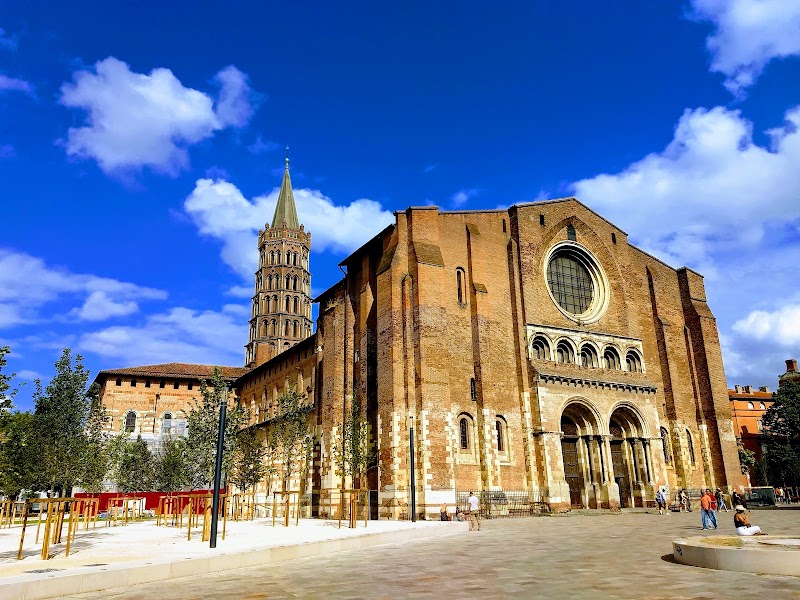
Basilique Saint-Sernin de Toulouse

| Address | Basilique Saint-Sernin de Toulouse, 7 Pl. Saint-Sernin, 31000 Toulouse |
|---|
| Maps | Click here |
|---|
| Website | Click here |
|---|
| Opening Hours | Monday: 8:30 AM – 6:00 PM
Tuesday: 8:30 AM – 6:00 PM
Wednesday: 8:30 AM – 6:00 PM
Thursday: 8:30 AM – 6:00 PM
Friday: 8:30 AM – 6:00 PM
Saturday: 8:30 AM – 6:00 PM
Sunday: 10:00 AM – 5:30 PM |
|---|
| Phone | 05 61 21 80 45 |
|---|
Brighton Nelson★★★★★
It's always a little weird to review a religious place, but anyway 😂
This is an absolutely wonderful cathedral! While it's not quite the Notre-Dame in Paris or the Saint-Marie in Marseille, it's my favorite homey cathedral I've visited in France. The one I'd most want to actually worship in, if that makes sense. The crypt was cool, there was a lot of unique history things to read that I wish I'd have gotten more time to study, and plenty of winding rooms with awesome spiritual displays. I'm not Catholic, but I love the peace a good cathedral can bring. Loved this one!
Liu-Ti Perfaid★★★★★
Wonderful! Really cool Romanesque Basilica, very grand.
Unique opportunity to see some great art, as well as visit a crypt.
Would visit again, definitely a must-see of Toulouse.
Daniel Dugan★★★★★
This is a church which is at once a sacred space as well as a historical space. The leadership of this church does an amazing job of welcoming guests who approach from either perspective. I was thrilled with the quantity of information about the purpose and construction of the Basilica. I also found the church an easy place to spend some quiet moments. If you go no where else on your visit to Toulouse, experience of this nearly thousand year-old church will leave an impression.
Justin Hikade★★★★★
Basilique Saint-Sernin
A hidden masterpiece in Toulouse that rivals Europe’s great cathedrals.
We stumbled upon this basilica during our visit and were genuinely surprised by its scale and atmosphere. Built in the Romanesque style, it’s one of the largest churches of its kind in Europe—and it feels both monumental and peaceful at the same time.
What makes it special is its history: it’s often called a “second Rome” due to the large number of relics and saints associated with it. The crypt holds numerous remains, and tradition even claims connections to royal relics like the Thorns Crown. Whether or not all legends hold true, the sense of history is undeniable.
Inside, the warm stone, high arches, and quiet light create a very contemplative mood. For me personally, only Sagrada Família surpassed it—but that’s a very high bar.
Tip: Don’t skip the crypt—it’s easy to miss but adds a completely different layer to the visit.
Verdict: A must-see in Toulouse, especially if you appreciate history and authentic, less crowded landmarks.
Adalbertus von Malapane★★★★★
Saint-Sernin in Toulouse is the sort of church that reminds you the Middle Ages were not subtle. Massive, austere, built of warm pink brick that glows gently in the southern French light, it rises above the city less like a cathedral and more like a theological fortress. Officially, it is one of the greatest Romanesque churches in Europe, a UNESCO-listed masterpiece and an essential stop on the pilgrimage route to Santiago de Compostela. Pilgrims once arrived here exhausted, dusty, spiritually ambitious, and probably smelling rather alarming after crossing half of medieval Europe on foot.
The basilica was built largely during the 11th and 12th centuries to accommodate these endless waves of travellers and the ever-growing collection of relics. Medieval Christianity, after all, functioned partly on faith and partly on logistics. Saint-Sernin perfected both. The vast nave, radiating chapels, and carefully planned ambulatory allowed pilgrims to circulate efficiently without excessively interrupting liturgical life — essentially the medieval equivalent of crowd management engineering, only with more incense and fewer exit signs.
And then, inevitably, the familiar French ritual arrived: restoration. Centuries of modifications, damage, enthusiastic reinterpretations, and the quiet erosion of time had altered parts of the basilica. In the 19th century, Eugène Viollet-le-Duc entered the story — which is rather like inviting a brilliant but dangerously opinionated novelist to “edit” a historical manuscript. His understanding of authenticity was famously flexible. Medieval monuments, in his view, were not simply to be preserved, but completed according to what they should have been. Missing elements could be invented, inconvenient originals discreetly removed, and historical accuracy encouraged to cooperate with artistic conviction. Conservation, in his hands, became a curious blend of scholarship, imagination, and architectural fan fiction.
Yet Saint-Sernin offers one of the great plot twists in the long French relationship with Viollet-le-Duc. In the 1970s, the basilica underwent another major restoration — this time largely to remove many of the additions and reinterpretations associated with his vision and to recover the church’s original Romanesque character. It was, in essence, a restoration of a restoration. Architectural criticism turned into architectural archaeology.
And still, this remains the exception rather than the rule. Most towns and monuments chose to preserve Viollet-le-Duc’s interventions, accepting them as part of the monuments’ own historical evolution. After all, his influence extended far beyond restoration. He became, almost accidentally, one of the intellectual fathers of Art Nouveau. Hector Guimard, Frank Lloyd Wright, Antoni Gaudí — all acknowledged some debt to his imagination. One could probably add the set designers of Game of Thrones without causing much controversy.
As a result, Saint-Sernin escaped the more theatrical excesses inflicted elsewhere and still retains an extraordinary sense of Romanesque gravity. What makes the place remarkable is precisely this absence of spectacle. Unlike Gothic cathedrals that strive upward toward heaven in explosions of stained glass and vertical ambition, Saint-Sernin feels grounded, almost stubbornly human. It does not seduce visitors with drama. It wins them slowly — through silence, proportion, worn stone, and the quiet confidence of a building that has seen nearly a thousand years of humanity pass beneath its arches and remains entirely unimpressed by modern urgency.
Place du Capitole

| Address | JC3V+P8, 1 Rue Ernest Roschach, 31000 Toulouse |
|---|
| Maps | Click here |
|---|
| Website | Click here |
|---|
| Opening Hours | Monday: Open 24 hours
Tuesday: Open 24 hours
Wednesday: Open 24 hours
Thursday: Open 24 hours
Friday: Open 24 hours
Saturday: Open 24 hours
Sunday: Open 24 hours |
|---|
| Phone | 05 17 42 31 31 |
|---|
Brighton Nelson★★★★★
I don't know if I've ever been in a capitol building that is this beautiful! Not that I visit an excessive amount of capitol buildings, but it is practically the l'Ouvre 2.0 without having any need to look that wonderful. It's so beautiful! The wall murals, the statues that have so much texture, and the incredible history behind it... They all come together to make a place you must visit in Toulouse, especially on a hot day where you need something to cool you off!
Karin Hunter★★★★★
Check the schedule before you go. Seemed like you needed to enter at least 30min before close. Free admission. Lovely galleries. Thoroughly enjoyed the experience, especially the Henri Martin room. Not very big, but packs a punch within each section.
Belinda Worland★★★★★
Beautiful building and stunning paintings on the walls (literally painted on the walls not paintings hung on the walls. I'm not an art person but I particularly liked the work by Henri Martin. A short wait but worthwhile because they only allow a limited number of people entry at a time so it can be enjoyed without being overcrowded. Be prepared for a security bag check also. A very interesting and enjoyable experience in Toulouse.
Liu-Ti Perfaid★★★★★
Beautiful! Felt both usable and ornamental at the same time, a wonderful balance of elegance and authority, a real gem on the eyes.
And free to enter! 10/10 would recommend again, must visit if you come to Toulouse.
Erica NH★★★★☆
It is free to enter, so it’s worth having a look about. It’s not so big, but there are some nice paintings and the area for municipal meetings.
Saint-Etienne Cathedral

| Address | Pl. Saint-Étienne, 31000 Toulouse |
|---|
| Maps | Click here |
|---|
| Website | Click here |
|---|
| Opening Hours | Monday: 8:00 AM – 7:00 PM
Tuesday: 8:00 AM – 7:00 PM
Wednesday: 8:00 AM – 7:00 PM
Thursday: 8:00 AM – 7:00 PM
Friday: 8:00 AM – 7:00 PM
Saturday: 8:00 AM – 7:00 PM
Sunday: 9:00 AM – 7:00 PM |
|---|
| Phone | 05 61 52 03 82 |
|---|
Marcus Hurley★★★★☆
The cathedral is in a large square and is a strange mix of stonework and brick. The interior is fantastic, brightly painted frescoes decorate almost every wall. Admission is free and the experience is wonderful, a sense of joy in the building rather than the stark asceticism of northern European cathedrals.
Gaber Zidar★★★★☆
The church is currently beeing under partly restoring its half nave, so you can't see the whole of it. The side altars almost all dated from 19. century are very poorly maintained. The main one is baroque one. Its stalls are a bit dusty. There are some water pipes in the squere of chatedral. They have maighty organs that are popping out or the wall. It was not that quiet and tranquille, due restauration inside.
Zsolt Elekes★★★★★
A straight, impressive church both from the outside and inside, with massive columns, numerous side chapels, and beautiful wooden decorative elements. It is wonderful to walk around the choir area and also admire the asymmetry of the building’s architecture from the outside. Highly recommended for everyone.
G Mac★★★★★
A wonderful cathedral with an interesting history and fascinating juxtaposition of architectural styles. There is some major renovation going on in the red brick section of the building, so it was not possible to visit this area. But the main cathedral is wonderful with its soaring ceilings and vaulted archestruly stunning.
Liu-Ti Perfaid★★★★★
Sat in on the service on Sunday, very grand, very aura-full. Would recommend this place to anyone interested in architecture, or just a place to stay cool.
Couvent des Jacobins

| Address | Couvent des Jacobins, 10 Pl. des Jacobins, 31000 Toulouse |
|---|
| Maps | Click here |
|---|
| Website | Click here |
|---|
| Opening Hours | Monday: Closed
Tuesday: 10:00 AM – 6:00 PM
Wednesday: 10:00 AM – 6:00 PM
Thursday: Closed
Friday: 10:00 AM – 6:00 PM
Saturday: 10:00 AM – 6:00 PM
Sunday: 10:00 AM – 6:00 PM |
|---|
| Phone | 05 61 22 23 82 |
|---|
Mike Zito★★★★★
Built in 1229 in a beautiful pink Gothic style. Murals from the 13th century. The cloisters and gardens are a nice place to relax for a while.
Not to be missed in Toulouse-
G Mac★★★★★
Along with the cathedral, this is a must see in Toulouse. It is five euros for adults to enter, but it is absolutely worth it. With the restoration work that is going on the exterior. The entrance is via the refractory. In here, several of the lunettes have been removed from the walls and are being restored on the ground. The church chapter house and other areas are absolutely fascinating. There are many audiovisual guides which explain some of the amazing architecture and history. It would be very easy to spend an hour to two hours, marveling at this beautiful building.
Jacqueline Kenney★★★★★
This is an incredibly beautiful building. It’s worth taking a couple of hours just to enjoy the building aside from anything on display. The exhibitions are incredible and the acoustic for music amazing. The gardens are just so gorgeous. Make sure you allow enough time to visit.
Ryan Smith★★★★★
This is one of the more beautiful sites that we visited in Bath - the stained glass windows are lovely!
It was free to visit the church itself with only a 5 Euro charge each to visit the adjacent cloister.
Both are recommended and can be toured in about an hour.
Sofia Campos★★★★★
The Convent of the Jacobins in Toulouse is a beautiful and peaceful place. The interior is striking, with its elegant brick columns and calm atmosphere. Although the exterior is currently under renovation, it’s still well worth a visit. Built in the 13th century by the Dominican Order, it holds great historical and spiritual significance, especially as the resting place of Saint Thomas Aquinas.
Donjon du Capitole

aitz i★★★★★
Beautiful building with a turism office next to it
M Dikova★★★★★
It was really nice
Ilona Bensens★★★★★
The Capitole Keep is a truly beautiful monument that is well worth a visit. Its architecture is impressive and full of character. The black roof, with its bell tower and clock, gives it a distinctive look, almost reminiscent of a haunted mansion, which adds considerable charm to the whole structure.
The orange stone used to build the monument harmonizes perfectly with the dark roof and evokes the iconic colors of the magnificent city of Toulouse. Located on a beautiful square, the Keep blends seamlessly into the urban landscape and immediately catches the eye.
It's a must-see monument during a stay in Toulouse, both for its history and its remarkable aesthetics. I highly recommend a visit!
severine l★★★★★
A very beautiful building constructed in 1925. It has housed the tourist office since 1948. A must-see when visiting Toulouse.
Pont Neuf

| Address | Pont Neuf, 31400 Toulouse |
|---|
| Maps | Click here |
|---|
| Website | Click here |
|---|
| Opening Hours | Monday: Open 24 hours
Tuesday: Open 24 hours
Wednesday: Open 24 hours
Thursday: Open 24 hours
Friday: Open 24 hours
Saturday: Open 24 hours
Sunday: Open 24 hours |
|---|
| Phone | — |
|---|
Guilherme Reis★★★★★
Beautiful bridge in the middle of the city, bring a charming atmosphere to Toulouse. I definitely recommend it, also walking along the river or sitting by the river and enjoy the view. Near to many attractions, restaurants and hotels.
Sergio Ponce★★★★★
Just perfect, the view is very beautiful, it's worth sitting down to enjoy the scenery and grab a bite to eat.
Ionut Sendroiu★★★★★
It's about 400 years old, yet still called Pont Neuf (French for "New Bridge"). The quality of its design made it the only bridge in Toulouse to withstand the terrible flood of 1875, which destroyed all the other bridges in the city (although they were more recent).
It took almost a century to be completed (construction started in 1544 and finished in 1632) due to violent floods of the Garonne river. The bridge is not symmetrical because the left bank is several meters lower than the right bank.
Nowadays is an iconic landmark of the city, although the Triumphal Arch that used to decorate the bridge has been demolished in the 19C. Recommend crossing the bridge at sunset, walking or by bicycle, to enjoy the scenery.. I recommend crossing the bridge at sunset, walking or by bicycle, to enjoy the scenery.
Enjoy life★★★★★
Beautiful bridge which spans the Garonne's river and provides passage between the Esquirol and Saint-Cyprien districts, connecting the Rue de la République to the Rue de Metz. While construction began in the 16th century, it wasn't inaugurated until a century later, in 1632. The economic and political upheavals of the time, along with the globalization of the era, took their toll on the city's finances. It is one of the bridges that can be admired in all weather, from the Quai de Tounis or the Quai de la Daurade.
Despite its great age, it has withstood the numerous floods of a river that is often raging. Its seven wide, irregular arches benefit from the presence of spillways and cutwaters that stabilize its piers.
HE HUANG★★★★☆
"I visited Toulouse and its surrounding areas in October 2025, and the experience was truly memorable. Pont Neuf, just like the city of Toulouse itself, gives me a sense of peace and serenity. Compared to many other European big cities, it’s remarkably clean and well-maintained. Walking across the bridge and through the streets feels so relaxing and comfortable.
Chapelle des Carmélites

| Address | Chapelle des Carmélites, 1 Rue de Périgord, 31000 Toulouse |
|---|
| Maps | Click here |
|---|
| Website | Click here |
|---|
| Opening Hours | Monday: Closed
Tuesday: Closed
Wednesday: 10:00 AM – 7:00 PM
Thursday: 10:00 AM – 7:00 PM
Friday: 10:00 AM – 7:00 PM
Saturday: 10:00 AM – 7:00 PM
Sunday: 10:00 AM – 7:00 PM |
|---|
| Phone | 05 34 44 92 05 |
|---|
G Mac★★★★★
This is a small chapel, but it is certainly worth seeing. It has a plain exterior, but once you enter, you are overwhelmed by the richness of the paintings on the ceiling and walls. It’s beautiful vaulted arches give maximum space for the frescoes and they are quite beautiful.
Olga Istomina★★★★☆
The chapel's interior is charming thanks to the unique bright paintings on the ceiling and walls. Unfortunately, we had to admire this beauty only from the front door, since a modern installation was being prepared inside, and large screens blocked the view.
Erica NH★★★☆☆
Small. Some nice paintings and it’s free, but nothing super special.
Emily Bell★★★★☆
While the ceiling and walls of the main chapel were amazing, they were somewhat obscured by the modern art installations. I particularly liked that they had another room separate from the chapel with information about the history of the building and the Carmelite order.
Sofia Campos★★★★☆
The Chapelle des Carmélites is a small but truly stunning place in Toulouse. Originally part of a 17th-century Carmelite convent, the chapel is one of the city's hidden gems. Its richly decorated ceiling and beautiful frescoes create an atmosphere of peace and beauty. Though modest in size, it offers an impressive artistic and spiritual experience. A must-see for those who appreciate art, history, and quiet places.
Museum of Old Toulouse

| Address | 7 Rue du May, 31000 Toulouse |
|---|
| Maps | Click here |
|---|
| Website | Click here |
|---|
| Opening Hours | Monday: 2:00 – 6:00 PM
Tuesday: 2:00 – 6:00 PM
Wednesday: 2:00 – 6:00 PM
Thursday: 2:00 – 6:00 PM
Friday: 2:00 – 6:00 PM
Saturday: 2:00 – 6:00 PM
Sunday: Closed |
|---|
| Phone | 05 62 27 11 50 |
|---|
Y oo★★★★★
I loved this place! 🙂 quietly and calmly saw the paintings and antique objects of Toulouse, reflecting on its past and present. The old buildings were very beautiful, and the friendly staff welcomed me. Thank you.
Nizom Nadzir★★★★★
This is a well maintained and informative small museum dedicated to the history of old Toulouse. It's great for first time visitors to the city, as it's small enough that you could tour it in 30min and yet get a basic foundational understanding of the long history of Toulouse.
Ryan Smith★★★★☆
A small museum that we were able to tour in about an hour.
The staff are very friendly and helpful. There was also a binder in English with very detailed information for the exhibits.
There are some stairs if mobility challenged and watch your head going through some doorways if very tall..!
Ambró Stoics★★☆☆☆
Honestly it's hard to judge. It's only €5 so you might as well I guess, but the rooms lack cohesion, concept and context.
For example you have a room of pictures of old Toulouse. What this room needs is a big map on the wall showing where each of these would be situated in modern Toulouse, and pictures taken from the same views so you can see the difference.
You have a room with ceramics, you should put up some information about how and why the ceramic industry was important to Toulouse, how much it employed or exported at it's height, etc. This should be the bare bones of a museum.
But still, it is only €5 so you might as well I guess. Just don't expect anything amazing.
Fabio Ricardo Araujo da Silva★★★★☆
Very nice museum with lots of items and paintings. I bought the Toulouse Pass Tourisme, so the entrance was free. Had a bit of a hard time at the reception because staff didn’t speak English. Definition worth visiting.
Chapelle Saint-Joseph de La Grave

| Address | Rue du Pont Saint-Pierre, 31300 Toulouse |
|---|
| Maps | Click here |
|---|
| Website | Click here |
|---|
| Opening Hours | Monday: Closed
Tuesday: Closed
Wednesday: 11:00 AM – 6:00 PM
Thursday: 11:00 AM – 6:00 PM
Friday: 11:00 AM – 6:00 PM
Saturday: 11:00 AM – 6:00 PM
Sunday: 11:00 AM – 6:00 PM |
|---|
| Phone | 05 34 24 51 01 |
|---|
Chris Christensen★★☆☆☆
Rather disappointed because, due to construction, there's not much to see. Go to support the funds needed for restoration. The foreign language signs beneath exhibits are way too low for no apparent reason (text too small too). Only a handful of exhibits, nothing on the plague, you can't climb up into the dome, and even the garden was closed for restoration.
That said, the dome itself is stunning and I love the landscape areas with shrubs and herbs--they need a little weeding, but so much nicer than lawn or gravel.
megane deslauriers★★★☆☆
Very fast visit unless you listen to all the videos of characters describing different lives that could be found at the chapelle. Went the first Sunday of the month therefore it was 5€ per person. It is very pretty but only one room.
Brendan★★★★★
Beautiful place to explore for a great price. It is on the smaller side but still amazing!
Sofia Campos★★★★☆
The Chapelle Saint-Joseph de La Grave is an iconic monument, easily recognizable on the Toulouse skyline. Entry is free with the Tourism Pass. While the interior of the chapel itself is quite simple and doesn't offer much to see, the monument as a whole is historically significant, and the on-site information provides valuable context. Worth a quick visit, especially given its importance to the city’s heritage.
Chantal Perkins★★★★☆
Went for the Eva Jospin exhibition, worth going despite the long winded way to get there due to works.
Interesting artist and concept and a good opportunity to visit la Chapelle du Dôme.
Muséum de Toulouse

| Address | 35 All. Jules Guesde, 31000 Toulouse |
|---|
| Maps | Click here |
|---|
| Website | Click here |
|---|
| Opening Hours | Monday: Closed
Tuesday: 10:00 AM – 6:00 PM
Wednesday: 10:00 AM – 6:00 PM
Thursday: 10:00 AM – 6:00 PM
Friday: 10:00 AM – 6:00 PM
Saturday: 10:00 AM – 6:00 PM
Sunday: 10:00 AM – 6:00 PM |
|---|
| Phone | 05 67 73 84 84 |
|---|
Robert Jones★★★★☆
Very good museum. Tons of displays and exhibits, nicely layed out too. Easy to get to and from, nice little gift shop too.
Kevin Butler★★★★★
A wonderful museum, with great displays on the ground floor and really good interactive displays upstairs. Yje garden outside is great to walk around and the cafe is a real treat.
Sofia Campos★★★★☆
The Toulouse Museum is a perfect place to explore, especially with children. It’s a well-organized and comprehensive museum, free to enter with the Tourism Pass. With several exhibition areas and even an outdoor botanical garden, it offers a great variety of experiences. A must-visit for a fun and enriching time in the city!
Kristin Hoover★★★★★
Nice area to walk through. Had difficulty finding the elevator to go to the downstairs exhibit. Also I accidentally opened the fire door trying to find the botanical gardens, but the staff was pretty nice about the error. Otherwise the botanical gardens is beautiful with a lot of variety of plants and there’s all sorts of animals to see on the inside. my daughter really enjoyed the overall experience.
Joker XII★★★★☆
The Muséum de Toulouse is a fascinating and beautifully curated space that brings science, nature, and history to life. From the incredible dinosaur skeletons to the engaging biodiversity exhibits, every section is thoughtfully presented with both adults and kids in mind. The layout is modern and easy to navigate, and many displays are interactive or multilingual, which is a big plus. The museum’s focus on environmental awareness and the connection between humans and nature is especially impactful. A must-visit if you're in Toulouse — plan to spend at least 2-3 hours here!
Place Saint-Étienne

Lumi Wambogo★★★★★
Very pretty historical town that is a must see for anyone visiting the Bordeaux Regions
léa★★☆☆☆
sadly is under construction at the moment
Philippe B.★★★★★
One of the most beautiful squares in Toulouse, triangular in shape with the cathedral at its base and the Rue Croix-Baragnon at its apex. Beautiful bourgeois brick buildings line it, and the oldest fountain in Toulouse stands in its center.
Charles T.★★★★★
Beautiful public square with a fountain next to St. Stephen's Cathedral
Miguel Ángel Terrero★★★★☆
It's a pleasant square in the center of Toulouse. It's right next to the Cathedral and very close to the Place du Capitole.
Musée Saint-Raymond

| Address | 1 ter Pl. Saint-Sernin, 31000 Toulouse |
|---|
| Maps | Click here |
|---|
| Website | Click here |
|---|
| Opening Hours | Monday: Closed
Tuesday: Closed
Wednesday: 10:00 AM – 6:00 PM
Thursday: 10:00 AM – 6:00 PM
Friday: 10:00 AM – 6:00 PM
Saturday: 10:00 AM – 6:00 PM
Sunday: 10:00 AM – 6:00 PM |
|---|
| Phone | 05 61 22 31 44 |
|---|
Mike Zito★★★★★
Archeological museum with great curating. There are extensive Roman sculptures and gardens. There was a necropolis on this site in the 4th century.
Thus museum opened in 1872. It is the former 16th century college of Saint Raymond rebuilt in 1523 after a fire.
A really spectacular museum.
megane deslauriers★★★★☆
Hilarious audio descriptions and names. Fairly fast to complete, around an hour. Mostly statues and archeological finds (objects and pillars). Went the first Sunday of the month therefore it was free to visit the exhibition, with the exception of the temporary one which was 5€.
Seokjin Ham★★★★★
This is an archaeological museum, specializing in artifacts from prehistoric times to the Middle Ages, with a particular focus on the Gallo-Roman period. It offers deep insight into the ancient history and early Christian heritage of Toulouse and the wider Occitanie region. The museum is housed in a 16th-century former university residence, which has served as a museum since 1892. The collections include Roman sculptures, funerary steles, everyday objects, and early medieval relics, offering a chronological journey through the region’s ancient civilizations.
※ Included in the Toulouse Pass Tourisme.
RV★★★★★
This is more like a gem of a museum, information is very well presented, and very well worth if you want to learn the history of Toulouse from pre Roman to the Roman times and later. Seeing a mummy made it even more worthwhile.
Ryan Smith★★★★★
A fantastic museum filled with some very high quality exhibits. Almost all of the exhibits also provided English descriptions.
The video at the start of the museum (on the top floor) was also very informative.
Georges Bemberg’s Foundation — Hotel of Assézat

| Address | Place d'Assezat, 31000 Toulouse |
|---|
| Maps | Click here |
|---|
| Website | Click here |
|---|
| Opening Hours | Monday: Closed
Tuesday: 10:00 AM – 6:00 PM
Wednesday: 10:00 AM – 6:00 PM
Thursday: 10:00 AM – 6:00 PM
Friday: 10:00 AM – 6:00 PM
Saturday: 10:00 AM – 6:00 PM
Sunday: 10:00 AM – 6:00 PM |
|---|
| Phone | 05 61 12 06 89 |
|---|
Hans on the Bike★★★★★
Museums and Art Galleries can sometimes be overwhelming. Not so for this one. It has a nicely curated collection of beautiful paintings and other types of art, even some old manuscripts, which shows the passion of the collector. I didn’t find much on George Bemberg himself, but his collection is outstanding. The building it is housed in is beautiful too, so do not forget to take that in. De Assézat family played an interesting role in Toulouse’s history.
Elizabeth King★★★★★
An amazing collection with famous artists male AND female! Very easy to move through the collection from floor to floor. Air conditioning throughout especially in the warm weather. Bemberg had excellent taste in his collection of paintings and objects. I also went to the Sorolla exhibition which shows many of his work in progress paintings. Still worth a visit. Overall highly recommend a visit to the Bemberg Collection.
Olivia H★★★★★
€12/person and well worth it if you like impressionism and being close up to good art. Everything is well- maintained and clean. Good layout and descriptions of each gallery. Some Monet, a Picasso, and some Sickert work.
Could spend anywhere from 45 minutes to 2.5 hours depending on your level ofviewing and appreciation for the works.
Phillip Spencer★★★★★
Lovely old building turned into a modern art gallery and exhibition space. ♿ Good disabled access from the side of the property but you need to let staff know to open the side door to use the lift up to the main floor. Lift inside allows wheelchair access to all levels. Can be a bit difficult to manoeuvre the wheelchair round if very busy. The staff were extremely helpful in ensuring we were able to visit easily.
Ron Stern★★★★☆
The collection is relatively small. They have a few nice canvases of old masters like Titian but their forte is the modern collection, specifically Pierre Bonnard.
Place Saint-Pierre

| Address | Pl. Saint-Pierre, 31000 Toulouse |
|---|
| Maps | Click here |
|---|
| Website | Click here |
|---|
| Opening Hours | Monday: Open 24 hours
Tuesday: Open 24 hours
Wednesday: Open 24 hours
Thursday: Open 24 hours
Friday: Open 24 hours
Saturday: Open 24 hours
Sunday: Open 24 hours |
|---|
| Phone | — |
|---|
Tomasz Nalepka★★★★★
Nice place. Great view for photos on Chapel of hospital Saint-Joseph de la Grave 😜 and Saint-Pierre bridge 😊
Chrisg g★★★★★
Lovely square where there was a market and a swing band playing on the Sunday afternoon that we visited. You can stroll onto the bridge or walk down to the river bank from here and it's just on the edge of the characterful centre of the town. Plenty of bars and cafes to sit and soak up the atmosphere. Definitely worth a visit.
noel borg★★★★★
Great views o the Garonne River and the square is full of life with people chilling out
Michael Pierce★★★★★
A pedestrian bridge now. There's several extra tall picnic tables for enjoying your lunch with a bit of childlike whimsy. I'm willing to bet that it's even more charming and romantic when it's lighted in the evening.
April Way★★★★☆
A fantastic place for a leisurely stroll on a sunny afternoon. Toulouse is such a vibrant city—full of energy, charm, and exciting sights to explore on foot. I only wish we had planned more than just one day here.
Le Capitole

| Address | 19 Rue Léon Gambetta, 31000 Toulouse |
|---|
| Maps | Click here |
|---|
| Website | Click here |
|---|
| Opening Hours | Monday: 9:00 AM – 7:00 PM
Tuesday: 9:00 AM – 7:00 PM
Wednesday: 9:00 AM – 7:00 PM
Thursday: 9:00 AM – 7:00 PM
Friday: 9:00 AM – 7:00 PM
Saturday: 9:00 AM – 7:00 PM
Sunday: 10:00 AM – 6:00 PM |
|---|
| Phone | 05 61 22 34 12 |
|---|
Heinrich von Aspelkamp★☆☆☆☆
Over the weekend, I took several attempts to visit this place during the official opening times. Every time it was closed "exceptionally" without prior announcement. Set up a timetable, folks! Or just tell people not to visit your city (as this isn't the only place here which makes frequent, arbitrary changes like this).
Sofia Campos★★★★★
The Capitole of Toulouse is a stunning building and a wonderful surprise. Its impressive paintings and ornate decorations truly stand out. Note that if weddings or ceremonies are taking place, visits inside may not be possible. Still, it’s a free and must-see attraction when visiting the city!
Julie★★★★☆
We'll worth a visit to admire the beautiful old buliding and art work within.
Marie-Eve Giguère★★★★★
We were pleasantly surprised by how much we enjoyed our visit to Le Capitole. The architecture is truly stunning, but what really stood out were the intricate frescoes / tapestries, the beautifully detailed ceilings, and the rich wooden floors. Every corner felt like a work of art.
•
It was a beautiful, free immersive experience.
Paul Vivas★★★★★
Fantastic Building
The Capitole in Toulouse is a landmark building which is amazing and beautiful. It has stunning paintings, the decoration & architecture are all stunning. This is a must visit place for all history buffs. Highly recommended.
Practical Tips for Visiting Historic Sites in Toulouse
Making the most of your time in Toulouse requires a bit of planning, especially if you want to avoid crowds and understand the context behind each monument. The city is generally easy to navigate, but opening hours, seasonal events, and restoration work can affect access. These tips will help you explore efficiently and respectfully.
-
Buy the Toulouse Pass Tourisme if you plan to visit at least three or four major monuments. It often includes public transport and discounts at museums, which saves money and time spent queuing at ticket desks.
-
Check opening days carefully before setting out. Many historic sites close on Mondays or between noon and 2 p.m., and some churches pause visits during religious services. A quick online check prevents disappointment.
-
Wear comfortable shoes with good grip. The historic center is full of cobblestones, uneven paving, and gentle slopes. You will walk much more than you expect, and smooth soles become uncomfortable quickly.
-
Visit popular monuments early or late. The Basilica of Saint-Sernin and the Jacobins Convent are quieter before 10:30 a.m. and after 4 p.m., giving you better light for photography and a calmer atmosphere.
-
Look beyond the main facade. Many of Toulouse’s most beautiful courtyards, staircases, and sculpted details are hidden behind doors that appear closed but are open to the public during business hours. Do not hesitate to step inside quietly.
-
Pair historic visits with local food breaks. Toulouse’s covered markets and traditional bakeries sit near major landmarks. Stopping for a mid-morning pastry or a leisurely lunch gives you energy and a taste of local life beyond the monuments.
Exploring Toulouse’s historic sites is less about checking boxes and more about absorbing the rhythm of a city that has reinvented itself many times without losing its character. The warm brick tones shift with the daylight, and the same square can feel entirely different in morning mist and evening sun. Give yourself permission to wander without a strict schedule, because the unplanned discoveries often become the most lasting memories.
Whether you come for the Romanesque architecture, the aerospace legacy, or simply the pleasure of walking through centuries-old streets, Toulouse offers a depth that rewards genuine curiosity. The city does not shout for attention; it invites you to slow down, look upward, and notice the details that have survived wars, fires, and modern development. That quiet endurance is perhaps the truest expression of its historic spirit.
Freya Belle is a content writer and travel journalist specializing in European destinations. With experience exploring over 30 European countries, she focuses on providing in-depth guides to authentic cuisine, historical culture, and hidden gems often overlooked by mainstream tourists. Her writing helps travelers experience Europe like a local.