Nestled beneath the imposing shadow of Mont Blanc, Chamonix is often celebrated as the adrenaline capital of Europe, a playground for extreme skiers, mountaineers, and trail runners. Yet, beneath the surface of this high-octane resort town lies a rich tapestry of cultural heritage and alpine history that often goes unnoticed by the casual visitor.
While the cable cars and ski lifts dominate the skyline, the valley floor and surrounding hamlets are dotted with remnants of a bygone era. From the golden age of mountaineering to the quiet piety of rural Savoyard life, the architecture here tells a story of resilience against the harsh mountain environment.
Exploring the historic sites of Chamonix offers a welcome contrast to the physical exertion of the slopes. It provides a deeper understanding of how this remote mountain community evolved from a humble farming village into a global icon of adventure tourism.
Whether you are taking a rest day from skiing or simply seeking a cultural interlude during a summer hiking trip, these landmarks offer profound insight. They connect you to the pioneers who first mapped the glaciers and the families who have called this valley home for centuries.
This guide curates the most significant and accessible heritage locations throughout the valley. Each site offers a unique window into the soul of the Alps, allowing you to experience the history that is woven into the very stone and timber of the region.
To help you navigate this rich history, we have compiled a comprehensive directory of the most essential stops. Use this list to plan an itinerary that balances the thrill of the mountains with the depth of their past.
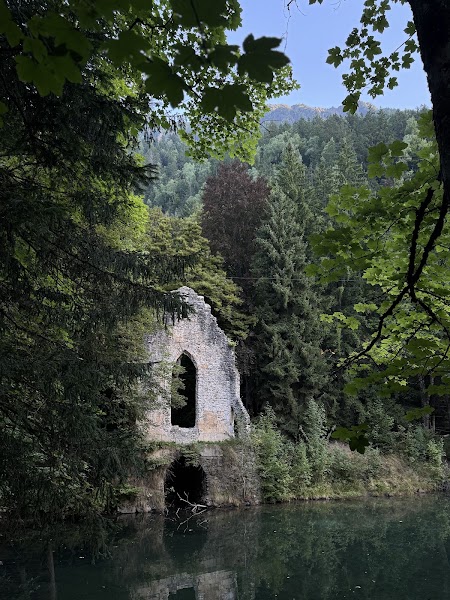
Ruines du Lac Sinclair

| Address | 1352 Rte des Gaillands, 74400 Chamonix-Mont-Blanc |
|---|
| Maps | Click here |
|---|
| Website | Click here |
|---|
| Opening Hours | — |
|---|
| Phone | — |
|---|
Tandy Larson★★★★★
We were looking for some scenic stops on our way back from Monte Bianco, this popped up on google maps. Beautiful wooded park for a walk with some very cool ruins to checkout.
Rosalia Alvarado★★★★★
really nice trekking to get to the lake. You can get there walking close to the river. The lake was frozen, super exotic. You can also take a walk into the woods and there is a climbing spot.
Wouter Gyssels★★★★★
Jaw dropping views on the Mt Blanc and Aiguille du midi, especially at sunset time!
Shada Alharbi★★★★★
Amazing landscape,, zip line activities 👍
Tomas Garro★★★★★
Beautiful lake and castle ruins. It's a short visit but quite recommended if you like being in nature
Anneaux Olympiques

Thomas Schmiedgen★★★★★
20260209_Reference to the great history of Chamonix as the Olympic city of 1924, still today a spirit of freedom and respect
Globe Trottor★★★★★
This is an iconic spot, and there's a really cool photo opportunity: capture the rings of mountains, including Mont Blanc in the shot. But be careful, many people take this photo and get it wrong. The mountain that appears tallest is actually the Dôme du Goûter, which is only 4,304 meters high. Mont Blanc is behind it on the left; it looks lower, but that's just the angle. It's right behind... 🙂
Biegowy Patol★★★★★
A must-see for anyone who loves sports ❤️
Grobidouphotos sur insta★★★★★
Simply magnificent
Musée du Mont-Blanc

| Address | 59 Av. Michel Croz, 74400 Chamonix-Mont-Blanc |
|---|
| Maps | Click here |
|---|
| Website | Click here |
|---|
| Opening Hours | Monday: Closed
Tuesday: Closed
Wednesday: 10:00 AM – 6:00 PM
Thursday: 10:00 AM – 6:00 PM
Friday: 10:00 AM – 6:00 PM
Saturday: 10:00 AM – 6:00 PM
Sunday: 10:00 AM – 6:00 PM |
|---|
| Phone | 04 50 55 29 46 |
|---|
JRG★★★★★
UPDATED COMMENT after SECOND VISIT (Including upgrading from 3 to 5 stars)
Good points:
1) Tells the human story of human habitation of the Chamonix area and the development of mountaineering and winter sports well. Has many great photos and interative exhibits with well written plaques in multiple languages. These are well done to interest everyone from young children to adults.
2) The history of mountaineering and alpine sports is particularly well told.
Bad points
1) Material in the Tourist Office and Posters around town provide little understanding of the Museums good points.
2) Poor and misleading signage makes it difficult to find the Museum. The entrance just has some thin white signs which can't be read from a distance. - See attached photo for my comment on this.
3) Not open for long enough on poor weather days when many people wish to visit. Given the fortune that must have been spent creating the museum and its many exhibits and it should be more flexible in opening to match poor weather demand. AND there should be a system publicising on the web and on signage around town when it is open for extra hours.
4) And do educate Front Desk hotel staff so they tell hotel guests about the museum. I'm told they have been invited to visit but do more. Suggest sessions every few months where get free entry with a briefing and a 'Ask me about the Mont Blanc Museum' pin which they can wear when they are at their hotel reception. Also give them, and the tourist office, with a leafet on the Museum with a map showing how to get to the museum.
Damian Dormer★★☆☆☆
Most of the first floor of this building (the end near the river) has been under renovation for two years (based on the giant sign out front near the river) & the place above the construction site on the second floor is rented as an Airbnb. The surrounding renovation isn't disclosed in the rental. So the building security isn't standard, among other things, and there are likely additional safety issues since the floor is held up by temporary steel supports.
It's beautiful architecturally and really central in Chamonix and has been going on for years, so even people who live near Les Grands Montets know about this renovation, but apparently the real estate agents just a few blocks away are oblivious.
Beth Lebbon★★★★☆
Great museum, really informative and enjoyable to look around - and perfect for when it's rainy! Reasonable entrance price, a few different rooms to look around.
Would definitely recommend when visiting Chamonix!
Luca Mzk★★★★★
I especially like the emphasize on what climate change means to the Mont Blanc region.
Luciano L★★★★★
If you’re interested in Alpi story, this place is a good choice, it’s open also in Sunday, and low prices for the tickets. It takes about an hour or more, you could find some nice poster and old ski related stuff, you can also enjoy some puzzles game for kids.
Triangle de la Herse

Paul Guerin★★★★★
World class.
Rognon

Sam Harper★★★★★
Great off piste
Combe de Grande Pendant

Temple de la Nature

| Address | Le Montenvers, 74400 Chamonix-Mont-Blanc |
|---|
| Maps | Click here |
|---|
| Website | Click here |
|---|
| Opening Hours | — |
|---|
| Phone | — |
|---|
Vanja Zvonar★★★★☆
A stone building first used as a mountain shelter and now as a small drop-in style museum. It is small and contains a projector playbacking the story of mountain climbing in Chamonix and Montenvers. Nothing special and the movie is slow-paced but the position and the view of the glacier valley and the train station is great.
Bel★★★★★
Free entry to watch an interesting video!
Laurent LSMT★★★☆☆
Just a quick stop, to kill 10 minutes.
It's still a great spot for a nice souvenir photo, but the place itself isn't particularly attractive.
MASSON Romain★★★★☆
First refuge created in the 18th century at the level of the sea ice.
Adrian Hüppi★★★★★
From the outside, the building appears unassuming. Upon entering, the history of the place is depicted on a screen.
Geneviève Bouvier Memorial

| Address | 74400 Chamonix |
|---|
| Maps | Click here |
|---|
| Website | Click here |
|---|
| Opening Hours | Monday: Open 24 hours
Tuesday: Open 24 hours
Wednesday: Open 24 hours
Thursday: Open 24 hours
Friday: Open 24 hours
Saturday: Open 24 hours
Sunday: Open 24 hours |
|---|
| Phone | — |
|---|
K9 le vosgien★★★★★
Not many people know this, which is a shame. Holidaymakers only know the city center; I like to see the outskirts of the city.
Daniela Fossat★★★☆☆
The place is not looked after and the plants are invading it
Échelle des Aiguilles Rouge

Diana L.★★★★★
I really enjoyed this part of TMB section 10. But I wanted to leave a review for people who may not feel so comfortable with heights. It is actually a quite scary part of the hike - especially with a rainy-snowy weather (hiked on September 24th). Beside the many ladders, there are lot of wooden steps on the steep rocks, which were very slippery. Just get some more info about it from the internet or trail apps.
Charles Morat Vallorcine★★★★★
J'adore ces lieux. L'Aiguillette d'Argentière est un lieu magnifique pour faire de belles rencontres 🤩. La vue sur le massif du Mont-Blanc est magique. Superbe randonnée, je recommande
عقاب العقاب Akeb Al Akeb★★★★★
🔥 Day 8 of the Mont Blanc Tour… and the adrenaline spiked!
I reached the Échelle des Aiguilles Rouges 🪜⛰️
Iron ladders fixed to the rocks… and the void below!
Honestly, the experience was both terrifying and exhilarating 😅
As you climb, every step seemed to say: Don't look down… keep going!
But when you reach the top and see the view around you, you know the fear was worth it 🔥
This is the Mont Blanc Tour…
Not every day is just a walk; some days are a real challenge and a test of yourself.
And thank God… we made it! 🥾⛰️💪
Stephane Clerc★★★★★
Indeed, the climb to the ladders offers a superb panoramic view. In autumn, the colors of the flora were resplendent.
However, we had to give up on crossing the ladders: for anyone who suffers from vertigo, it's insurmountable. Just watch the videos (on YouTube, for example) to realize that attempting it with children is sheer recklessness.
A beautiful hike nonetheless.
F G★★★★★
This is the only vertigo-inducing point on the hike towards Lac Blanc. There's no need to worry; the ladders are securely fixed and the trail itself is well-maintained.
Guide de montagne

| Address | 190 Pl. de l'Église, 74400 Chamonix-Mont-Blanc |
|---|
| Maps | Click here |
|---|
| Website | Click here |
|---|
| Opening Hours | Monday: Open 24 hours
Tuesday: Open 24 hours
Wednesday: Open 24 hours
Thursday: Open 24 hours
Friday: Open 24 hours
Saturday: Open 24 hours
Sunday: Open 24 hours |
|---|
| Phone | — |
|---|
Natalia Volkova★★★★★
The monument dedicated to Jacques Balmat in Chamonix-Mont-Blanc impresses with its simplicity and symbolism. Carved from a single block of rough granite reminiscent of the summit of Mont Blanc, it pays homage to the first person to climb the mountain in 1786. The bronze medallion depicts Balmat's determined profile, earning him the nickname "Balmat of Mont Blanc." This monument embodies the spirit of courage, exploration, and pushing beyond one's limits, remaining a powerful symbol of the birth of mountaineering and a source of pride for Chamonix.
Harii★★★★★
A very interesting monument, it's worth visiting.
Statue de Horace Bénédict de Saussure et Jacques Balmat

| Address | 37 Pl. Balmat, 74400 Chamonix-Mont-Blanc |
|---|
| Maps | Click here |
|---|
| Website | Click here |
|---|
| Opening Hours | Monday: Open 24 hours
Tuesday: Open 24 hours
Wednesday: Open 24 hours
Thursday: Open 24 hours
Friday: Open 24 hours
Saturday: Open 24 hours
Sunday: Open 24 hours |
|---|
| Phone | 04 50 53 00 24 |
|---|
Tramol Nsaid★★★★★
Best story start here!!
This is a must-visit place in Chamonix! 🏔️✨ If you’ve made it here, you’ll truly feel like you’ve arrived in Chamonix. But if you come all this way and miss this place, it almost feels like you haven’t really experienced Chamonix at all! ❤️
Itay Rotem★★★★★
The most beautiful city in the world, the landsacpe around the city truly captures the magic that everyone is talking about. The amazing classic European architecture in the city center, with massive gaged mountains around truly make for an unforgettable experience
antonios varzakis★★★★★
A bronze group represents the Genevan naturalist Horace-Bénédict de Saussure and Jacques Balmat. Saussure was a Genevan Aristocrat, Geologist, Physicist and Alpine traveller. In 1760 Horace Bénédict de Saussure, offered a financial reward to anyone who could complete the first ascent of Mont Blanc (Monte Bianco in Italian). Several unsuccessful attempts were made over the next few years to climb Mont Blanc and it wasn’t until 8 August 1786 that the reward was claimed by two local Chamonix men who climbed the mountain from the Chamonix valley. They were Jacques Balmat, a Chamois hunter and crystal collector, and Dr Michel Gabriel Paccard, a Chamonix doctor.A bronze stature was erected in the town’s main square in 1887 to commemorate the centenary of the first ascent. Seen from behind, it is dramatic: two men, one of them pointing to Mont Blanc with an outstretched arm. From the front you will be surprised to find that the statue is not of Balmat and Paccard the two pioneering Mountaineers, but of Balmat and his ‘financier’ Saussure. For many years thereafter articles and books including Balmat’s own autobiography continued to promote Balmat over his companion. It was not until the bicentenary in 1986 that a second bronze statue was erected to commemorate Dr Paccard. Paccard’s statue is sited behind and about 150yds from the original statue on the edge of the square.
VLAJKO PETROVIĆ★★★★★
Great statue in famous Chamonix... In the heart of this mountain city... Always look at Mont Blanc... It tells story about man who was first on this summit Balmat and man who was financial support Saussure... With Balmat on Mont Blanc there also was Paccard... But Balmat and other put himself with marketing to be the first... And every magazine write about that... Then 1986 people do right thing and make statue for Paccard but it's 150m far from this statue... All recommendations to see this both statues and make picture👌
Vanja Zvonar★★★★★
The great story about 18th century men who wrote history of alpinism and Mont Blanc. De Saussure and Balmat tried several times but didn't make it. De Saussure later offered a prize to whoever climbs the summit first and ultimately Balmat and Paccard made it to the top together. It is said that their ascent was observed with telecopes from here, as this is one of the few places from which the summit itself is visible. Great inspiration for the modern alpinists before the ascent.
Gare du Montenvers Mer de Glace

Dave Eadie★★★★★
Wow despite the shrinking glacier we had a wonderful time up here. The train ride up was great, it helped the weather was so good. At the top there is a lot to see and the gondola cable cars are really quiet and it's so peaceful. Then we enjoyed a lovely walk down. Stunning.
Lorraine Hassall★★★★★
Wow, what a place. Everything about this trip is excellent. The mountain train, the views and the ice cave. It’s scary how quick the glacier is melting.
We went on a cloudy morning, which then cleared. We bought tickets on the day at the station.
ARINDAM DEB★★★★★
Amazing journey, old train compartment with wooden chairs, spectacular scenery from the windows.
Cable cars to glacier is also a wonderful experience,
Glacier is getting smaller day by day due to global warming, may be after few years this glacier will not exist.
We are making world hotter everyday, May be our future generations will miss this beautiful glaciers.
Voyages culinaires★★★★★
If you’ve ever wanted to feel like a 19th-century aristocrat who accidentally wandered into an extreme sports documentary, welcome to Montenvers and the Mer de Glace.
First, the red cogwheel train. This thing doesn’t so much “travel” as it aggressively climbs a mountain. It’s like a polite, Swiss-engineered roller coaster—no loops, just a steady up.
Then you arrive and—boom—mountains everywhere, just towering over you like they’ve been waiting centuries to judge your life choices. You try to take a photo, but your phone quietly gives up because it cannot capture “absurdly majestic.”
Now, the Mer de Glace. “Sea of Ice” sounds romantic until you realize it looks like a frozen river that’s been through some stuff. You hike down approximately 47,000 stairs (scientifically measured) to reach the ice cave, wondering if your quads can file a complaint.
The glacier ice cave itself is incredible—blue, glowing, and just slightly unsettling, like nature built a very classy freezer you’re allowed to walk through. You keep touching the ice like, “Yes, still cold, just checking.”
Finally, the reward: mountain beers. Nothing tastes better than a cold beer at altitude after surviving the Stairmaster Olympics. You sit there, staring at glaciers and peaks, thinking, “I have absolutely earned this."
Eutalia Leonte★★★★★
Beautiful scenery! Must arrive before 4 as the last train is at 4:30 and you won't have time to visit the actual ice cage.
Couloir des Fontanes

| Address | Torrent des Fontanettes, 74400 Chamonix-Mont-Blanc |
|---|
| Maps | Click here |
|---|
| Website | Click here |
|---|
| Opening Hours | — |
|---|
| Phone | — |
|---|
Francis Vallier★★★★★
Freeride couloir reserved for good skiers
Pierre a Ruskin

| Address | 195 Chem. de la Pierre À Ruskin, 74400 Chamonix-Mont-Blanc |
|---|
| Maps | Click here |
|---|
| Website | Click here |
|---|
| Opening Hours | — |
|---|
| Phone | — |
|---|
Le premier homme à avoir gravi le Mont-Blanc.
| Address | 190 Pl. de l'Église, 74400 Chamonix-Mont-Blanc |
|---|
| Maps | Click here |
|---|
| Website | Click here |
|---|
| Opening Hours | Monday: Open 24 hours
Tuesday: Open 24 hours
Wednesday: Open 24 hours
Thursday: Open 24 hours
Friday: Open 24 hours
Saturday: Open 24 hours
Sunday: Open 24 hours |
|---|
| Phone | — |
|---|
Tips for Visiting Chamonix’s Historic Sites
While the mountains are the main draw, experiencing the history of Chamonix requires a bit of planning to ensure you respect the heritage and navigate the geography efficiently. The valley is spread out, and many historic structures are still active places of worship or private properties that require mindful visitation. By understanding the local context and logistics, you can enrich your experience significantly and avoid the common pitfalls of mass tourism.
Utilize the Tourist Office City Pass. If you plan to visit multiple museums, such as the Alpine Museum or the Crystal Museum, inquire about the "Chamonix Le Pass." This pass often bundles entry to cultural sites with public transport, saving you money compared to buying individual tickets.
Respect the Active Churches. Many of the baroque churches in the valley, such as the Eglise Saint-Michel, are still active parishes. Avoid entering during Sunday mass unless you intend to worship. Photography is usually permitted, but ensure your flash is off and your voice is kept low to maintain the sanctity of the space.
Check Seasonal Openings. While the outdoor sites and church exteriors are accessible year-round, many museums and the interiors of certain villas operate on seasonal schedules. They often close for a month between seasons (May or November) for maintenance. Always verify current opening hours on the official Chamonix tourism website before heading out.
Wear Appropriate Footwear. Even in the town center, the streets can be steep and cobbled, and weather can change rapidly. If you are visiting historic hamlets like Les Houches or Argentière, you will likely be walking on uneven paths. Waterproof shoes with good grip are essential, even if you are not hiking.
Use the Free Train Line. The valley train (Mont Blanc Express or the local TER) is a historic asset in itself. It connects Chamonix center to Servoz, Les Houches, and Argentière. Using this line allows you to visit historic villages without the hassle of parking, which is heavily restricted in the old town centers.
The history of Chamonix is not confined to glass cases or roped-off rooms; it is a living, breathing element of the town’s identity. As you walk through the narrow alleys and stand before the old chalets, you are tracing the footsteps of the guides and explorers who defined modern mountaineering.
Taking the time to visit these historic sites transforms a simple holiday into a pilgrimage. It offers a moment of quiet reflection amidst the roar of the avalanches and the buzz of the town, ensuring your connection to the valley runs much deeper than the surface of its snow.
Freya Belle is a content writer and travel journalist specializing in European destinations. With experience exploring over 30 European countries, she focuses on providing in-depth guides to authentic cuisine, historical culture, and hidden gems often overlooked by mainstream tourists. Her writing helps travelers experience Europe like a local.