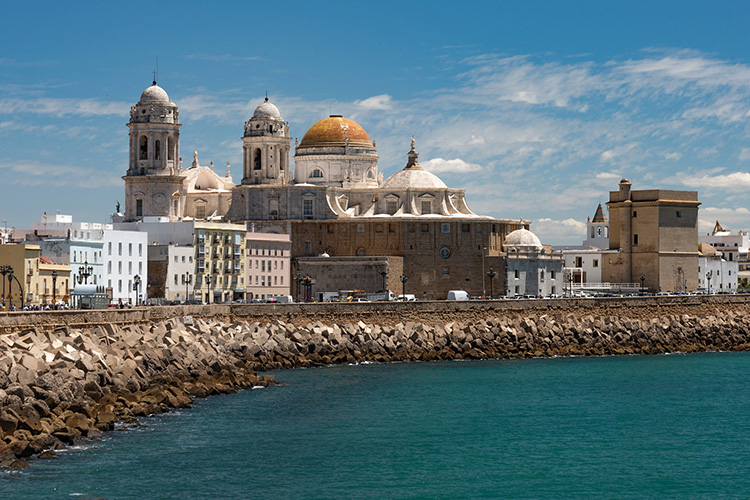
Exploring the ancient streets of Cádiz feels like walking through the pages of a living history book. Founded by the Phoenicians over 3,000 years ago, this sun-drenched Andalusian city is often cited as one of the oldest continuously inhabited settlements in Western Europe. Unlike sprawling metropolises where history is sectioned off behind velvet ropes, Cádiz integrates its past into the rhythm of daily life, from the bustling fish markets to the quiet, flower-filled plazas.
The city’s unique geography—a narrow peninsula jutting into the Atlantic Ocean—has shaped its narrative. For centuries, this strategic position made Cádiz a coveted port for traders, explorers, and empires. The wealth that flowed through its harbor during the Age of Discovery funded the construction of magnificent cathedrals, opulent merchant houses, and formidable fortifications designed to repel pirates and rival navies.
For travelers, the appeal of Cádiz lies in its density and walkability. You can wander from Roman ruins to Baroque churches in a matter of minutes, stopping along the way for a plate of fried fish and a glass of local sherry. The city’s compact nature makes it an ideal destination for history enthusiasts who want to maximize their time without sacrificing depth or authenticity.
Beyond the well-trodden paths of the cathedral and the central market lies a tapestry of lesser-known monuments that tell the story of resilience and cultural fusion. The legacy of the Moors, the influence of the Catholic Monarchs, and the echoes of the 1812 Spanish Constitution all coexist within the city’s whitewashed walls. Each site offers a distinct layer of the historical narrative, revealing why this coastal gem is so much more than just a beach destination.
When planning your visit, it is essential to look beyond the surface. The true value of Cádiz is found in understanding how its geography dictated its architecture and how its people defended their home against the sea and invaders. From watchtowers that once spotted returning treasure fleets to catacombs that housed the city’s dead, the historical sites here are as diverse as the cultures that built them.
To help you navigate this rich heritage, we have curated a list of the most significant landmarks that should be on your itinerary. These locations have been selected not only for their visual splendor but also for their historical weight and the stories they tell about the evolution of Western civilization. Whether you are a first-time visitor or a returning history buff, these sites provide a comprehensive overview of the city’s soul.
Here are the 12 best historical sites in Cádiz that offer a complete journey through the ages.
Catedral de Cádiz

| Address | Pl. Catedral, s/n, 11005 Cádiz |
|---|
| Maps | Click here |
|---|
| Website | Click here |
|---|
| Opening Hours | — |
|---|
| Phone | 956 28 61 54 |
|---|
Jon★★★★★
Myself and a friend visited on a Saturday (during a national public holiday) in mid-August. We used a map app to guide us from our cruise terminal through the narrow streets. We bought our tickets for the bell-tower and for the cathedral on the day.
Pros:
-Impressive architecture featuring baroque, rococo & neoclassical styles.
-Cathedral bell-tower - unique access - one continuous ramp (wide enough for two people) up to near the top of the bell tower with approx 15 steps at the very top. Great 360 degree views over the city.
-Cathedral - separate adjacent entrance to bell-tower. We were given a time slot to enter the cathedral. Small shop. VR headset experience (by the entrance/exit doors) of the history of Cadiz Cathedral - available in 5 languages including English - was good fun and featured 3D drone footage of the cathedral interior and CGI of old Cadiz. The Holy Shroud and the Body exhibition in crypt, includes The Mystery Man - a hyper-realistic piece based on studies performed on the image left by the man in the Holy Shroud. Male and female toilets.
Cons:
-None I can think of.
Duke.Q8★★★★★
A stunning cathedral that’s far more impressive than I expected. The sheer size of the interior is remarkable, and the underground crypt has a unique atmosphere, with its cool, damp air adding to its sense of history.
If you’re able, don’t miss climbing the bell tower. It’s a steady climb rather than a difficult one, and the panoramic views over Cádiz and the coastline are well worth the effort. If possible, try to avoid being at the top when the bells are due to ring!
Allow at least an hour or two to enjoy everything without rushing. Once you’re finished, the surrounding square is full of cafés and bars, making it the perfect place to sit down with a drink and take in the atmosphere.
Marc Diamond★★★★★
Oh, how we adored Cádiz.
It reminds me of Glasgow in some ways - the people are authentic and warm, it feels like a place people ‘live’ and while there ARE tourists, of course, it feels like much less of a hustle.
It’s a place to walk and explore and to take your sweet time enjoying the atmosphere.
There are queues outside the restaurants, not people trying to usher you in. The streets are narrow and beautiful in an old and authentic way. And we never felt unsafe.
It’s true it’s one of the oldest cities in Europe, but it feels very much alive.
Gracias, Cádiz!
Melissa Nasrah★★★★★
Beautiful cathedral with a 39 min audio tour you can access from your phone. The view from the clock tower was worthwhile. The church bells rang while we were there and were loud- evidently they ring every 15 minutes 🙂 Really gorgeous place with interesting architecture that tells a story. We bought tickets at the door and had no wait. It was after 6 pm on a weekday.
Piotr Kalinowski★★★★★
It's beautiful. I'm impressed. It's too much to describe everything so see some of my pictures I took to show to my friends and family. By the way, I wasted more than an hour to get tickets online. I got those without waiting from the ticket office at the Cathedral. One more thing, there are places you will be asked not to fotogrph and this is for a good reason. Unfortunately, without pictures I won't be able to describe some things to my friends. Rules are rules and shall be respected.
Castillo de Santa Catalina

| Address | C. Campo de las Balas, s/n, 11002 Cádiz |
|---|
| Maps | Click here |
|---|
| Website | Click here |
|---|
| Opening Hours | Monday: 11:00 AM – 8:00 PM
Tuesday: 11:00 AM – 8:00 PM
Wednesday: 11:00 AM – 8:00 PM
Thursday: 11:00 AM – 8:00 PM
Friday: 11:00 AM – 8:00 PM
Saturday: 11:00 AM – 8:00 PM
Sunday: 11:00 AM – 8:00 PM |
|---|
| Phone | 956 22 63 33 |
|---|
Luis sanchez★★★★★
Ancient and very well preserved piece of history. Great views from the top of the castle and even better historical significance of being allowed into the sacred chapel!!!
Free to enter!!!!
Ben Hausman★★★★★
Interesting castle that is still being used. Several buildings inside the walls. Really great views from the walls.
Jefferson Andrade★★★★★
The fortress has several small buildings with interesting exhibitions—one provides incredible detail on the 1947 Navy ammunition explosion that devastated the area. Walking along the walls offers breathtaking views of the sea and the nearby Castillo de San Sebastián. It’s free to visit and totally worth it!
Zuza★★★★★
Really nice place, definitely worth visiting. Has a really nice view over the ocean.
Wendy Law★★★★★
This castle is underrated. Inside the castle, there’s a garden, there’s a museum, and there is a small chapel. When you go around the castle, it is a stunning view of the ocean and the beach. I took many videos so that you can see from a different perspectives. Best of all, it is free to go in. Enjoy the Beatles see use of the sea.
Torre Tavira

| Address | C. Marqués del Real Tesoro, 10, 11001 Cádiz |
|---|
| Maps | Click here |
|---|
| Website | Click here |
|---|
| Opening Hours | Monday: 10:00 AM – 6:00 PM
Tuesday: 10:00 AM – 6:00 PM
Wednesday: 10:00 AM – 6:00 PM
Thursday: 10:00 AM – 6:00 PM
Friday: 10:00 AM – 6:00 PM
Saturday: 10:00 AM – 6:00 PM
Sunday: 10:00 AM – 6:00 PM |
|---|
| Phone | 956 21 29 10 |
|---|
Rylee J★★★★★
If you do one thing that is “touristy” in Cádiz, I would let it be this!! The tour with the camera obscura was fascinating to me and super entertaining with Alejandro. He’s very funny and brings a few laughs. Very worthwhile view!!
Damir★★★★★
Very interesting presentation, with stunning view to the city from the top of the tower.
Good thing that it was not crowded at all.
8€ entrance is ok price
Camera obscura presentation is very interesting and I would like to thank the lady for her presentation and explanation of the city.
It's a different and interesting view of seight seeing
Ivana Poglajen★★★★★
This is a really interesting location to visit. Even if you don't do the full tour, it's worth coming just to climb the tower and enjoy the incredible panoramic views over the entire city of Cádiz.
Tip for the Camera Obscura: If you want to experience the Camera Obscura guided tour, make sure to book in advance or arrive early. We weren't so lucky and the slots for our hour were already completely full.
However, you can still visit the exhibition and go up to the rooftop. The staff was incredibly kind and took the time to explain the basics of how the Camera Obscura works anyway. Great customer service!
Gigi No★★☆☆☆
The view from the top was so good, nothing to complain about.
But the camera obscura presentation was a total joke! 😂 What was that??? It couldn't be rushed any more, honestly! Machine-gun-like rapid-fire speech, delivered by the employee least interested in his job, with zero passion or interest in what was read! The Camera Obscura was a totally lost money and time. The employee read the text carelessly, too quickly, and completely unclearly (apparently in 'english'). I strongly advise against it.
Vienna★★★★★
Highly recommend this hidden gem! Make sure to book in advance and arrive on time for the English tour. The staff is incredibly dedicated and explains everything in great detail(especially Mr. Pablo ). A truly unforgettable experience!
Yacimiento arqueológico Cueva del Pájaro Azul • Puerto de Gadir siglo IV - III a.C. El Tablao Flamenco más antiguo del Mundo

| Address | C. San Juan, 37, bajo, 11005 Cádiz |
|---|
| Maps | Click here |
|---|
| Website | Click here |
|---|
| Opening Hours | Monday: 10:30 AM – 2:30 PM, 4:00 – 5:45 PM
Tuesday: 10:30 AM – 2:30 PM, 4:00 – 5:45 PM
Wednesday: 10:30 AM – 2:30 PM, 4:00 – 5:45 PM, 8:45 – 10:30 PM
Thursday: 10:30 AM – 2:30 PM, 4:00 – 5:45 PM
Friday: 10:30 AM – 2:30 PM, 4:00 – 5:45 PM, 8:45 – 10:30 PM
Saturday: 10:30 AM – 2:30 PM, 4:00 – 5:45 PM, 8:45 – 10:30 PM
Sunday: 10:30 AM – 2:30 PM |
|---|
| Phone | 856 38 68 38 |
|---|
Nick Davies★★★★★
Excellent tour by Pilar in English, describing perfectly the history of the caves. Its actually an old bar with much older Phoenician history back to 300BC..... A dry dock buried in to he mists of time. Well worth the visit. 8€ well spent! You can book, but also just knock on the door. Great
Kassidy Kearey★★★★★
Very knowledgeable and friendly, Cristian certainly knew his archeology and was passionate about it, gave great explanations. That you for sharing with us your love for these Phoenician marvels
Yolanda H★★★★☆
Lovely to see what remains of a Phoenician dry dock although with all the building on it since you need a good imagination. Book a tour as it is very small and group numbers are limited. I did not go to the flamenco show so can't comment on that
megan blackford★★★☆☆
The venue is quite charming, however the reason for the medium rating is that I went there to watch a flamenco dance performance. Unfortunately, you will only be able to see the show if you are lucky enough to get a seat at the very front. I was seated at the back on a very uncomfortable bar stool and couldn't see anything. It could be a good venue if you are just going to hear music. However the seating is very uncomfortable and could cause issues for people with back problems.
Heather Mycock★★★★★
A fascinating, underground pre-booked tour of the Phoenician dry dock, Roman aljibe (water storage tank) and 20th century bar in English. Complements the nearby free entrance to the Salazón salting pits
Castillo de San Sebastian

| Address | GMHM+FH, P.º Fernando Quiñones, s/n, 11002 Cádiz |
|---|
| Maps | Click here |
|---|
| Website | Click here |
|---|
| Opening Hours | Monday: 9:00 AM – 8:00 PM
Tuesday: 9:00 AM – 8:00 PM
Wednesday: 9:00 AM – 8:00 PM
Thursday: 9:00 AM – 8:00 PM
Friday: 9:00 AM – 8:00 PM
Saturday: 9:00 AM – 8:00 PM
Sunday: 9:00 AM – 8:00 PM |
|---|
| Phone | — |
|---|
Verified Travel Reviews★★★★★
Castillo de San Sebastián is one of Cádiz's most iconic landmarks and absolutely worth visiting. The long causeway leading to the fortress offers spectacular panoramic views of the Atlantic Ocean, the city skyline, and the coastline, making the walk just as memorable as the castle itself.
The fortress is rich in history and provides a unique glimpse into Cádiz's military past. Even if you don't go inside, the peaceful atmosphere, sea breeze, and incredible photo opportunities make this a must-see destination.
A perfect place for history lovers, photographers, and anyone looking to enjoy one of the most scenic walks in Cádiz. Highly recommended! 🏰🌊📸🇪🇸
Alexandra Tomulescu★★★★☆
These are the ruins of the old San Sebastian castle. If you are around, a visit might worth it, but if you are not able to make it, you are not missing out a lot. Let’s say this way - the promenade to the castle was better than the castle itself. Ok, views over the ocean are nice, but being on a peninsula means everything has ocean views. The promenade is nice. The thing that I really appreciated was that there are some public bathrooms and are quite clean (in spite of nobody being around to look up for the castle)
Richard Evans★★★★☆
A nice walk out to the castle that looks far better from the approach than when you get inside. It's free and worthy of a look. Also gives you a good view back towards the beach and Cadiz.
Jon★★★★★
Myself and a friend visited on a Saturday (during a national public holiday) in August.
Pros:
-Free entry
-Impressive causeway to castle
-Large complex with ramparts and a lighthouse.
Cons:
-Minimal information boards.
Byron Byron★★★★★
A short walk along a stone boulevard offers access to a historic castle and fort. Good for a walk around, note there's limited shade and the walkway is cobbled stones. Some good places for swimming nearby
Yacimiento Arqueológico Gadir

| Address | C. San Miguel, 15, 11001 Cádiz |
|---|
| Maps | Click here |
|---|
| Website | Click here |
|---|
| Opening Hours | Monday: 10:00 AM – 6:00 PM
Tuesday: 10:00 AM – 6:00 PM
Wednesday: 10:00 AM – 6:00 PM
Thursday: 10:00 AM – 2:00 PM
Friday: Closed
Saturday: 10:00 AM – 6:00 PM
Sunday: 10:00 AM – 6:00 PM |
|---|
| Phone | 956 22 63 37 |
|---|
Timothy Cargal★★★★☆
The archaeological site is located beneath the Teatro del Títere | La Tía Norica (a concert venue) and can be visited for free. However, admission is by groups of up to 25 persons at the beginning of each hour. You will need to be added to the list at the theater box office window if you have not arranged your time in advance. The visit begins with a video overview of the Phoenician presence in Cádiz produced in a method very different from traditional museum presentations (I won't provide a spoiler here). Visiting the site itself is done by walking over the excavations, at times across plexiglass floors. Docents accompany each group, and speak both Spanish and English. Well worth a visit if you are interested in classical archaeology.
Lynn at North London Photography★★★★★
Fascinating museum featuring the 9th-century BCE Phoenician streets and houses buried underneath the city of Cádiz (and the Roman remains atop these - there was garum production here. The Romans made a lot of garum in a lot of places). We booked the free tickets and went in at a scheduled time for a tour with an informative video presentation. Very well done and definitely worth a visit!
CY★★★★★
Amazing archeological digs preserved under the building housing Yacimiento Arqueológico in Cadiz. Entry is free with a ticket which you need to rebook. Capacity is limited for each session. Book early for attendance at one of the scheduled sessions at their ticket counter at the front of the building. Explains the Phoenicians who first settled Cadiz over 3,000 years ago.
J Marker★★★★★
Free. About a 35 minute experience. The video at the startis excellent, I hope it won an award. There is an additional video on the far wall as you walk around, be sure to stay to watch it. Look for the 2800 year old cat skeleton. One of the best exhibits I have visited. Excellent guide. You Must turn up and book beforehand, so don't turn up expecting to just get in.
Ryan Cheng★★★★★
Very informative and well-planed museum, featuring ancient Phoenician city. The staff can speak English pretty well and answer your questions kindly. The tour starts with a eye-catching video and explains the history of the city and then you can start visiting the museum, the information panels are detailed, although the museum isn’t big you could still spend an hour inside because the tour is very well-planed, overall it’s a very good experience. And it’s FREE of charge!
Puerta de Tierra

Doug Ho★★★★★
The Puertas de Tierra (Land Gate or Door of the Earth) in Cádiz, Spain, is a magnificent 18th-century, two-arched, fortified gate that historically served as the main entrance to the old city. Located in Plaza de la Constitución, it separates the historic Old Town from the modern part of the city. It was once the main defensive bastion, designed with marble facades reminiscent of a religious altarpiece. Features two large stone arches, a defensive tower, and bastions of San Roque and Santa Elena. Today, it houses two small museums: the Museo del Títere (Puppet Museum) and the Museo Taller Litográfico (Lithographic Workshop Museum).
Visitors can visit the site to view the fortresses, the panoramic views, and the remaining 17th-century walls.
Al Kuehnast★★★★☆
We saw the Puerta de Tierra from our bus as we entered Cádiz. This impressive fortified gate was the main land entrance to the city and formed part of Cádiz's defensive walls. The original fortifications date from the 16th century, and the structure acquired its present appearance in the 18th century. Today, it separates the historic old town from the newer areas of Cádiz.
Estella Machado★★★★★
Excellent visit, there is an immersive 10 minute presentation on the history of the fort which was fascinating and informative. Really worthwhile doing, to understand the scope of the structure.
FRANK TUDELA★★★★☆
Puertas de Tierra" is a bastion-monument built around the old defensive wall at the entrance to the city of Cadiz.
It is one of the most significant monuments of the city and separates, at present, the Old Town (known as "Cádiz") and the modern area (popularly known as "Puerta Tierra") in the city.
Ben Hoover★★★★☆
Beautiful to check out but did not go in
La caleta

Belinda Parkes★★★★★
Lovely local beach. You can hire chairs. There was a small bar that served tapas. Loved it.
Cynthia KL, Malaysia★★★★★
Be sure to come before sunset amd take a walk to the light house.
Maria Teresa Reyero★★★★★
Beautiful urban beach where all the locals go
Martin★★★★★
Beautiful pavillion, particularly at sunset.
Frank Ormston★★★★★
A lovely peaceful beach
Ruinas del acueducto romano de Gades

| Address | -2, Plaza Asdrúbal, 1, 11008 Cádiz |
|---|
| Maps | Click here |
|---|
| Website | Click here |
|---|
| Opening Hours | Monday: Open 24 hours
Tuesday: Open 24 hours
Wednesday: Open 24 hours
Thursday: Open 24 hours
Friday: Open 24 hours
Saturday: Open 24 hours
Sunday: Open 24 hours |
|---|
| Phone | — |
|---|
Nina Schwarz★★★★☆
Only a small part of the acqueduct is lying next to a neglected park. There’s no explanation but the remains give an idea of the craftsmanship that was needed to produce such an engineering marvel.
Stuart McKellar★★★★☆
It's in a residential play park. It's great to see it stacked up along the side of the park, and realise the effort these Romans went to, to supply the town water.
Lance Green★★★★★
This little park is a wonderfully quiet little space in this busy city. It was great to get a close up look at the ancient pipe. It never ceases to amaze me how capable the ancients were.
Steven Webb★★★☆☆
Ruins of very old pipe in a city park. Nice. Other than that, not much here. Fast away from highlights of old town in the city.
Philip Smith★★★★★
Remains of a Roman aqueduct pipe unlike ones I've seen before, with interlocking 'spine' type pieces. Interesting to me. Also some Roman burials.
Muralla Medieval de Cádiz

Juan Travel★★★★★
Cádiz, the three-thousand-year-old city, was called Gadir by the Phoenicians; Gadeira by the Greeks; Gades by the Romans; Yazirat Qadis by the Arabs; and is now known as Cádiz, derived from its Roman name. It is also popularly known as "La Tacita de Plata" (The Little Silver Cup).
In Cádiz, the Pópulo neighborhood is the oldest in the city, with roots in the medieval period and considered one of the oldest continuously inhabited places in Western Europe. Its origins date back to the Phoenician founding of Gadir (around 1104 BC), but it was consolidated as a medieval neighborhood.
Today, the Pópulo neighborhood retains its medieval charm with its historic archways, the Roman Theatre, and its proximity to the Cádiz Cathedral. It is a cultural center, prominent in events such as the Cádiz Carnival and archaeological visits, such as the "Roman and Medieval Cádiz" program in June 2025 ❤️
ClÁsico★★★★★
If you'd like to learn more, keep reading: Medieval Cádiz was a completely fortified city, which King Alfonso X the Wise ordered rebuilt due to its strategic importance. The walled enclosure had only three sections of wall, as the fourth side was defended by the cliff overlooking the sea. Three gates provided access to the city on each of the three walled sides: the Puerta de la Villa or Puerta del Mar (now known as the Arco del Pópulo), the Puerta del Arrecife or Arco de los Blanco, and the Puerta de Poniente or Arco de la Rosa.
The medieval walls of Cádiz surrounded the entire city at that time, and over the centuries, along with the Castillo de la Villa or Castillo Viejo, they have been absorbed by buildings as the city expanded beyond its boundaries.
The city of Cádiz was traditionally a site of sieges and battles. English, Dutch, and French forces were stationed before its walls. Therefore, from a very early date, Cádiz had to be fortified, resulting in a series of walls that have given the city its distinctive appearance.
Throughout the 16th, 17th, and 18th centuries, Cádiz was gradually enclosed by a larger and more powerful defensive bastioned wall (whose design left the medieval wall inside it, disconnected from the new wall and without any defensive function), further emphasizing the city's island-like character.
In the original settlement, the current Pópulo neighborhood, the three access gates of the medieval wall are still preserved: the Arco del Pópulo, the Arco de la Rosa (facing the Cathedral Square, it retains its exterior defensive machicolation), and the Arco de los Blanco (which retains remains of adjoining sections of wall and has been successfully restored and its value highlighted recently).
If you liked it, give it a Like. Thank you.
Source: IAPH
JHON MARTINEZ★★★★★
Cádiz trimilenaria , uno de los lugares de la tacita de plata recomendado para su visita , sobre todo de noche .
lino guerrero★★★★★
Very beautiful, a spectacular place, the city and its beaches are very welcoming.
francis★★★★★
A section of the medieval wall that is preserved and can be visited free of charge, very close to the Roman theater, which I highly recommend visiting.
Arco de la Rosa

| Address | Peaje, Pje. Arco de la Rosa, 1, 11005 Cádiz |
|---|
| Maps | Click here |
|---|
| Website | Click here |
|---|
| Opening Hours | Monday: Open 24 hours
Tuesday: Open 24 hours
Wednesday: Open 24 hours
Thursday: Open 24 hours
Friday: Open 24 hours
Saturday: Open 24 hours
Sunday: Open 24 hours |
|---|
| Phone | — |
|---|
Priyanka Shah★★★★★
Arco de la Rosa is one of the most charming historical gateways in the old town of Cádiz and a wonderful little piece of the city's medieval past. Located in the historic Barrio del Pópulo, right beside Plaza de la Catedral, it is easy to come across while exploring the narrow streets of the oldest part of Cádiz.
The arch formed part of the medieval defensive enclosure of the city and was one of the three main gateways of the old Christian settlement. The other two were Arco de los Blancos, which opened towards the land side, and Arco del Pópulo, which opened towards the sea. Arco de la Rosa originally provided access towards the Santiago suburb, making it an important connection between the fortified medieval town and the areas beyond its walls.
The name "Arco de la Rosa" comes from a small chapel dedicated to the Virgen de la Rosa that once stood above the gateway. This religious connection gives the arch a particularly interesting character, combining the defensive history of medieval Cádiz with the strong religious heritage that can be found throughout the old city.
One of the fascinating architectural details is that the original entrance was not completely straight. It was designed with a bent or angled passage because of a defensive tower that once stood opposite the arch. That tower has since disappeared, but the unusual layout gives you an idea of how carefully medieval entrances were designed for protection. There was also a narrow defensive opening in the structure that could be used to protect the entrance.
The area immediately around the arch has also changed dramatically over the centuries. In front of it was once a small square known as Plaza de las Mesas, where the gallows were installed. That space eventually disappeared as the present-day Plaza de la Catedral was developed, creating the much more open and picturesque setting we see today.
What makes Arco de la Rosa especially beautiful today is its location. As you pass through or stand near the arch, you get a wonderful view towards the Catedral de Cádiz, creating a striking combination of medieval stonework and the magnificent cathedral rising behind it. Cádiz's official tourism route through the medieval city specifically highlights the arch for this impressive cathedral view.
The surrounding Barrio del Pópulo is arguably just as interesting as the arch itself. This is considered one of the oldest neighbourhoods of Cádiz, and walking through its narrow streets feels like travelling through several different periods of the city's history at once. Within a very small area, you can find medieval gateways, the Roman Theatre, the Old Cathedral, historic merchant houses and later buildings connected with Cádiz's important maritime trading history.
I particularly enjoyed that Arco de la Rosa doesn't feel like a typical isolated tourist monument. It is still integrated into the streetscape and feels like a natural part of the neighbourhood. You can simply wander through the old streets, come across the arch, pause to admire the architecture and then continue towards the cathedral or Roman Theatre.
It's not a place where you'll need to spend a huge amount of time, but it is absolutely worth stopping for a few minutes. Once you understand that this was one of the historic entrances into medieval Cádiz and that the surrounding area has been continuously shaped by centuries of history, the arch becomes much more meaningful.
A small but beautiful reminder of medieval Cádiz, made even more special by its setting right beside the cathedral. If you're exploring the Barrio del Pópulo, definitely add Arco de la Rosa to your walking route.
Doug Ho★★★★★
The Arco de la Rosa is one of the three remaining gates of the medieval wall of Cádiz, Spain. Built in the 13th century during the reign of Alfonso X "the Wise," it served as the western entrance to the fortified city.
Situated in the historic Barrio del Pópulo, the oldest neighborhood in the city, right next to the Cádiz Cathedral in Plaza de Pío XII. Named after a nearby chapel dedicated to the Virgen de la Rosa. Also Named after Captain Gaspar de la Rosa, who lived in the city during the 18th century. It was previously known as the Arco de Santiago, as it led to the fishermen's suburb (arrabal) of the same name. The arch has a simple semicircular design and was significantly restored in 1973. In its original medieval state, it featured a "dog-leg" or angled entrance to prevent direct charges by invaders. It also includes a machicolation, an opening through which defenders could pour boiling oil or throw stones at attackers. It is constructed using oyster stone (piedra ostionera), a porous sedimentary rock characteristic of Cádiz architecture that is composed of fossilized shells and resists sea humidity exceptionally well.
Alejandro Lucia travel★★★★★
The Arco de la Rosa (Arch of the Rose) is a historic gateway, the former western gate located in the walls of Cádiz, connecting the cathedral square with the Pópulo neighborhood. Built in the 13th century, some say its name comes from a nearby chapel dedicated to the Virgin Mary.
Зoран★★★★★
Visiting time: mid-April 2026.
The Arco de la Rosa (Arch of the Rose) is a historic city gate in Cádiz, located in the heart of the old town, next to the Cádiz Cathedral.
The arch was built in the 13th century during the reign of Alfonso X the Wise, as the western gate of the medieval city walls. Of the old structure that we can see now, all that remains is a section of the wall with the arch, with a small chapel dedicated to the Virgin of the Rose (Virgen de la Rosa) above.
The gate connects the Plaza de la Catedral with the oldest neighborhood in the city, the Barrio del Pópulo.
remedan10★★★★★
The western gate of the old medieval wall of Cádiz, built in the 13th century during the reign of Alfonso X. It connects the Cathedral Square with the Pópulo neighborhood. It is believed to owe its name to the former existence of a niche containing an image of the Virgin of the Rose, although other theories exist.
Punic Tombs of the Necropolis of Gadir

| Address | 11008 Cádiz |
|---|
| Maps | Click here |
|---|
| Website | Click here |
|---|
| Opening Hours | Monday: Open 24 hours
Tuesday: Open 24 hours
Wednesday: Open 24 hours
Thursday: Open 24 hours
Friday: Open 24 hours
Saturday: Open 24 hours
Sunday: Open 24 hours |
|---|
| Phone | — |
|---|
Lynn S★★★★☆
Love the whole coastal area, you could walk along and chill out
Rutger Nouwens★★★★☆
They sure like their electric steps
Rob Davis★★★★★
Great place
Fco★★★★☆
An interesting piece of very old history, about which we found very little information next to it, and moreover, the lettering has faded and is barely legible. Frankly, if there's a piece of heritage that isn't in the museum, they should at least put it on display for the public to enjoy.
Marian Calvo Lizano★★★★★
A beautiful place to see the sea, the beach, and some truly stunning and incomparable sunsets. The skyline of the historic center, the lighthouse, and the cathedral. I love it.
Practical Tips for Exploring Cádiz
To make the most of your historical tour of Cádiz, a little preparation goes a long way. The city’s layout is generally forgiving, but the timing of your visits, your understanding of local customs, and your choice of footwear can significantly impact your experience. Below are some essential tips to ensure your journey through the city’s past is as seamless as it is memorable.
Plan around the "Siesta" Hours
Many historical monuments and smaller museums in Cádiz close for a few hours in the afternoon, typically between 2:00 PM and 5:00 PM. Plan your indoor visits for the morning, and use the early afternoon to enjoy a long lunch or relax on the beach. This local rhythm is essential to the Andalusian way of life and affects access to ticket offices and guided tours.
Wear Non-Slip Footwear
Cádiz is famous for its polished cobblestones and smooth marble plazas, which can become incredibly slippery, especially on humid mornings or after a light sea mist. When exploring ancient ruins or climbing the narrow spiral staircases of the watchtowers, shoes with excellent grip and comfortable support are non-negotiable.
Utilize the Free Admission Windows
If you are traveling on a budget, time your visit to coincide with the free entry periods offered by many of the city’s major landmarks. For example, several monuments offer free admission on Mondays or during the final hour before closing. Checking the official municipal tourism website before your trip can save you a significant amount of money.
Climb Early for the Best Views
The Torre Tavira and the Cathedral’s bell tower offer the best panoramic views of the city, but the staircases are narrow and the viewing platforms can get crowded. Arrive right when these sites open to avoid the midday heat and the crush of tour groups. The morning light also provides the best visibility for spotting the distant mountains of Africa on a clear day.
Understand the "Menu del Día"
A historical tour of Cádiz requires energy, and the local lunch culture is perfectly designed to refuel you. Instead of ordering à la carte at touristy restaurants near the cathedral, look for a "Menú del Día" at a local tavern. This fixed-price menu usually includes a starter, a main course, a drink, and dessert, allowing you to experience authentic local cuisine without breaking the bank or losing time.
Respect the Residential Nature of the Old Town
Remember that the historical center of Cádiz is not a museum; it is a living, breathing neighborhood. While exploring the narrow alleys and admiring the architecture, be mindful of noise levels, especially during the afternoon rest period. Many of the balconies and doorways you are photographing are private homes, so a respectful distance is appreciated by the locals.
Walking through Cádiz is an exercise in peeling back layers of time, where the Atlantic breeze carries the whispers of Phoenician traders and Spanish revolutionaries alike. The city rewards the curious traveler who is willing to wander without a strict itinerary, discovering hidden plazas and ancient walls that are not always marked on standard maps. By engaging with the local pace of life and respecting the environment, you gain a deeper appreciation for why this city has endured for millennia.
Ultimately, the historical sites of Cádiz are not just static remnants of the past; they are active participants in the city’s vibrant present. From the ringing of the cathedral bells to the shadow of the Roman theater, every corner offers a lesson in resilience and beauty. As you leave the peninsula, you will carry with you not just photographs, but a profound understanding of one of Spain’s most historically significant treasures.
Freya Belle is a content writer and travel journalist specializing in European destinations. With experience exploring over 30 European countries, she focuses on providing in-depth guides to authentic cuisine, historical culture, and hidden gems often overlooked by mainstream tourists. Her writing helps travelers experience Europe like a local.