Zaragoza sits in the heart of the Ebro Valley, a city where Roman ruins, Moorish architecture, and Baroque grandeur stand shoulder to shoulder. Unlike Spain’s more famous coastal destinations, this Aragonese capital rewards travellers who love history without the overwhelming crowds. Every stone here tells a story that stretches back more than two thousand years.
The city’s strategic position between Madrid, Barcelona, and the Pyrenees made it a cultural crossroads for centuries. Romans, Visigoths, Muslims, Jews, and Christians each left their mark on Zaragoza’s streets, creating a layered heritage that is unusually rich even by Spanish standards. Exploring these historical attractions offers a genuine journey through the evolution of Iberian art and power.
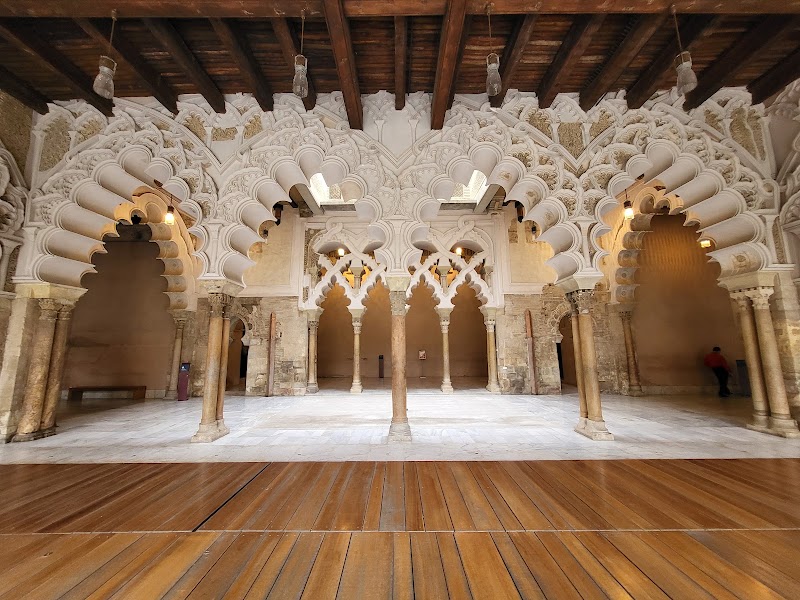
Many visitors are surprised to discover that Zaragoza was once known as Caesaraugusta, named after Emperor Augustus himself. Its Roman theatre, forum, and baths are still being excavated, offering a rare glimpse into daily life in ancient Hispania. Meanwhile, the Aljafería Palace stands as one of the best-preserved examples of Islamic architecture in northern Spain.
Religious heritage is equally central to Zaragoza’s identity. According to tradition, the Virgin Mary appeared to the Apostle James here in 40 AD, making the city a major pilgrimage destination. The resulting Basilica del Pilar is not just a place of worship but a symbol of Aragonese pride and a masterpiece of Spanish Baroque design.
Understanding Zaragoza’s history means appreciating how the city has continuously reinvented itself while honouring its past. From the Moorish taifa kings to the Catholic Monarchs and the defiant defenders of the Peninsular War, Zaragoza’s story is one of resilience. Today, that legacy is accessible through museums, restored monuments, and living urban spaces.
This guide highlights the most significant historical attractions in Zaragoza, combining world-famous landmarks with lesser-known gems. Each site has been selected for its historical importance, architectural merit, and the quality of the visitor experience. Practical details and insider tips will help you plan an efficient and enriching itinerary.
Whether you are a first-time visitor or a returning history enthusiast, these attractions provide a comprehensive introduction to Zaragoza’s remarkable past. Use this list to build your own walking route through two millennia of art, faith, and human achievement.
Aljafería Palace

| Address | C. de los Diputados, s/n, 50004 Zaragoza |
|---|
| Maps | Click here |
|---|
| Website | Click here |
|---|
| Opening Hours | Monday: 10:00 AM – 5:15 PM
Tuesday: 10:00 AM – 5:15 PM
Wednesday: 10:00 AM – 5:15 PM
Thursday: 10:00 AM – 5:15 PM
Friday: 10:00 AM – 5:15 PM
Saturday: 10:00 AM – 5:15 PM
Sunday: 10:00 AM – 5:15 PM |
|---|
| Phone | 976 28 96 83 |
|---|
Bryan Ortiz★★★★★
Hot day... website ticket sales were down, but we got tickets for the following day at the entrance.
Quite a palace, and price is very affordable. It is great to go see, but if people do not understand the history of moors in Spain around 900-1250 AD, they may want to watch a video or documentary, or read a book about it. Having context enhances the experience.
Very well preserved.
When we went, it hosted the Goya exhibit, since the museum downtown is being renovated or something. I'm glad I was able to see some of these masterpieces while in Zaragoza.
Lily★★★★★
My favourite thing I did in Zaragoza, such a fulfilling experience. Really enjoyed reading all the notes about different items and the history of the palace, they had English translations also which I’ve found to be a rare occurrence in the basque region. I loved it and couldn’t recommend it more. If you’re in Zaragoza it’s a MUST DO! It’s also free on the first Sunday of every month so my entry was luckily free. What and experience. The art is beautiful and the architecture pristine, many different areas of interest, even politics so do your research and I think you’ll find something you like 🙂
Bill Thane★★★★★
We are new Zaragoza residents. The tickets are super reasonable and the self guided tour using the Google Play app is very helpful. The signs and explanations are largely in Spanish and English. There is, currently, an exhibition of some of Goyas works on display as well. Great weekend activity to visit this site.
Ambrose & Brid O'Halloran★★★★★
This really worth a visit. The detail in the architecture is stunning. The scale of the site is really impressive. There are lifts to take you to the second floor. It is also the seat of the regional parliament so there are security checks and bag scanning. It can be busy as there is a visitor quota in operation for different time slots.
hisham alsuraye★★★★☆
I just visited the Aljaferia Palace in Zaragoza. It had a beautiful atmosphere, and the staff were incredibly welcoming. The blend of Arab and Spanish history there is fascinating — I really loved the experience.
Murallas Romanas de Zaragoza

| Address | Plaza César Augusto, 3, Casco Antiguo, 50003 Zaragoza |
|---|
| Maps | Click here |
|---|
| Website | Click here |
|---|
| Opening Hours | Monday: Open 24 hours
Tuesday: Open 24 hours
Wednesday: Open 24 hours
Thursday: Open 24 hours
Friday: Open 24 hours
Saturday: Open 24 hours
Sunday: Open 24 hours |
|---|
| Phone | 976 72 11 00 |
|---|
George Samuel★★★★★
Visiting Murallas Romanas de Zaragoza is a incredible way to connect with the deep history of the city. These surviving sections of ancient stone walls and semicircular towers date back to the Roman era when the city was known as Caesaraugusta. Right next to the main stretch of the wall, you can also see a bronze statue of Emperor Augustus, which adds a great touch to the site.
It is completely open to the public and located right in the heart of town next to the Central Market, making it super easy to walk up to and appreciate. Seeing such massive, ancient Roman stonework standing right in the middle of a modern city square is a unique experience and well worth a quick stop while exploring Zaragoza.
Aaron Spicker★★★★★
It's always fun to see Roman ruins. However, I can give you a tip. There's a tourist office sign where you're then allowed to climb four flights of stairs with views of the city... Being able to look down on the Roman ruins is the best view!
BravoEddie★★★★☆
A piece of Roman wall stands in front of the central market of Zaragoza, with a Caesar statue in the back, try to take a photo with his finger point to the top of tower behind, it's fun.
Rosa Espindola★★★★★
I was dead tired after tapas at Tubo Street and felt sleep sitting on the ruins. Very hard rocks, though. I dreamed about horses and blades. Was a nice nap considering. Then, a "patear" this gorgeous city.
Anya Nura★★★★★
Sometimes it’s hard to grasp the thought that Romans built things to last and you can actually see what people saw centuries before… I think it’s a unique place to visit and enjoy
Arco del Deán

| Address | C. del Deán, 5, Casco Antiguo, 50001 Zaragoza |
|---|
| Maps | Click here |
|---|
| Website | Click here |
|---|
| Opening Hours | Monday: Open 24 hours
Tuesday: Open 24 hours
Wednesday: Open 24 hours
Thursday: Open 24 hours
Friday: Open 24 hours
Saturday: Open 24 hours
Sunday: Open 24 hours |
|---|
| Phone | — |
|---|
Isabella Dicaprio (Isabella)★★★★★
Great construction and the story of being built in one day was fantastic.
Chris Sirinop★★★★☆
A small passage to get you to the Main Street.
Adhit Adhit★★☆☆☆
Nothing Special
Jorge Hedges★★★★☆
Very nice landmark in Zaragoza!
Rebecca Berchtold★★★★★
Like walking back in time, when the Arabs possesed these lands.
Puerta del Carmen

| Address | Av. de César Augusto, s/n, Casco Antiguo, 50004 Zaragoza |
|---|
| Maps | Click here |
|---|
| Website | Click here |
|---|
| Opening Hours | Monday: Open 24 hours
Tuesday: Open 24 hours
Wednesday: Open 24 hours
Thursday: Open 24 hours
Friday: Open 24 hours
Saturday: Open 24 hours
Sunday: Open 24 hours |
|---|
| Phone | 976 72 11 00 |
|---|
Paul Parent★★★★★
Puerta del Carmen is one of Zaragoza's most iconic historic landmarks and a wonderful place to visit while exploring the city. I visited in May 2026, and it was fascinating to stand before this impressive 18th-century gate, which has witnessed centuries of Spanish history. The visible cannonball damage from the Peninsular War adds authenticity and serves as a powerful reminder of Zaragoza's resilience during the sieges of 1808 and 1809.
Although it now stands surrounded by busy streets and modern traffic, the monument remains remarkably well preserved and provides an excellent contrast between the city's rich past and vibrant present. Informational panels nearby help explain its historical significance, making it easy to appreciate even without a guided tour. It's also a great stop for photography, especially in the early morning or late afternoon when the warm light highlights the stonework beautifully. A must-see landmark for anyone interested in Spanish history, architecture, or simply discovering another side of Zaragoza beyond its famous basilica.
Karl Bradshaw-White★★★★★
Lovely city in Spain which many people wouldn't think of visiting, if you love culture and architecture then the city is well worth the visit.
Seokjin Ham★★★★☆
It is named after the nearby Convento del Carmen. The gate, built in the Neoclassical style with a Roman triumphal arch structure, was designed by Agustín Sanz and constructed between 1789 and 1795. During the Siege of Zaragoza, which took place from 1808 to 1813, it served as a fortress for the Aragonese resistance, and traces of the intense fighting from that period remain. It also served as the entrance through which troops entered the city during the First Carlist War in 1838.
Noel Muñiz★★★★★
This is an interesting relic from ancient Roman times.
Damià★★★★★
A nice place to see if you are a tourist in Zaragoza.
Cathedral of the Savior of Zaragoza

| Address | Pl. de la Seo, 4, Casco Antiguo, 50001 Zaragoza |
|---|
| Maps | Click here |
|---|
| Website | Click here |
|---|
| Opening Hours | Monday: 10:00 AM – 2:30 PM, 4:00 – 8:00 PM
Tuesday: 10:00 AM – 2:30 PM, 4:00 – 8:00 PM
Wednesday: 10:00 AM – 2:30 PM, 4:00 – 8:00 PM
Thursday: 10:00 AM – 2:30 PM, 4:00 – 8:00 PM
Friday: 10:00 AM – 2:30 PM, 4:00 – 8:00 PM
Saturday: 10:00 AM – 2:30 PM, 4:00 – 8:00 PM
Sunday: 10:00 AM – 12:00 PM, 4:00 – 8:00 PM |
|---|
| Phone | 608 21 95 66 |
|---|
Loech “Loach” Man★★★★★
Pretty amazing place, but quite crowded on the weekend. It's also closed around lunch time so you can't really go in and take advantage of smaller crowds.
All that said, it's not worth taking a special trip to Zaragoza just for this and a couple other churches that are around. If you're in the area, or you're passing through, you definitely should visit.
Aine d★★★★★
This was the best historical site we saw in Zaragoza. It covers several periods, invasions & conversions. The audio guide for children and another for adult work really well. Lots of language options.
It’s mostly wheelchair friendly but the gift shop, up one step and the tapestry’s are up several flights of old broad stairs.
Everyone is so friendly.
The detail of each little chapel can be a little overwhelming at times. The effort, skills & expense put into them. The personal
Family history.
Michał Łukaszewicz★★★★★
Very nice and important place to see. The cathedral has some magnificent architecture and decour, also there is a wonderful tapestry museum inside which I would say is a must see for any history and decour enthusiast.
The visit includes a great audioguide in multiple languages.
Maria Achilleia★★★★★
The cathedral of the savior of Zaragoza is so beautiful church! Inside and outside! It’s very nice to visit. I recommend it! Feels so peaceful in there.. there are tours for a fee not in the mass hours of course.
Elma Baron★★★★★
Unassuming on the outside but it has gorgeous chapels inside. Audioguide was very helpful. Definitely worth a visit. No photography allowed inside.
Palacio de Fuenclara

| Address | C. de Fuenclara, 2, Casco Antiguo, 50003 Zaragoza |
|---|
| Maps | Click here |
|---|
| Website | Click here |
|---|
| Opening Hours | — |
|---|
| Phone | — |
|---|
Fernando C.★★★★★
A Renaissance-style residential palace, built in the second half of the 16th century by order of Don Antonio Agustín, father of the then Archbishop of Tarragona. In the 17th century, the building was transformed by its new owners, the Counts of Fuenclara.
Originally, the palace had three floors, although a fourth was later added. One of its most striking features is the large wooden eaves that crown the palace. Inside, a 16th-century coffered ceiling is still preserved in the entrance hall, as well as a typical Aragonese Renaissance courtyard.
Over time, the building has undergone numerous renovations and expansions. At the beginning of the 20th century, its use changed, first housing the Salón Fuenclara theater, and later, in the mid-20th century, becoming the Arlequín cinema.
Currently, the interior of the building is in a state of ruin, awaiting restoration and a future use, which has yet to materialize.
María Fernandez Sanchez★★★★☆
Del siglo XVI de estilo renacentista, de cuatro plantas y con un magnífico alero de madera. Declarado Bien de Interés Cultural en 2002 y comprado por el ayuntamiento en 2003. Se encuentra en estado ruinoso esperando ser restaurado. Está situado en pleno casco antiguo de la ciudad al lado de la Calle Alfonso I. En el siglo pasado había un cine, el Arlequín.
Viajero Traveler★★★★☆
A Renaissance palace, later divided into modest apartments. In the 1970s and 80s, dilapidated and almost in ruins, it was acquired by the city council, which restored it and dedicated it to the film archive.
It is currently restored, with a clean facade, but awaiting new uses.
Enrique Cabrero★★★★☆
A former palace in Renaissance Zaragoza, it later fell into disrepair and became tenement housing. In the second half of the last century, it housed a cinema. Today, it stands abandoned, its future uncertain.
Fuente de los Incrédulos

| Address | Vía Ibérica, 29, Casablanca, 50012 Zaragoza |
|---|
| Maps | Click here |
|---|
| Website | Click here |
|---|
| Opening Hours | Monday: Open 24 hours
Tuesday: Open 24 hours
Wednesday: Open 24 hours
Thursday: Open 24 hours
Friday: Open 24 hours
Saturday: Open 24 hours
Sunday: Open 24 hours |
|---|
| Phone | — |
|---|
Antonio alconchel buenacasa★★★★☆
Nnn
Javi Moya★★★★★
The Fountain of the Unbelievers is an 18th-century fountain in Zaragoza, located on Vía Ibérica, at the intersection with the Imperial Canal, next to the Casablanca Locks and the adjacent park. Inaugurated in 1786 and declared a Site of Cultural Interest (BIC), it measures 7 x 5 meters and consists of a basin with simple, understated lines, a blend of Baroque-Classical and Neoclassical styles. Made of white limestone, its most striking feature is its solid and robust rectangular main body, set vertically.
It was commissioned by Ramón Pignatelli in 1786 to commemorate the arrival of water from the Imperial Canal to Zaragoza. This Neoclassical work, constructed of white stone, bears the inscription on its front: D.O.M. Incredulorum Convictioni et Viatorum Commodo. Anno MDCCLXXXVI. (For the conviction of unbelievers and the rest of travelers. Year 1786. Strolling along the sides of the canal in this setting is more than pleasant.)
Víctor★★★★★
This is one of Zaragoza's most interesting (and lesser-known) spots. This area, along with the Fontellas junction in Navarre, offers some of the best locations to understand one of Europe's most important 18th-century civil engineering projects: the Imperial Canal of Aragon, which rivals the French Canal du Midi (a UNESCO World Heritage Site). The Fountain of the Unbelievers commemorates the arrival of this significant project to the city, despite the skepticism (or disbelief) of some. In any case, it's a worthwhile historical visit and offers other attractions, such as seeing the site (the mill and inn, the White House that gives the neighborhood its name) where the city signed its surrender in the War of Independence (considered by historians to be one of the first contemporary urban battles). It's also a good starting point for a hiking route either towards Torrero (another neighborhood with points of interest, though not widely known) or towards Casablanca-Rosales. Updated October 2022: The fountain's spouts have been repaired and are now flowing, restoring its centuries-old function. I'm so glad 🙂
Luis Miguel Prieto★★★★☆
It is a Monument in Honor of the Imperial Canal and Ramón Pignatelli "For the conviction of the unbelievers and the rest of the travelers" (Year 1786) designed in Neoclassical style.
Fernando C.★★★★☆
The Fountain of the Unbelievers, so named because of the skepticism surrounding the construction of the Imperial Canal of Aragon. This fountain was built by order of Ramón Pignatelli in 1786 as a testament to the canal's success, despite the widespread skepticism of the time.
It is located next to the Casablanca Lock and dates from the 18th century. The following inscription appears on its front:
"Incredulorum convictioni et viatorum commodo"
"For the conviction of the unbelievers and the rest of travelers"
Cathedral-Basilica of Our Lady of the Pillar

| Address | Plaza del Pilar, s/n, Casco Antiguo, 50003 Zaragoza |
|---|
| Maps | Click here |
|---|
| Website | Click here |
|---|
| Opening Hours | — |
|---|
| Phone | 976 39 74 97 |
|---|
Mazen Choumari★★★★★
Stunning basilica with layers of history
La Basílica del Pilar is one of the most impressive places in Zaragoza, both for its size and for its history. The current building is mainly Baroque, with huge domes, towers, and richly decorated chapels inside. The site has been a place of Christian worship for many centuries, and earlier churches once stood here before the present basilica was built.
What I like most is how it reflects the mix of cultures in Aragón over time. the basilica and Zaragoza in general were strongly influenced by Mudéjar art, created by Muslim craftsmen who continued working under Christian rule. You can feel this legacy in some of the decorative details and in the overall atmosphere of the old city around it.
The location is perfect, right on the main square and next to the river, so it is very easy to visit while walking through the historic center. Whether you are interested in architecture, history, or just beautiful views, El Pilar is absolutely a must‑see in Zaragoza
Nathalia Bosoko★★★★★
It a majestic beautiful cathedral. It a shame that that they removed the bells. Also, I think It's more impressive from the outside.
It was like 37° outside when I visited, and, therefore, I was on summer clothes (not necessarily the most modest). I think they have stric rules about clothing as a sacred place, although not everyone was following this on the day.
Delane Ramos★★★☆☆
The cathedral looked much better from the outside than on the inside. The alfresco on the walls are so dark we can barely distinguish the scenes. Although the altars are mind-blowing, my husband and I left disappointed with the upkeep of the interior of the cathedral. Thank God it was free to get in!
Ann Lynn★★★★★
What a wonderful blessing to visit the cathedral of Our Lady of Pilar. You can feel the presence of Our Lady in the church. It is a beautiful church. We were blessed to be able to attend the mass at 10 am as part of our Holy Week pilgrimage.
Emmanuel Dato★★★★★
An awe inspiring basilica. The church is beautiful, amazing, an awesome architectural building. It is a must visit. We also had a mass in one of the chapels. I highly recommend visiting the basilica. Zaragoza town is also a beautiful place. In front is a great park where there are restaurants and shops nearby. Great for taking pictures and videos.
Sala de Exposiciones La Lonja

| Address | Pl. de Ntra. Sra. del Pilar, s/n, Casco Antiguo, 50003 Zaragoza |
|---|
| Maps | Click here |
|---|
| Website | Click here |
|---|
| Opening Hours | Monday: Closed
Tuesday: 10:00 AM – 1:30 PM, 5:00 – 8:30 PM
Wednesday: 10:00 AM – 1:30 PM, 5:00 – 8:30 PM
Thursday: 10:00 AM – 1:30 PM, 5:00 – 8:30 PM
Friday: 10:00 AM – 1:30 PM, 5:00 – 8:30 PM
Saturday: 10:00 AM – 1:30 PM, 5:00 – 8:30 PM
Sunday: 10:00 AM – 2:00 PM |
|---|
| Phone | 976 72 49 12 |
|---|
Lily★★★★☆
Cool museum, no English translations, really beautiful images and really beautiful history. Quite an impactful experience. Definitely recommend. Not too large so you won’t spend too much time there. Free entry
BravoEddie★★★★★
It's free to visit this historical building with gorgeous decorations, from the ceiling to the wall. You can learn something about the history of Zaragoza.
Kissairis Basora M★★★★★
A peaceful and elegant space in the heart of Zaragoza, perfect for slowing down and immersing yourself in art. The building itself is beautiful, with its historic architecture adding an extra layer of charm to the experience.
The exhibitions are thoughtfully curated and vary throughout the year, offering a window into both local and international art. It’s a cultural gem that invites quiet reflection and inspires creativity.
Entry is free, making it an accessible and enriching stop for anyone exploring the city.
Betsy & The City★★★★★
Wonderful exhibtion in a beautiful setting. Definitely worth visiting!!
Mic★★★★☆
Great building holding an exposition free of charge, however, it's a shame that the expositions cover the lower part of the inside of the Lonja. You can learn some more about Zaragoza and Goya though.
Monumento al Justiciazgo

| Address | Pl. de Aragón, 11, Casco Antiguo, 50004 Zaragoza |
|---|
| Maps | Click here |
|---|
| Website | Click here |
|---|
| Opening Hours | Monday: Open 24 hours
Tuesday: Open 24 hours
Wednesday: Open 24 hours
Thursday: Open 24 hours
Friday: Open 24 hours
Saturday: Open 24 hours
Sunday: Open 24 hours |
|---|
| Phone | — |
|---|
Shubham Kumbhar★★★★★
This is a powerful tribute to Zaragoza’s history and its fight for justice✨. The sculpture is beautifully crafted, and its location in the heart of the city makes it easy to find. It’s a great place to reflect and take in some history while enjoying the surrounding area. Definitely a must-visit for those interested in Zaragoza’s rich culture and past. The monument stands as a reminder of the importance of justice and the resilience of the people. Highly recommend stopping by!
constance draper★★★★☆
Juan de Lanuza (1524-1591), became Justice of Aragon on September 22. 1591, age 27, beheaded after 3 months on December 22 by order of Philip II of Spain without a trial, and in violation of the laws of Aragon for his role in defending those laws.
Some statues make you want to know more ...
José Avilez★★★★★
The Monument to the Justiciarship is located in the central Plaza de Aragón in Zaragoza and pays homage to Juan de Lanuza V, the last Justiciar of Aragon, executed by order of Philip II in 1591 after supporting the secretary Antonio Pérez. The idea of erecting a monument in his honor dates back to the Trienio Liberal of 1821, although it wasn't until the end of the 19th century that the architect Félix Navarro Pérez (author of the project) and the sculptor Francisco Vidal carried out the work, which was inaugurated on October 22, 1904.
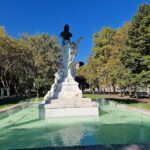
The monument, approximately 10–16 meters high on a 6-meter-square base, consists of a solid pedestal of Codos stone with inscriptions evoking the Fueros of Sobrarbe and the tragedy of Lanuza, a stylized column in the classical style symbolizing the firmness of Aragonese justice, and at its summit, a coat of arms of Aragon surmounted by a copper globe with the inscription “Justice, supreme law.” At its base rests the seated bronze statue of Juan de Lanuza in a solemn pose, elevated and dignified as a judge.
Its construction was financed by the Provincial Council, the City Council, and public donations. Every December 20th, the anniversary of its creation, Aragonese institutions lay floral tributes in memory of the Justiciazgo (the Aragonese legal authority). This monument symbolizes the roots of the Aragonese legal system and the defense of liberties against absolute power, becoming a symbol of regional identity.
过客★★★★★
Monument to Justice (Monumento al Justiciazgo), Pl. de Aragón, 11, 50004 Zaragoza
The Monument to Justice stands 16 meters tall and consists of a stone base upon which rests a bronze sculpture.
The sculpture comprises a column upon which sits a chair, upon which Juan de Lanúza is depicted, his right arm outstretched. The shield of Aragon appears above this, covering the entire monument, which is a sphere representing law.
This monument is the collaborative work of architect Félix Navarro Pérez and sculptor Francisco Vidal.
Measuring 16 meters high and 11 meters wide, it is divided into six parts: the pedestal, the column, the chair, the statue, the shield, and the sphere.
In the 19th century, the image of justice experienced a revival in various fields, such as in painting (Onseta, Barbasan) or literature (Duke of Rivas or Marquis of Pidal).
However, the Monument to Justice in Aragon, past and present, retains a regional collective identity rather than a symbol of liberty.
Two inscriptions can be seen on the pedestal, one from Fueros de Sobrarbe; another from Fueros de Sobrarbe; and yet another from Fueros de Sobrarbe. Another inscription is from *La capilla de Lanuza* by the Aragonese playwright Marcos Zapata, who died in 1914.
The statue on the pedestal represents Judge Juan de Lanuza V, who was executed on December 20, 1591, by order of Felipe II, while receiving Antonio Pérez, the former secretary to the Aragonese monarch, who was accused of murdering Escobedo, the secretary to the King of Austria.
Between the 12th and 13th centuries, Aragon produced righteous figures destined to mediate disputes between the nobility and the king.
At the time, the Court of Justice was considered the most prestigious and important institution in the Kingdom of Aragon, having experienced dark periods in its history, such as the execution of Don Juan de Lanuza, who was beheaded in 1591 by order of Philip II, for his opposition to the king.
In 1711, King Philip V abolished the image of the magistrate.
The idea of establishing a monument to justice began to emerge in the early 19th century, although it was not until 1904 that the monument was erected on the site of the Piñateli Monument.
In 1982, with the ratification of the Aragonese Autonomy Act, the image of the magistrate was restored, becoming the third person in the Aragonese autonomous body after the president of the Aragonese Autonomous Community and the president of the Parliament. Currently, the function of the Aragonese Grand Justice is to protect the people of Aragon and ensure the implementation of community self-governance laws.
Museo del Foro de Caesaraugusta

| Address | Pl. de la Seo, 2, Casco Antiguo, 50001 Zaragoza |
|---|
| Maps | Click here |
|---|
| Website | Click here |
|---|
| Opening Hours | Monday: Closed
Tuesday: 10:00 AM – 2:00 PM, 5:00 – 9:00 PM
Wednesday: 10:00 AM – 2:00 PM, 5:00 – 9:00 PM
Thursday: 10:00 AM – 2:00 PM, 5:00 – 9:00 PM
Friday: 10:00 AM – 2:00 PM, 5:00 – 9:00 PM
Saturday: 10:00 AM – 2:00 PM, 5:00 – 9:00 PM
Sunday: 10:00 AM – 2:30 PM |
|---|
| Phone | 976 72 12 21 |
|---|
jose lourenco★★★★★
If you have been in some of the most famous roman ruins you need to pare down your expectations. It is nice to hear it and see the site but this is not Rome. Still we loved it.
BravoEddie★★★★☆
A place to see the remains of those Roman period pillars. There are also some ancient utensils to display. With a Combo ticket you can visit another three related museums in the neighbourhood.
For 65+ seniors, the visit is free.
Kay Bee★★★★☆
You can’t go to Zarazoga without checking out the Roman architecture. The staff said that folks can be here anywhere from 15-60 minutes. We were there for 30 minutes. Sooo worth seeing what they have. Always fascinating to see how far the Romans spread out.
Ket N★★★★☆
Nobody offered us an option of english audioguide, and there are locations without any english texts or explanations. 7 euro for 4 museums, free admission for youth under 16. Short movie telling the story of the city as if from the point of view of the river. With very quick English subtitles.
Common ticket for 4 museums was sold at nearly 12:30 on Nov 1, and the man who sold it didn’t care to warn us that we won’t be able to visit them all on that day as is was a holiday and all museums close at 14:30. That was very disappointing as we were leaving the city the next morning.
Seokjin Ham★★★★☆
It is a site featuring the remains of a forum, a public space in ancient Rome that served as the center of political, religious, economic, and social activities in the city. Based on ruins excavated between 1988 and 1989, it showcases structures such as a market, sewers, and aqueducts built in the late 1st century BC. Additionally, it includes remnants from the era of Emperor Tiberius, such as the forum, sewers, canals, and foundational structures. The site is easily recognizable by its distinctive alabaster cube structure visible from the outside.
Plaza de César Augusto

| Address | Plaza de César Augusto, Casco Antiguo, 50003 Zaragoza |
|---|
| Maps | Click here |
|---|
| Website | Click here |
|---|
| Opening Hours | — |
|---|
| Phone | — |
|---|
CRUX “CRUX”★★★★☆
Ruins of Roman empire. Amazing remnants of walls.
Mauricio P★★★★☆
It's a great spot in ZARAGOZA city also free to go upstairs it's around 6 floors up.
Nana Ants★★★★★
A historical site with Roman archaeological remains, including a statue of Caesar Augustus and the city wall.
It's truly beautiful and just a short walk from the cathedral and the central market.
Hernández Hibbert Elena★★★★★
Very nice and the tram is right next door.
Ana Risso Solanas Pacheco★★★★★
Beautiful. Archaeological remains are very well identified.
Practical Tips for Visiting Zaragoza’s Historical Attractions
A little preparation goes a long way in a city where many monuments are clustered together but operate on different schedules. The following recommendations will help you avoid common pitfalls, save money, and experience each site at its best. Keep these practical points in mind as you plan your daily route.
-
Buy the Zaragoza Card for multiple entries. If you plan to visit at least four major paid attractions, the Zaragoza Card offers significant savings. It typically includes the Aljafería Palace, Roman museums, and public transport, with options for 24 or 48 hours. Check the official tourism website for current prices and participating venues.
-
Respect the siesta and local opening hours. Many smaller museums and churches close between roughly 2:00 PM and 5:00 PM, especially outside summer. Plan indoor visits for the morning or late afternoon. The Basilica del Pilar, however, generally remains open throughout the day, making it a good midday stop.
-
Dress appropriately for religious sites. The Basilica del Pilar and La Seo Cathedral are active places of worship, not just tourist attractions. Shoulders and knees should be covered, and visitors are expected to remain quiet during Mass. Photography may be restricted during services, so look for posted signs.
-
Wear comfortable shoes and carry water in summer. Zaragoza’s historical centre is best explored on foot, but summer temperatures frequently exceed 35°C (95°F). Start early in the morning, take breaks in shaded plazas, and refill your water bottle at public fountains. The riverside paths near the Ebro offer cooler walking routes.
-
Combine free entry days with less-visited sites. Many city-run museums offer free entry on the first Sunday of each month or on specific weekday afternoons. Use those opportunities for smaller venues like the Roman Forum or Pablo Gargallo Museum, saving your budget for the Aljafería Palace and guided tours.
Zaragoza’s historical attractions are not static exhibits but living landmarks that continue to shape the city’s daily rhythm. Walking from the Islamic arches of the Aljafería to the Roman foundations beneath the Plaza del Pilar, you begin to understand how each civilisation built upon the last. The city does not hide its layers; it celebrates them openly.
For the curious traveller, Zaragoza offers something increasingly rare in Europe: world-class historical sites that can be experienced at a human pace. You can stand alone in a Mudéjar tower, watch the light change across the Ebro, and hear the echo of two thousand years without being rushed along by crowds. That intimacy is precisely what makes these attractions so memorable.
By planning your visit around the rhythms of the city and using the practical tips above, you will leave with more than photographs. You will carry a deeper appreciation for how Zaragoza earned its place as one of Spain’s most historically significant yet understated destinations.
Freya Belle is a content writer and travel journalist specializing in European destinations. With experience exploring over 30 European countries, she focuses on providing in-depth guides to authentic cuisine, historical culture, and hidden gems often overlooked by mainstream tourists. Her writing helps travelers experience Europe like a local.