Ronda’s history is not tucked away in a single museum; it is carved into the cliffs, paved into the streets, and echoed through the plazas. Sitting high above the dramatic El Tajo gorge, this Andalusian city has been shaped by Celts, Romans, Moors, and Catholic Monarchs. For travelers who love architecture and storytelling, exploring the historical attractions here feels like walking through the pages of a living textbook.
The city’s most famous monuments are not just photo opportunities; they are functional parts of the urban landscape. You can cross a bridge that once served as a prison, walk through a bullring that defined modern bullfighting, and descend into a mine that supplied water during sieges. Every stone seems to hold a secret about survival, conquest, or artistic ambition.
Because Ronda is divided by a deep ravine, the historical sites naturally split into two districts. The old Moorish medina, known as La Ciudad, sits on one side, while the newer Mercadillo neighborhood sprawls on the other. Understanding this geography helps you plan a logical walking route without backtracking. The gorge itself serves as the central artery connecting centuries of human ingenuity.
Many visitors rush through on a day trip from the Costa del Sol, but the depth of history here rewards a slower pace. You do not need to be a historian to appreciate the blend of Islamic engineering and Renaissance elegance. However, knowing a few background details before you arrive will transform a simple sightseeing stop into a meaningful cultural experience.
This guide focuses on the most significant historical attractions, not just the most photographed ones. You will find defensive structures, religious landmarks, and civic buildings that illustrate Ronda’s complex identity. Each site offers a different perspective on how this mountain stronghold evolved over more than two thousand years.
To help you prioritize your time, the recommendations below balance iconic must-sees with quieter corners that often get overlooked. Whether you have a full weekend or just a few hours, these landmarks will give you a comprehensive understanding of Ronda’s past. Comfortable shoes are essential, as the best discoveries often involve steep climbs and uneven cobblestones.
Below is a curated list of the twelve best historical attractions in Ronda, arranged to help you explore efficiently.
Bullring of the Royal Cavalry of Ronda

| Address | C. Virgen de la Paz, 15, 29400 Ronda, Málaga |
|---|
| Maps | Click here |
|---|
| Website | Click here |
|---|
| Opening Hours | Monday: 10:00 AM – 7:00 PM
Tuesday: 10:00 AM – 7:00 PM
Wednesday: 10:00 AM – 7:00 PM
Thursday: 10:00 AM – 7:00 PM
Friday: 10:00 AM – 7:00 PM
Saturday: 10:00 AM – 7:00 PM
Sunday: 10:00 AM – 7:00 PM |
|---|
| Phone | 952 87 41 32 |
|---|
Paul Wu★★★★☆
04/04
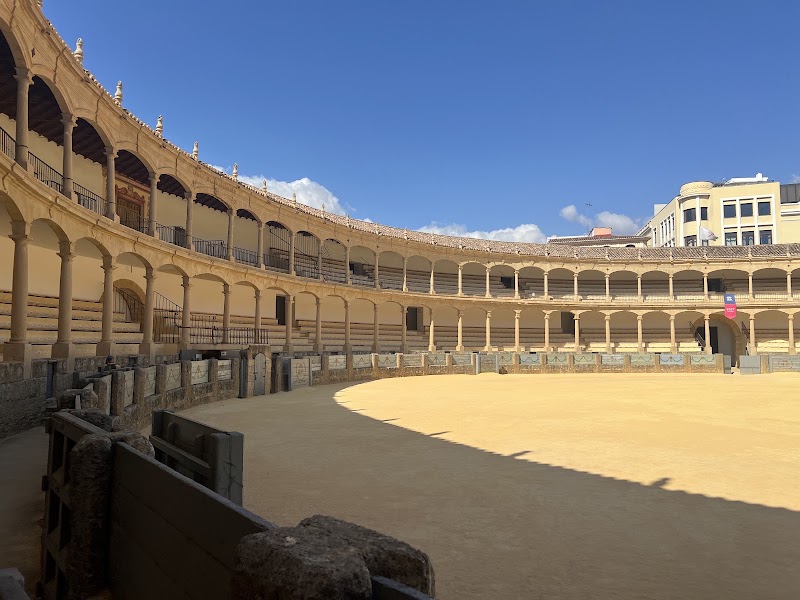
The Plaza de Toros de la Real Maestranza de Caballería de Ronda (Ronda’s Royal Bullring) is one of the oldest and most historically significant bullrings in Spain, located in the heart of Ronda. Completed in 1785, it is closely associated with the Real Maestranza de Caballería de Ronda, one of the oldest equestrian and noble institutions in the country. Architecturally, it is notable for its elegant neoclassical design and its double-tiered stone arcades, giving it a refined appearance compared to many other bullrings in Spain.
Inside the complex, visitors can explore the bullring itself, a museum dedicated to the history of bullfighting, and exhibits on equestrian traditions and famous bullfighting figures linked to Ronda. The arena is particularly famous for its unusually wide sandy ring and the use of a single central column supporting the seating structure, a distinctive engineering feature for its time.
A well-known local tradition is that horses can enter directly into the bullring through a central gate, which opens onto the arena floor—this is what your note likely refers to (“牛棚馬就開在正中間”). This design allows ceremonial equestrian access straight into the ring, emphasizing the strong connection between horsemanship and bullfighting culture in Ronda.
Today, the Plaza de Toros is no longer used for regular bullfighting events year-round, but it remains an important cultural landmark and a major tourist attraction, symbolizing Ronda’s deep historical role in the development of Spanish bullfighting tradition.
Priyanka Shah★★★★★
The Bullring of the Royal Cavalry of Ronda, also known as Plaza de Toros de Ronda, is one of the city's most important historic landmarks and one of the oldest purpose-built bullrings in Spain. Located on Calle Virgen de la Paz, it has a strong connection with Ronda's history of horsemanship and bullfighting.
The bullring was built by the Real Maestranza de Caballería de Ronda, an institution whose origins go back to the 16th century. Construction of the permanent stone arena began in 1780 under architect José Martín de Aldehuela and was completed in 1785. The building was officially inaugurated that year with a bullfight featuring the famous Ronda-born matador Pedro Romero and Pepe-Hillo from Seville.
The architecture is quite distinctive. Built mainly from local sandstone, the circular arena is surrounded by two levels of elegant arcaded galleries supported by Tuscan columns. The relatively restrained exterior contrasts with the graceful proportions and repeated arches inside, giving the bullring a more refined appearance than many people might expect from a traditional bullfighting arena.
Ronda's bullring is particularly significant because of its connection with Pedro Romero, one of the foundational figures of modern Spanish bullfighting. He established a more structured approach to the art of bullfighting and became closely associated with the Ronda school of tauromachy.
The bullring also has a strong connection with the Ordóñez family. Cayetano Ordóñez and his son Antonio Ordóñez were two of Ronda's most famous matadors, and their influence helped revive the city's bullfighting traditions. Since 1954, the arena has hosted the famous Corridas Goyescas, an annual event inspired by the costumes and artistic style associated with the time of Francisco de Goya.
Beyond bullfighting, the arena's original purpose was connected with the Real Maestranza's equestrian traditions. The institution was created partly to train members of the local nobility in horsemanship and military skills, so the bullring represents both the history of cavalry and the later development of Spanish bullfighting.
The Plaza de Toros was declared a Bien de Interés Cultural, or Site of Cultural Interest, in 1993. A major restoration programme followed in 1997 to preserve the historic stonework and strengthen the building while allowing it to continue serving cultural and educational purposes.
One of the most interesting things about visiting is seeing the arena itself from the stands and appreciating its unusual sense of proportion. The double galleries, pale stone and perfectly arranged columns create a beautiful setting, while the surrounding mountains and Ronda's historic landscape add to the atmosphere.
The bullring is much more than a venue for bullfights. It represents an important part of Ronda's cultural identity and the city's contribution to the history of Spanish horsemanship and tauromachy.
For anyone exploring Ronda, this is definitely one of the places worth seeing. Even for visitors who are not particularly interested in bullfighting, the architecture, history and connection with figures such as Pedro Romero, Cayetano Ordóñez and Antonio Ordóñez make the Plaza de Toros an important part of understanding Ronda.
Lanz around the world★★★★★
Even though it’s not hosting any bullring fight right now, it’s still unforgettable and astonishing to visit the birthplace of the modern version of bullfight (invented by Francisco Romero and mastered by Pedro Romero). I knew nothing about this “brutal” and declining culture before i visited this place. But this place made me extremely interested in bullfighting and I learned a lot from it (there’s a musuem and most areas are available to visit). I believe everyone should give it a try.
et★★★★★
The bullring is the world's first purpose-built bullfighting arena and the first bullfight was held in 1785. Visitors can tour the facilities both in front of and behind the scenes, gaining insight into this unique Spanish culture.
Trang Linh Nguyễn★★★★★
Very large and beautiful bullring. The entrance fee is €10 per person. Buying tickets and getting inside was very quick and easy. Definitely worth a visit when in Ronda!
La Casa del Rey Moro

| Address | C. Cta. de Santo Domingo, 9, 29400 Ronda, Málaga |
|---|
| Maps | Click here |
|---|
| Website | Click here |
|---|
| Opening Hours | Monday: 10:00 AM – 8:00 PM
Tuesday: 10:00 AM – 8:00 PM
Wednesday: 10:00 AM – 8:00 PM
Thursday: 10:00 AM – 8:00 PM
Friday: 10:00 AM – 8:00 PM
Saturday: 10:00 AM – 8:00 PM
Sunday: 10:00 AM – 8:00 PM |
|---|
| Phone | 668 50 30 50 |
|---|
Steve Pulis★★★★★
This stop and self-tour with audio guide is worth the visit. We learned about the Reconquista, especially from the Moorish side of the city. The grounds are lovely, but the stairs to the river below and the history along the way were the highlight of Ronda.
Simon Tang★★★★☆
A nice and well organised place, stunning point is the Water Mines, you have to walk down 60 meters to the bottom of the castle, looking up to the cliff the view is gorgeous. The hardest part is walking up ! However, no sweat no sweet, the hardworking is worth.
Hartger Visser★★★★☆
Back into history. A small but cosy garden. Designed by Jean Claude Forestier in the early 1900,s. Water as an important element running through the garden. Entrance fee is worth it, but then you’ll need te exercise! 100 meters down to the river. Going down on stairs used by the Moor slaves to get water. The stairs carved out of the rock te secrelty get down. Wow!! Tool me a while to get my breath, but sooo Beautiful down there. Put it on your list😊
Parking is quite a challenge. Park in one of the garages and go by foot.
Ripley OfTheNostromo★★★★★
This is a a fantastic monument. The views are stunning.
Just a word of caution. The steps down are winding and dark. The initial steps are well illuminated by the sunlight streaming in but after the first third, the steps become winding, narrow and dark.
The height of the steps are also uneven so you need to pay attention when walking downwards which can be a little disorienting.
The view from the bottom of the gorge is breathtaking.
The walkways on the outer part of the gorge were closed for maintenance but still just taking in the view of the clear blue green waters is worthwhile.
Johannes Bagge★★☆☆☆
Unfortunately, this visit did not live up to expectations. Although the location itself has great potential, the experience felt poorly planned and not worth the €10 entrance fee per person. Several parts of the area appeared neglected: fountains were not operating, some lighting was broken, and much of the vegetation looked dry or uninviting.
What made the experience particularly disappointing was the lack of information. When paying the entrance fee, we were not told that the café was closed — something we had been looking forward to and had specifically planned for. Even more frustrating, once we reached the water, the walking path along the cliff was closed. This trail was one of the main reasons we chose to visit, yet there was no notice or warning beforehand.
Overall, the visit felt overpriced given the limited access and maintenance issues. If you are mainly interested in views and gardens, there are nearby alternatives such as Jardines de Cue that are free of charge and offer a more enjoyable experience.
Museo Lara

| Address | C. Armiñán, 29, 29400 Ronda, Málaga |
|---|
| Maps | Click here |
|---|
| Website | Click here |
|---|
| Opening Hours | Monday: 11:00 AM – 7:00 PM
Tuesday: 11:00 AM – 7:00 PM
Wednesday: 11:00 AM – 7:00 PM
Thursday: 11:00 AM – 7:00 PM
Friday: 11:00 AM – 7:00 PM
Saturday: 11:00 AM – 7:00 PM
Sunday: 11:00 AM – 7:00 PM |
|---|
| Phone | 952 87 12 63 |
|---|
HistoryNeedsYou★★★★★
An extraordinary and brilliant surprise of a museum. Modest in appearance from the street, this museum is both an oasis of calm and a fantastic collection. Covering decorative arts, technology, weaponry, militaria, and much more, there’s so much to see and enjoy. The basement level presents the history of witchcraft and the inquisition in a rather fun way too. Well worth the tiny entrance price, and there are clean toilets too!
Irina Dogaru★★★★★
Un museo que me ha encantado. Vale la pena visitarlo.
A wonderful museum, founded by Juan Antonio Lara, including a wonderful private collection of clocks, weapons, witchcraft, Spanish Inquisition, carriages and many other things. I've just loves it. The lady at the reception, Paqui, was very kind and helpful. Thank you!
Larry Hoerner★★★★★
If you like antiques, this off the wall museum will thrill you. Watches, clocks, guns, pistols, typewriters, bullfighters, movies, wine production, silly oddities, copperware, it's got it all. For the price, you can either race through it (1/2 hour) or check it out in more detail (hours), and still feel like you got your money's worth!
Arina Aksenova★★★★★
A few days ago we travelled to Ronda and this museum was in our top 10 places to visit.we really enjoyed our excursion. We saw a lot of exhibitions and we were reading several interesting facts about each. The staff is really friendly and you can rely on them! they will always help you or even explain some curiosities. WE STRONGLY RECOMMEND IT!
Louise Haines★★★★★
What a brilliant, quirky museum. We loved all the different sections which were all so unexpected. Carriages, movie cameras, the Inquisition, witchcraft... What a mix! The staff were very kind and welcoming, too.
Alameda del Tajo

| Address | C. Virgen de la Paz, 29400 Ronda, Málaga |
|---|
| Maps | Click here |
|---|
| Website | Click here |
|---|
| Opening Hours | Monday: 9:00 AM – 10:00 PM
Tuesday: 9:00 AM – 10:00 PM
Wednesday: 9:00 AM – 10:00 PM
Thursday: 9:00 AM – 10:00 PM
Friday: 9:00 AM – 10:00 PM
Saturday: 9:00 AM – 10:00 PM
Sunday: 9:00 AM – 10:00 PM |
|---|
| Phone | — |
|---|
Epicurean Flow★★★★☆
Ronda is definitely a must-see when visiting Málaga. Located about a two-hour drive away, this impressive and historic town feels like stepping into a completely different side of Andalucía.
Perched dramatically above a deep canyon of roughly 750 meters, Ronda is truly breathtaking.
Over the centuries, nature has carved its way through the steep mountains, creating a spectacular gorge that overlooks the serene Andalusian landscape.
Standing on the famous bridge, you can hear nothing but the soft “oohs” and “aahs” of visitors taking in the view. It’s one of those places that genuinely leaves you speechless.
Ronda is without a doubt worth the trip if you want to experience one of the most unique and dramatic towns in southern Spain.
Radiate Repeat★★★★★
Beautiful park to relax, walk around and take in the incredible views it offers of the surrounding nature 😍
Close to the bus station and a short walk from the many beautiful views Rhonda offers.
A must see, take 20 minutes and enjoy this park, you won’t regret it!
Amber Shafi★★★★★
One of the most beautiful and peaceful parks I’ve ever visited. Must visited when in Ronda.
Goran Micic★★★★★
I enjoyed every moment in this gorgeous park. Big trees made a huge shadow on an unbelievably hot day. There are benches for everyone, artists are playing music. A stunning viewing point in the hilly surroundings was just amazing.
Tracey Bee★★★★★
Fabulous views of Ronda from this park. It's beautiful. Definitely visit it if you're in the area
Baños Árabes Yacimiento Arqueológico

| Address | C. Molino de Alarcón, s/n, 29400 Ronda, Málaga |
|---|
| Maps | Click here |
|---|
| Website | Click here |
|---|
| Opening Hours | Monday: 10:00 AM – 2:00 PM, 3:00 – 6:00 PM
Tuesday: 9:30 AM – 7:00 PM
Wednesday: 9:30 AM – 7:00 PM
Thursday: 9:30 AM – 7:00 PM
Friday: 9:30 AM – 7:00 PM
Saturday: 10:00 AM – 2:00 PM, 3:00 – 6:00 PM
Sunday: 10:00 AM – 3:00 PM |
|---|
| Phone | 951 15 42 97 |
|---|
Mimmo Khalifa★★★★★
Visiting the Arab Baths in Ronda is a fascinating experience that immerses you in the history and culture of Muslim Andalusia. The baths, dating back to the 13th–14th centuries, showcase remarkable Islamic architecture and engineering, with cold, warm, and hot rooms connected by a traditional water system.
As a Muslim, visiting feels especially meaningful: these baths were not just for washing but also served as social and cultural centers, reflecting a time when Islamic civilization flourished in Andalusia. Today, they offer a glimpse into the past and the rich heritage of Muslim life in Ronda.
A Zine★★★★☆
Neat place to gain a better understanding of how the baths worked.
The hours listed om Google for March were incorrect so I was happy to wander by here and see that they were still open at 1800. Since it was later in the day I had the entire place to myself.
They have a few cats on site so seeing the cats was a nice little addition.
G Jones★★★★★
If you’re in Ronda seeing the Arab Baths is worth the walk down the hill and entrance fee. They have done a good job in preserving this historic site and they have a video presentation in Spanish & English so that you have an understanding of how it all worked and a sample of life during that era
Idan Goor★★★★☆
Interesting visit overall. We especially liked the video in the last room, which explained the site very well and added helpful context (there's a video in English/Spanish every 10 minutes, so it's worth the wait to see it entirely). However, I do think the signs could use some restoration, as many of them were hard to read.
Brian Spain★★★★★
This was a reasonably quick visit near the end of our day in Ronda and was worth the stop. The video provided good historical insight into not just the Arab baths, but the general area.
This place is not that large and can be navigated in 30 minutes or so.
El Tajo de Ronda

| Address | C. Armiñán, 3, 29400 Ronda, Málaga |
|---|
| Maps | Click here |
|---|
| Website | Click here |
|---|
| Opening Hours | Monday: Open 24 hours
Tuesday: Open 24 hours
Wednesday: Open 24 hours
Thursday: Open 24 hours
Friday: Open 24 hours
Saturday: Open 24 hours
Sunday: Open 24 hours |
|---|
| Phone | — |
|---|
Rafat Khoury★★★★☆
We visited El Tajo de Ronda on our way from Marbella to Seville, and it was definitely worth the stop. The views are amazing, and the famous bridge and surrounding landscape are even more impressive in person.
We parked in the city center and walked to the bridge, which was easy and convenient. You don’t need more than 1–2 hours to visit the main viewpoints and walk around the area.
A must visit place if you are traveling through this part of Spain. Highly recommended!
The Jewel Riders Archive★★★★☆
Definitely worth the trip if you are passing by! The city has found its fame in bridges. There are other archaeological fines to be seen as well as a museum dedicated to bull fighting. There is an upscale shopping district, which honestly could be and should be avoided.
There is a ticket booth that sells entrance two steps that go underneath the bridge overpass into a room, which should have more information, but it seems the videos are not working and it is stifling hot! It is still worth it I thought just to be more secluded and in the shade to appreciate the view.
M. P. Norman★★★★★
Day trip to Ronda. Pickup was stupid-early, the kind of morning where the city still feels half-asleep and your coffee hasn’t caught up to your soul yet.
But the meeting point?
Easy. A ten-minute walk from our apartment in the middle of the shopping district, no scavenger hunt required. The company ran tight and smooth — no chaos or confusion, just people who clearly knew what they were doing.
And our guides?
Fantastic. Funny in that effortless way that keeps a bus awake before sunrise, and packed with the kind of knowledge that makes a place unfold instead of just sit there looking pretty. History, stories, weird little details — all of it delivered like someone letting you in on secrets.
Then there’s Ronda itself.
That city looks impossible. Like somebody dared a civilization to build a town on the edge of the world and, against all common sense, they did it anyway.
The bridge—Puente Nuevo—doesn’t just connect two sides of the city. It hangs there over the gorge like it’s locked in an argument with gravity and somehow winning.
You stand there looking down into that massive stone crack in the earth and your brain starts quietly reconsidering every engineering decision humanity has ever made.
And the bullring, Plaza de Toros de Ronda, carries this strange ghost-weight to it. Beautiful, sunlit, historic, and also humming with centuries of spectacle, ritual, blood, pride, and drama.
Ronda doesn’t feel polished or artificial. It feels old in the real way. Wind-carved. Story-soaked. A place balanced between beauty and danger, where every viewpoint looks like it belongs on the cover of a fantasy novel right before someone makes a terrible decision.
Absolutely worth the trip.
Mark M★★★★★
Perched dramatically over a deep chasm in the heart of Andalusia, Ronda is an absolute masterpiece of a destination that leaves every traveler spellbound. The iconic Puente Nuevo bridge offers jaw-dropping views of the El Tajo gorge, seamlessly connecting the historic Moorish old town with the vibrant modern districts. Wandering through its narrow, sun-drenched cobblestone alleys feels like stepping back in time. Brimming with rich history, legendary bullfighting roots, and warm local hospitality, this breathtaking cliffside city is an unmissable Spanish jewel that easily captures your heart.
Lanz around the world★★★★★
What else can I say. Absolutely a stunning place to visit and to appreciate the beauty and power of nature and time. Still can’t imagine prisoners were thrown from the bridge back in the day tho. The scale and view cannot be described in words.
It’s quite hot and sunny on the bridge, so be prepared.
I would visit again in the future.
Walls of Ronda

| Address | C. Goleta, 10, 29400 Ronda, Málaga |
|---|
| Maps | Click here |
|---|
| Website | Click here |
|---|
| Opening Hours | Monday: Open 24 hours
Tuesday: Open 24 hours
Wednesday: Open 24 hours
Thursday: Open 24 hours
Friday: Open 24 hours
Saturday: Open 24 hours
Sunday: Open 24 hours |
|---|
| Phone | — |
|---|
Jonalyn Regodo★★★★★
The Walls of Ronda are an impressive reminder of the city’s rich history. Walking alongside the ancient fortifications offers beautiful views of the surrounding landscape and a fascinating glimpse into Ronda’s past. The site is well worth visiting for anyone interested in history, architecture, or photography.
Rilany Will★★★★★
Beautiful place, you won’t regret all of the walking because it is definitely worth it
Kamila Świerska★★★★☆
Historical city walls, close to this smaller bridge. South part of the city. Less crowded and popular area. Views of nearby fields and whitewashed houses.
ALDEA GEORGIANA★★★★★
Absolutely magicall. It is a tiny bit crowded but it is acceptable. Parking is somewhat hard to find. Recommend a stroll around the windy steets of the town. Overall Magicall.
Kate Imson★★★★☆
Excellent views. Lots of tourist. Bring a selfie stick to help take photos. No signs in the city to indicate that drones are banned.
Puente viejo de Ronda

| Address | C. Real, 2, 29400 Ronda, Málaga |
|---|
| Maps | Click here |
|---|
| Website | Click here |
|---|
| Opening Hours | Monday: Open 24 hours
Tuesday: Open 24 hours
Wednesday: Open 24 hours
Thursday: Open 24 hours
Friday: Open 24 hours
Saturday: Open 24 hours
Sunday: Open 24 hours |
|---|
| Phone | — |
|---|
Hayes Weggeman★★★★★
I really enjoyed walking and taking in the spectacular views from the bridge which connects both parts of Ronda. You have to see the bridge during the day and then at night when they shine light on it. It is really beautiful. Ronda is a great place spend a few days and relax. It's altitude us about 720 meters appx. The climate in October through April is very nice.
Eugenia Zoican★★★★★
“Ronda is an absolutely stunning city and one of the most beautiful places to visit in Spain. The dramatic views from the famous bridge, the historic streets, and the rich culture make it a truly unforgettable destination. The atmosphere is charming, the scenery is breathtaking, and there are plenty of excellent restaurants and attractions to explore. Whether you're interested in history, architecture, or simply enjoying spectacular views, Ronda has something for everyone. A must-visit destination that I would happily return to!” 😊🇪🇸
Malcolm Shiel★★★★★
The magnificent bridge and gorge are spectacular to see, but there is also a beautiful town with old Spain charm to enjoy a walk round and a variety of great restaurants and gastro bars to enjoy dflicious meals and tapas.
Monica Radu★★★★★
Perched on a dramatic 100-meter-deep gorge in southern Spain, Ronda is a breathtaking Andalusian cliffside city. Famous for its 18th-century stone bridge (Puente Nuevo) dividing the old Moorish and modern districts, it is renowned for its spectacular vistas, rich Roman and Islamic history, and traditional bullfighting culture.
Paul Wu★★★★★
04/05
Ronda’s Old Bridge, known in Spanish as “Puente Viejo,” is a historic crossing that spans the dramatic El Tajo gorge in the city of Ronda in southern Spain. Although it is less famous than the nearby Puente Nuevo, the Old Bridge holds significant historical and cultural value, dating back to the early period of Christian rule after the Reconquista and built on the foundations of earlier Moorish structures, reflecting a blend of architectural influences that illustrate the region’s layered past. Constructed primarily of stone, it features a simple yet sturdy design with a single elegant arch connecting both sides of the gorge, and it once served as a vital route for travelers, merchants, and local residents navigating the rugged terrain. The surrounding area includes remnants of ancient city walls and pathways leading into the gorge, offering striking views of the natural landscape and highlighting Ronda’s historical defensive advantages, as the deep gorge acted as a natural barrier against invasions; today, the Old Bridge is appreciated not only as a functional structure but also as a scenic and historical landmark, providing a quieter and more intimate experience compared to the bustling Puente Nuevo, where visitors can reflect on the city’s rich heritage while enjoying panoramic views of the cliffs and the Guadalevín River below.
Puerta del Almocábar

| Address | Pl. Ruedo Alameda, 29400 Ronda, Málaga |
|---|
| Maps | Click here |
|---|
| Website | Click here |
|---|
| Opening Hours | Monday: Open 24 hours
Tuesday: Open 24 hours
Wednesday: Open 24 hours
Thursday: Open 24 hours
Friday: Open 24 hours
Saturday: Open 24 hours
Sunday: Open 24 hours |
|---|
| Phone | 952 18 71 19 |
|---|
Philip Frøslev★★★★☆
Nice viewing point. Easy accessible. Here you can see the view south of the city.
Mal Jones★★★★★
Ronda is a picturesque town and lives up to the tourist book hype. It is well worth a visit spending a few days wandering the streets and enjoying the restaurants, cafe-bars and surrounding landscape. There are a number of interesting walking/cycling routes from outside the old town walls which can take you to the other side of the valley from the you can see the spectacular bridge spanning the chasm from a distance. We ventured in January to witness not just the sights of the architecture, food and landscape but the festival of the Three Kings, the procession of which meanders streets of the old town for quite a few hours on the evening of 6th January. This is a very noisy affair and sensitive pets may find the experience too loud on occasion. The weather in winter is mild and more akin to early summer temperatures in the more northern parts of Europe. It’s a good season to visit.
John the Reviewer★★★★☆
Very impressive large wall and gate.
Paul Vivas★★★★★
Medieval Castle Towers
This is a fantastic gate guarding the entry to the Town of Ronda. Highly worth your time to visit it. They are comprised of two towers extremely well preserved. You can see them for free and then enter the town.
Mahmoud Abu-Qaoud★★★☆☆
Was a quick visit to this part of Rhonda. Not much to see unless you're very interested in history. I would recommend northern part for the vibes, walking, restaurants and cafes
Puente San Miguel

| Address | Río Guadalevín, 29400 Ronda, Málaga |
|---|
| Maps | Click here |
|---|
| Website | Click here |
|---|
| Opening Hours | Monday: Open 24 hours
Tuesday: Open 24 hours
Wednesday: Open 24 hours
Thursday: Open 24 hours
Friday: Open 24 hours
Saturday: Open 24 hours
Sunday: Open 24 hours |
|---|
| Phone | — |
|---|
Philip Frøslev★★★★★
The walking path leading from the south side to this small bridge is a nice little walk.
Kamila Świerska★★★★☆
In general place worth to visit. It is close to the Arab Bath, which you can skip if you don't have time. There is not much to see inside. The best you can do is to walk around to see the bridge from different angles.
David Rumptz★★★★★
Beautiful views and walk down to this bridge. The steps make the journey back up very easy.
Andy Cambridge★★★★★
The old and original bridge tucked at the back and bottom of Ronda. Gives a feeling of something older and from the past especially with the ancient baths just across the road from the location. Great place to visit and a lot quieter than the new bridge.
Rebecca fry★★★★★
Beautiful area nice to visit because everything is close.
Puente Nuevo de Ronda viewpoint

| Address | C. Tenorio, 20, 29400 Ronda, Málaga |
|---|
| Maps | Click here |
|---|
| Website | Click here |
|---|
| Opening Hours | Monday: 9:30 AM – 5:00 PM
Tuesday: 9:30 AM – 5:00 PM
Wednesday: 9:30 AM – 5:00 PM
Thursday: 9:30 AM – 5:00 PM
Friday: 9:30 AM – 5:00 PM
Saturday: 9:30 AM – 5:00 PM
Sunday: 9:30 AM – 5:00 PM |
|---|
| Phone | — |
|---|
Lamis El Ghor★★★★★
Gorgeous views as you wander further down, offering a more direct viewpoint of the Puente Nuevo. What an impressive sight!
Paul Wu★★☆☆☆
04/05
The Mirador Puente Nuevo de Ronda (New Bridge Viewpoint) is one of the most popular and iconic viewpoints in Ronda, offering a classic panoramic view of the Puente Nuevo spanning the El Tajo gorge. The viewpoint itself is generally free to access, and no ticket is required to stand at the upper viewing areas and take in the landscape.
If you want a similar perspective but from a lower elevation—closer to the gorge—you can walk down the nearby streets and paths leading toward the valley. These descending routes allow you to see the bridge from below and experience its full vertical scale, with the arch rising dramatically above the cliffs.
Another excellent nearby viewpoint is the Mirador de Aldehuela, which offers a slightly different but equally impressive angle of the bridge and gorge, often considered one of the best photographic spots in the city.
For a more immersive experience, you can continue further down toward the base of the gorge, where walking paths provide a ground-level perspective of the Puente Nuevo’s structure. This contrast between the upper viewpoint and the lower paths gives you two very different but complementary ways to appreciate Ronda’s dramatic landscape.
john smith★★★★★
This is a place we have the best view on the bridge. It’s a little bit of a walk downstairs but not really exhausting and the walk is worth it. If you come to the town by car, you can park just 700 m away at free public parking.
Anh Pham★★★★★
Fantastic view point to the bridge, totally worth the hike down and up. No cost, just time and love
onbarefeet★★★★☆
Steps to the Best View in Ronda
We visited the iconic Puente Nuevo during some free time on our day trip to Ronda, and despite limited time, the trek was absolutely worth it. To reach this viewpoint, we walked down from Plaza de María Auxiliadora on the south side of the gorge, just below the New Bridge.
The path involves many steps. While the descent is fairly manageable, the climb back up is steep and requires more effort. If you’re comfortable with that, you’ll be rewarded with spectacular viewpoints along the way—an absolute haven for photographers. It’s best done on a clear day and with proper walking shoes.
Access to the river and gorge floor was closed during our visit, but we went in the late afternoon when it was pleasantly busy. A must-visit experience when in Ronda.
Casa Museo Don Bosco

| Address | C. Tenorio, 20, 29400 Ronda, Málaga |
|---|
| Maps | Click here |
|---|
| Website | Click here |
|---|
| Opening Hours | Monday: 10:00 AM – 7:00 PM
Tuesday: 10:00 AM – 7:00 PM
Wednesday: 10:00 AM – 7:00 PM
Thursday: 10:00 AM – 7:00 PM
Friday: 10:00 AM – 7:00 PM
Saturday: 10:00 AM – 7:00 PM
Sunday: 10:00 AM – 7:00 PM |
|---|
| Phone | 672 46 80 82 |
|---|
Lorraine Lowerson★★★★★
Casa Don Bosco is a true hidden gem, discovered by accident and now my favourite place in Ronda.
Stepping into the elegant and beautifully preserved interior is magical and feels like stepping back in time. A lovely Terrace has been added since my last visit and is the perfect place to relax and enjoy the gardens and the magnificent views. Just as important, the customer service from the friendly staff was excellent and much appreciated. Highly recommend !
Krisztina Huszár★★★★★
Fab treasure box! I am great fan of the Spanish tiles so this place was paradise for me. Really fascinating view to the New Bridge, estimate some 30-40 minutes here, definately worth to look around.
Andrew McMorrow★★★★★
Amazing view from the terrace with great drinks selection & service!
Special thanks to Ursula at the bar who did a great job of recording a lovely (surprise) engagement video of my partner and I 🥳🥳
One of the best views in Ronda, we will certainly be back!
Avi Shek★★★★☆
Nice little casa, quite well decorated. I think €3 is somewhat okay for entrance fees. There's a restaurant so one can get refreshed. Also, reading the history of the casa after entering would be nice.
Simon Round★★★★★
What a hidden secret as it the best place to get afternoon and evening views of the gorge and the bridge. The gardens are cooling and relaxing. We enjoyed having a drink on the terrace.
There is a guide book available in English to explain the history of the house and the support of the under privileged.
There is an evening concert at 7pm but we did not attend.
Tips for Visiting Ronda’s Historical Sites
To make the most of your time in Ronda, a little preparation goes a long way. The city’s compact size makes walking the primary mode of transport, but the elevation changes and seasonal crowds can surprise first-time visitors. The following practical tips will help you avoid common mistakes and enjoy a smoother, more rewarding historical tour.
-
Start early or stay late. The most famous landmarks, especially Puente Nuevo and the bullring, become crowded by mid-morning. Arriving before 10:00 AM or after 4:00 PM gives you softer light for photos and quieter viewing areas.
-
Wear grippy, supportive footwear. Cobblestones in the old town are beautiful but uneven, and some viewpoints require navigating rocky paths. Avoid smooth-soled shoes, especially if you plan to descend toward the gorge floor.
-
Buy a combined ticket if available. Several municipal museums and historical sites offer joint entry passes. Check at the tourist office near Plaza de España for current pricing, as this can save you money compared to paying separately.
-
Respect the midday closure. Many churches and smaller museums close between 2:00 PM and 4:00 PM. Plan indoor visits for the morning, and use the early afternoon for outdoor viewpoints, gardens, or a long lunch.
-
Carry water and sun protection. Ronda sits at a high altitude, and the Andalusian sun is intense even in spring and autumn. There are few shaded areas along the gorge viewpoints, so hydration and a hat are essential.
-
Do not skip the lesser-known gates and walls. Attractions like the Almocábar Gate and the Arab Walls offer a quieter, more atmospheric experience than the busy bridge. These sites often have no queues and provide excellent context for Ronda’s medieval defenses.
Ronda rewards travelers who look beyond the postcard views. The city’s true historical richness lies in the details: a horseshoe arch hidden down an alley, a Renaissance courtyard behind an unmarked door, or the worn steps of a Moorish bathhouse. Give yourself permission to wander without a strict itinerary, and you will discover why this mountain city has inspired writers, artists, and explorers for centuries.
Freya Belle is a content writer and travel journalist specializing in European destinations. With experience exploring over 30 European countries, she focuses on providing in-depth guides to authentic cuisine, historical culture, and hidden gems often overlooked by mainstream tourists. Her writing helps travelers experience Europe like a local.